
 I’m hoping that Monday 2 to Sunday 8 July 2018 will have been the last of a series of less-productive weeks, now that I’ve probably throw out all the intestinal bugs, and that I’ve got my computer back.
I’m very happy to finally present these first few items.
Podcasts
- “The 9pm Probe: John Birmingham, author and columnist”, being The 9pm Edict episode 77. You can also listen to it on SoundCloud and Spreaker.
Articles
The first tranche of the Crikey Prying Eyes series has been released. I was the series editor, and my first two stories are now out there.
- Prying Eyes: Welcome to a world where your privacy is being sold for billions, Crikey, 2 July 2018. This is the free-to-read intro to the series.
- Dark patterns: the tricks and traps used to lure you into handing over personal data, Crikey, 2 July 2018.
Media Appearances, Corporate Largesse
None.
The Week Ahead
It’s all about writing this week. On Monday I need to finish a piece for Crikey, then it’s the start of several weeks in July and August when I’m writing primarily for ZDNet, covering for staff who are taking leave. That’ll keep me busy.
I hope to get a magazine-style episode of The 9pm Edict done some time this week too, but I haven’t set a date yet.
Further Ahead
Things I’ve pencilled in, none of which have been confirmed yet:
- SINET 61, Melbourne, 31 July – 1 August. (TBC)
- D61+ LIVE, Brisbane, 18–19 September. (TBC)
- Australian Cyber Conference, formerly the Australian Information Security Association (AISA) National Conference, Melbourne, 9–11 October.
- International Association of Privacy Professionals ANZ (iappANZ) Annual Summit, Privacy: Handling the Seismic Shift, Melbourne, 1 November. (TBC)
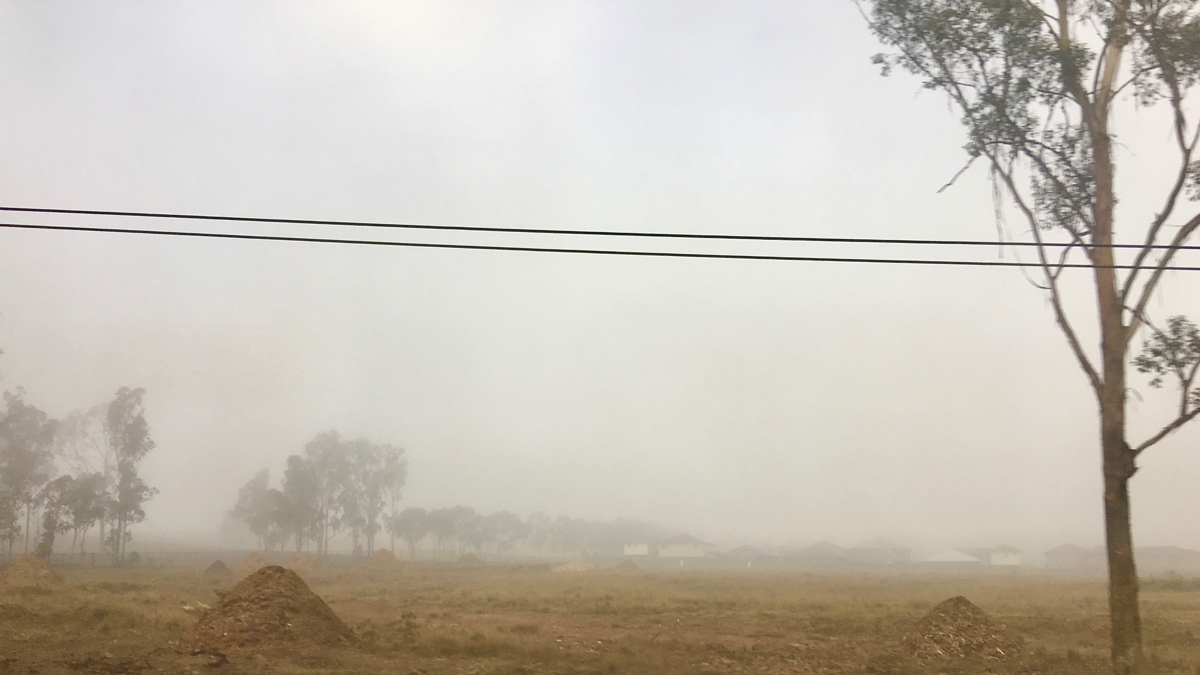
[Photo: Foggy morning in Werrington. The view south from a train passing through the western Sydney suburb of Werrington on a foggy winter morning, 4 July 2018.]
 This morning I delivered version six of my now-regular guest lecture to media students at the University of Technology Sydney (UTS), “Algorithms and the Filter Bubble”. Here are the references and further reading.
 Here’s the final of this week’s media spots that was triggered by Privacy Awareness Week, a chat about the privacy issues relating to mobile apps on Sydney’s Muslim community radio station