
intel

You are currently browsing articles tagged intel.

A weekly summary of what I’ve been doing elsewhere on the internets — which was a relatively quiet week after three significantly more busy ones. Thank the gods.

Podcasts

  • Patch Monday episode 112, “Security: PGP to Android, NFC and beyond”. A conversation with Jon Callas. He’s now chief technical officer with Entrust, but he’s been at the centre of computer security since the olden days. Thoroughly enjoyable, this was.

Articles

Media Appearances

None.

Corporate Largesse

None.

Elsewhere

Most of my day-to-day observations are on my high-volume Twitter stream, and random photos and other observations turn up on my Posterous stream. The photos also appear on Flickr, where I eventually add geolocation data and tags.

[Photo: A Harts Pub sign, The Rocks, Sydney, photographed this afternoon.]

A weekly summary of what I’ve been doing elsewhere on the internets — finally posted on Sunday like it’s meant to be.

On a personal note, it was great to finally get the dental work done so that my jaw is no longer infected. Now, to wait for my shoulder to heal…

Podcasts

  • Patch Monday episode 111, “Cybercrime 2016: a view of the future”. Recorded in Las Vegas, it’s mainly Michael Fey’s view of 2016. He’s McAfee’s worldwide senior vice president of advanced technologies and field engineering. Also, an explanation of how advanced persistent threats are a three-stage attack, and a chat with the bloke who taught me how to create malware and construct botnets in just one hour.

Articles

I wrote another two stories apart from these, one for CSO and one for ZDNet Australia, but they won’t be published until Monday.

Media Appearances

Corporate Largesse

  • On Tuesday I covered the ISACA conference in Sydney, so of course I got free food and drink.
  • On Friday I went to the launch of Intel’s Ultrabook standard for laptops at BAR100, The Rocks in Sydney, so naturally there was more free food and drink. They also gave me an Air-Tech Turbo Blimp radio-controlled indoor airship, which I gave away — to someone who then discovered that the blimp itself wasn’t in the box.

Elsewhere

Most of my day-to-day observations are on my high-volume Twitter stream, and random photos and other observations turn up on my Posterous stream. The photos also appear on Flickr, where I eventually add geolocation data and tags.

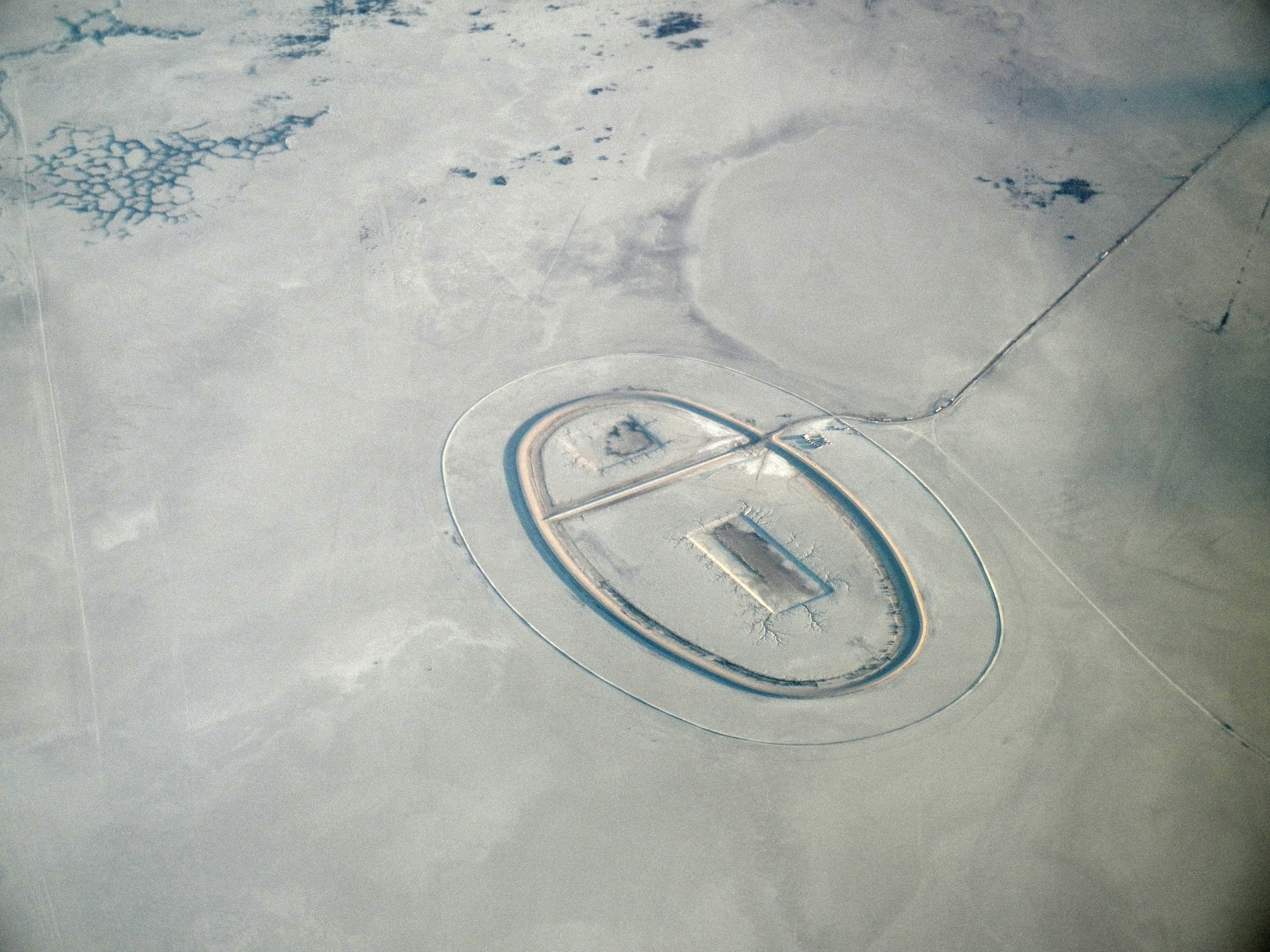
[Photo: A mysterious oval-shaped object in the desert somewhere between Las Vegas and Los Angeles. This might be in Death Valley, but more likely somewhere else. I wasn't paying much attention until I saw this. Any idea what it is? You can click to embiggen. Oh, and yes this photo was taken last week, not this week, but I'm sure you can live with that.]

Barry O’Farrell, I’ve got my eye on you. It’s one thing to start sorting out the mess left after a decade and half of NSW Labor government that was incompetent to the point of, I suspect, corruption. I’m sure we can all provide a list of folks whose bank and phone records we’d like to see pulled by ICAC. But that’s very different from threatening with sacking a local government body whose actions happen not to coincide with the interests of your mates in the pro-Israel cheer squad.

Yes, Marrickville Council decided to boycott Israel over that whole Palestine thing. So what? What business is that of yours as NSW Premier? None.

As an individual, I have the right to hold whatever political views I like. Freedom of thought and freedom of political expression are amongst the very few human rights we’ve properly protected here in Australia. Should I decide that some individual, group, business, organisation or nation holds views so repugnant that I’d rather not support them, then it’s my right not to do business with them.

As a proper, legally-constituted, legitimately-elected local government body — as a legal “person” — the Marrickville Council also has that basic legal right to choose who it does business with.

Now as it happens, I reckon Marrickville’s decision wasn’t terribly well thought through. As my colleague Josh Taylor over at ZDNet Australia points out, boycotting everything that comes out of Israel denies you access to the latest computing technology from Intel, amongst other things. The very fact that Marrickville Council didn’t respond to his questions but instead waved him off to a prepared statement at their website proves, in my opinion, that they don’t have the intellectual integrity or moral backbone to discuss and stand by their decision. By all means criticise them for that.

But until very recently I’d spent most of a decade as a citizen of Marrickville. Yes, there’s a certain idealistic leftism suffusing the place, if I may resort to that tediously tired old left-right classification. But from a resident’s perspective they got on with the job of delivering services with far fewer allegations of dodgy behaviour than certain Labor-dominated local councils I could name. Or Liberal-dominated councils, for that matter. Why isn’t your attention focussed on them?

So, Mr O’Farrell, unless you’ve got some prima facie evidence of corruption or misconduct on the part of Marrickville Council, piss off out of it. It’s up to the citizens of Marrickville to decide whether they do or don’t support their Council’s actions, no-one else’s.

You’ve got enough on your plate to be getting on with as it is, Mr O’Farrell. Get on with it.

A weekly summary of what I’ve been doing elsewhere on the internets. It’s a bit thin this week, thanks to the Australia Day holiday, clearing junk out of the house before moving, and the ridiculous heat Sydney is experiencing at the moment.

Articles

Podcasts

  • Patch Monday episode 73, “Inside Intel’s second-generation core”. My guest is systems architect Benno Rice.

Media Appearances

  • On Sunday I was a guest on the Parity Bit video podcast. At least the recording was on Sunday afternoon. It’s likely to be the early hours of Monday before the episode appears online. I will update this post to link directly to the podcast once it’s online. And here it is.

Geekery

Corporate Largesse

Elsewhere

Most of my day-to-day observations are on my high-volume Twitter stream, and random photos and other observations turn up on my Posterous stream. The photos also appear on Flickr, where I eventually add geolocation data and tags.

[Photo: Assange's Truth is Out There, a paste-up on the old post office on Enmore Road, Enmore in Sydney, featuring WikiLeaks' Julian Assange and the old X-Files slogan, photographed 28 January 2011.]

[Updated 8.40pm to link to the Parity Bit podcast.]

[Updated 31 January 2011 to link to the Parity Bit podcast on the program website rather than YouTube.]

A weekly summary of what I’ve been doing elsewhere on the internets. It’s already Monday, which makes this post late. You’ll cope. There isn’t a photo this week either. You’ll cope with that too.

Articles

Podcasts

Media Appearances

  • On Thursday I spoke with Liz Ellis, the former Australian netball captain and now radio presenter on ABC Radio 702 Sydney about the great work the Queensland Police did using their official Twitter and Facebook accounts during the recent floods.

Corporate Largesse

Elsewhere

Most of my day-to-day observations are on my high-volume Twitter stream, and random photos and other observations turn up on my Posterous stream. The photos also appear on Flickr, where I eventually add geolocation data and tags.

Has email reached its use-by date as a business tool? If so, what next? That topic was explored in the combined ZDNet Australia / Lifehacker Australia TechLines webcast last week. Here’s the 66-minute end product.

If the embedded video doesn’t work, try over here.

Panellists were anthropologist Genevieve Bell, Intel Fellow at Intel Labs; Alistair Rennie, general manager of Lotus Software and WebSphere Portal at IBM’s Software Group; futurist Mark Pesce; and Adele Beachley, who is RIM’s managing director for Australia and New Zealand i.e. from BlackBerry Land. It was hosted by the ABC’s James O’Loghlin.

I was in the audience, invited specifically so I could ask a question. Indeed, I get one in at the end. You’ll see me in the front row with a silver MacBook Pro in my lap.

I found the whole thing fascinating. O’Loghin worked well as a host too, I reckon. But I was wondering why for a webcast we needed the full six-camera broadcast production style. Freemantle Media did a good job, don’t get me wrong. But it’s an expensive way of doing things. Oh well, it wasn’t my money…

Anyway, have a squizz and let me know what you think.

ZDNet Australia logo: click for Patch Monday episode 25

Amongst the goodies at the huge Consumer Electronics Show in Las Vegas last week, Intel announced new processor chips that scale down to 32 nanometres — and that’s the topic for this week’s Patch Monday.

The chips are faster and use less power, sure. But what else does it mean? My guest is Benno Rice, a freelance systems architect based in Melbourne who’s particularly interested in embedded systems — so he knows about processor chips.

You can listen below. But it’s probably better for my stats if you listen at ZDNet Australia or subscribe to the RSS feed or subscribe in iTunes.

Please, let me know what you think. Feedback very, very welcome. And do let me know if there’s any topics I should cover, or guests we should interview.

Crikey logo

[This article was first published in Crikey on Wednesday, based on Senator Conroy's keynote speech to the Digital Economy Forum. See below for updates.]

“The Rudd Government is focused on creating a platform for economic growth and is committed to leading and growing our digital economy,” generalised Senator Stephen Conroy as he opened the Digital Economy Forum in Melbourne [on Wednesday morning].

His keynote speech regurgitated budget promises, generously sprinkled with doubleplusgood words about “encouraging” figures and “driving innovation”.

Uh oh. A “Digital Economy Forum”? Already I’m seeing blokes in suits jostling for room at the trough of government largesse. So who’s at this all-day talkfest? Aha! The CEO of Fairfax Digital; reps from Cisco, Google and Intel; a past president of the Australian Computer Society, the CEO of the Australian Internet Industry Association (which overwhelmingly represents big players); the Research Director for Ovum (presumably representing their big clients)… all the usual suspects.

But if the government is truly committed to supporting innovation and economic growth, where’s the involvement from small business?

Read the rest of this entry »

Rss Feed Tweeter button Technorati button Reddit button Myspace button Linkedin button Webonews button Delicious button Digg button Stumbleupon button Newsvine button