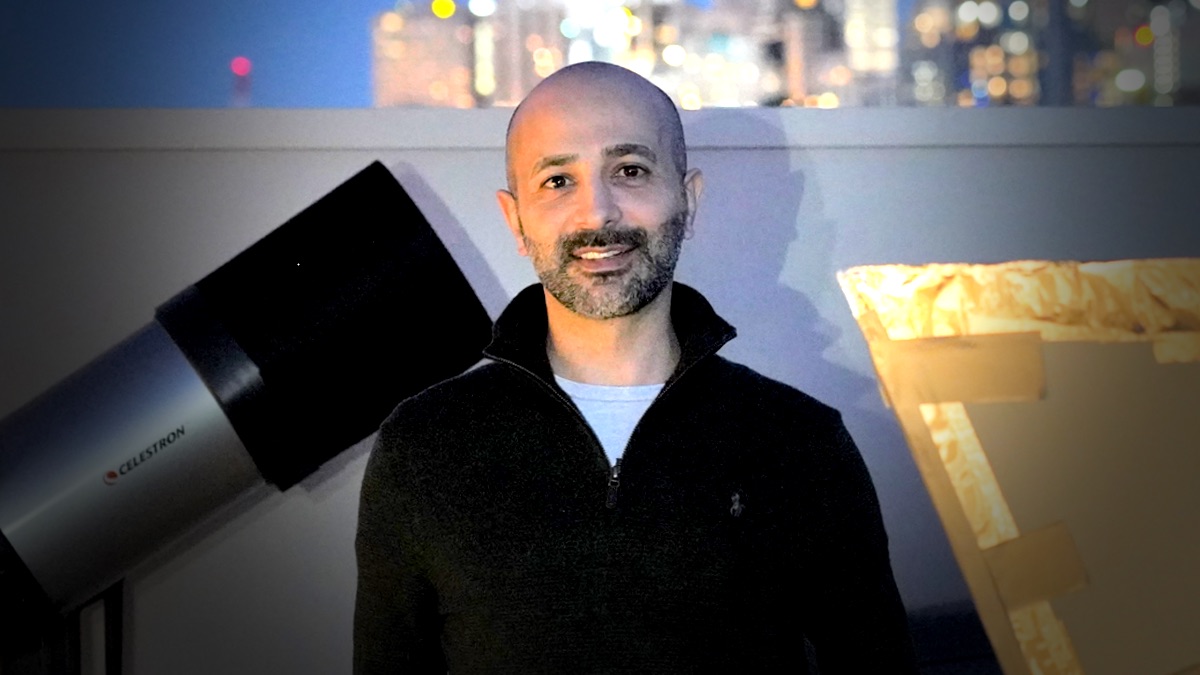
The winter series of The 9pm Edict continues with astrophysicist Rami Mandow, founder of SpaceAustralia.com. There’s a new telescope to talk about, and much more.
Continue reading “The 9pm Space Telescope Titillation with Pulsar Boy Rami Mandow”
Word-whore. I write 'em. I talk 'em. Information, politics, media, and the cybers. I drink. I use bad words. All publication is a political act. All communication is propaganda. All art is pornography. All business is personal. All hail Eris! Vive les poissons rouges sauvages!
The winter series of The 9pm Edict continues with astrophysicist Rami Mandow, founder of SpaceAustralia.com. There’s a new telescope to talk about, and much more.
Continue reading “The 9pm Space Telescope Titillation with Pulsar Boy Rami Mandow”
Australia’s Attorney-General invents a whole new category of legal practice. A man who did not bomb Bangkok explains who to blame for everything that went wrong. And don’t worry, we’ve been officially reassured by NASA.
In this podcast, there’s talk of crime, terrorism, heroism, bestiality, emoji, necrophilia, and more.
Continue reading “The 9pm Your Asteroid is Useless”
NASA sends a boy band to Pluto. Prime Minister Crusader Rabbit makes sense of the Middle East, more or less. And we hear some presciently ironic words from Singapore.
In this podcast, there’s talk of Singapore, censorship, wine, and taxes. Amongst other things.
Continue reading “The 9pm I Can’t Believe It’s Not a Planet”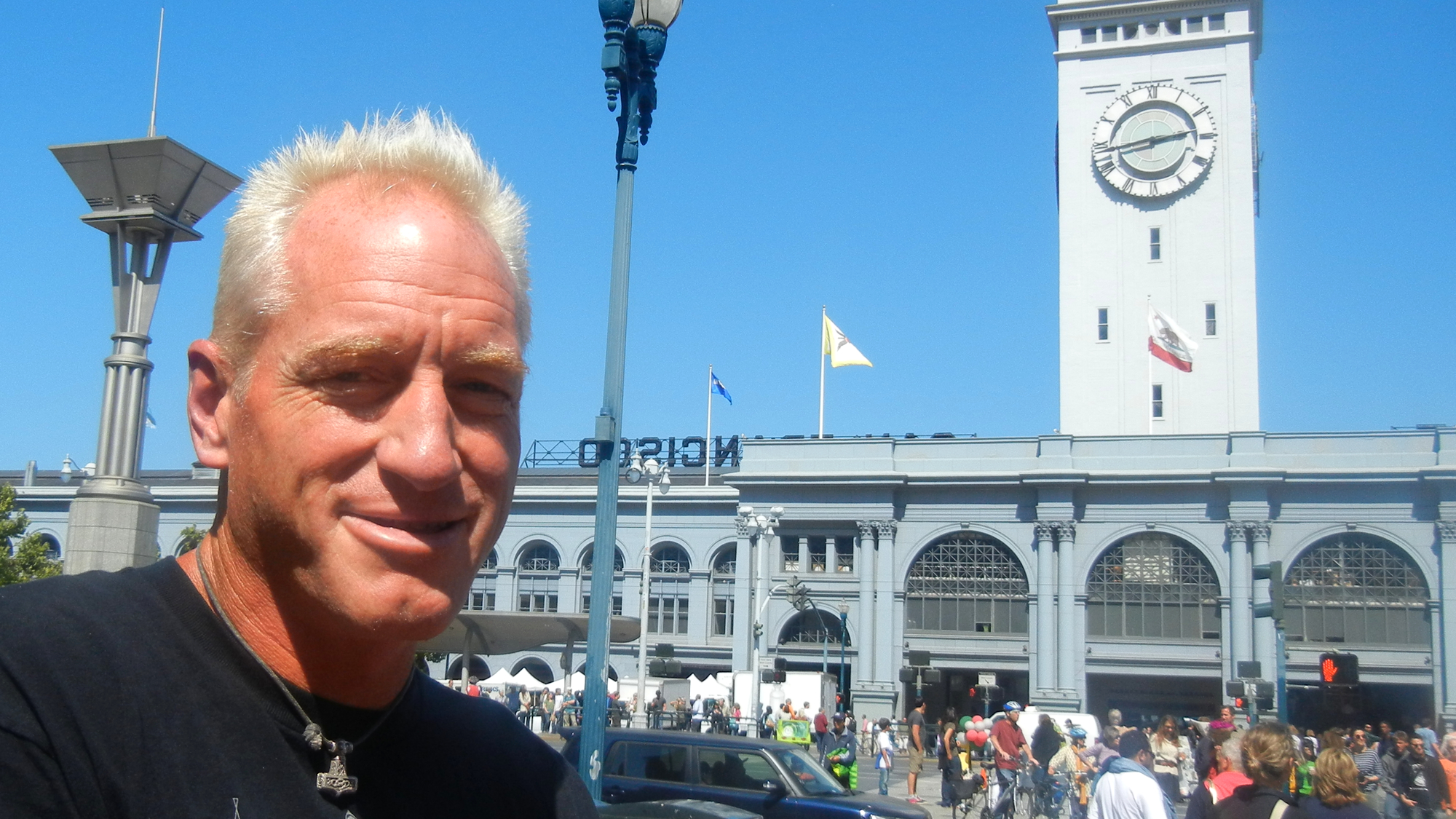
Is Android the reason we can’t have nice things any more? Astronaut Neil Armstrong: what a liar! And buttcrack, can you ever have too much?
In this episode we talk to a man somehow connected to Weird Coast T-Shirts (pictured above), and we hear about an orphan bear in Idaho.
Continue reading “The 9pm Bus Ride” While the superpowers were busy spending billions on a Space Race that would ultimately lead to a series of blurry television pictures, there was another, far more real, Space Age unfolding. In my head.
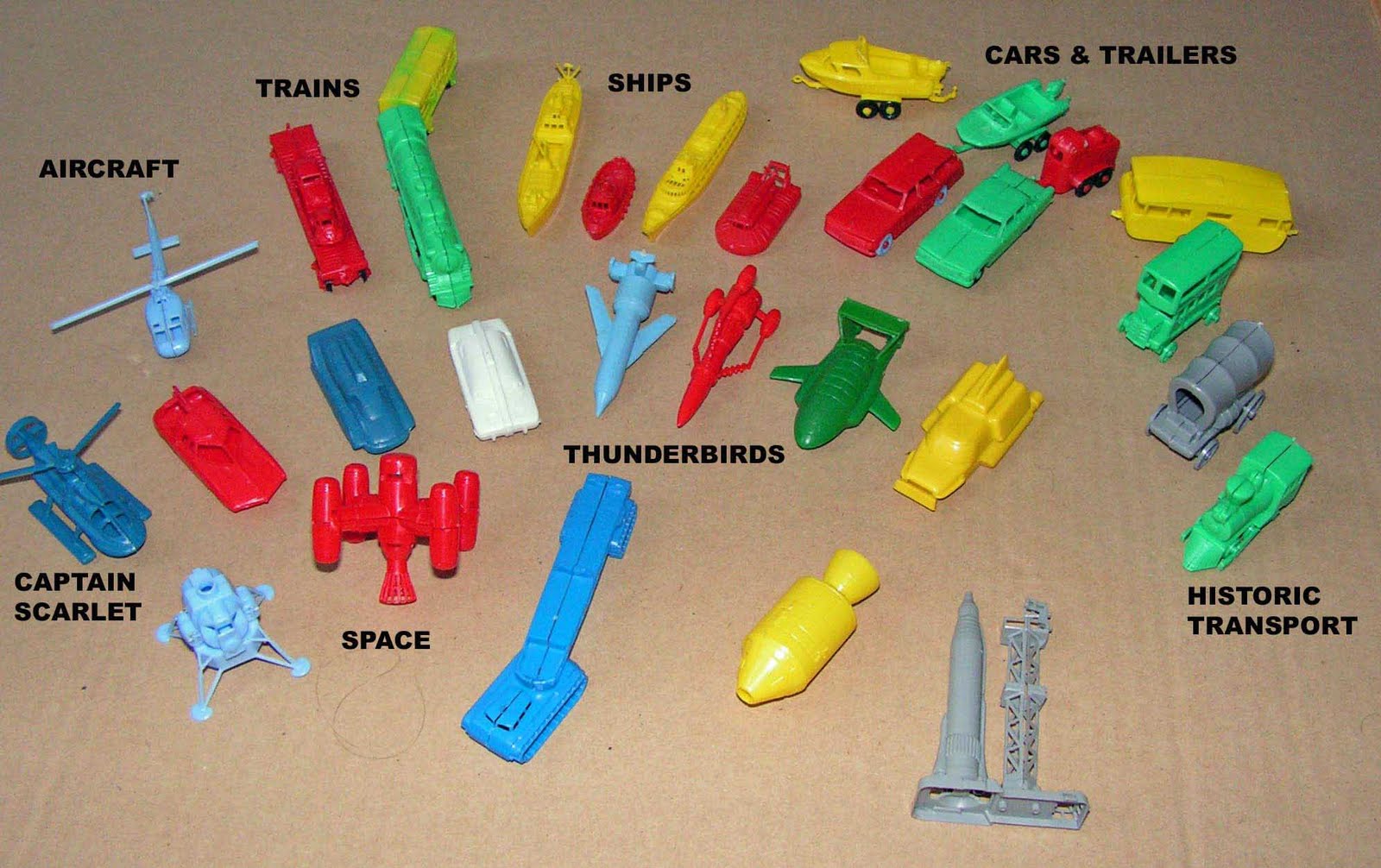
As B Smith said, in the 1960s there were snap-together rockets in Kellogg’s breakfast cereal boxes, including reasonably detailed models of the actual Apollo spacecraft, some of the more speculative NASA designs — even, as this close-up photo shows, vehicles from Thunderbirds and Captain Scarlet and the Mysterons.
The real imagined future of US and Soviet space exploration blurred with the imaginary imagined future of Gerry Anderson to create, in my mind at least, a gloriously unfolding set of possibilities.
My favourite breakfast cereal toy of all was the Kellogg’s Molab, pictured above — although I’m pretty sure mine was blue. Apparently it’s loosely based on NASA concepts for a manned MObile LABoratory for cruising the Lunar surface, much like this book cover illustration. General Motors even built a mock-up. However once the Moon Landings had happened, the follow-up programmes to Apollo were killed off.
I kept losing my Molab’s wheels. Probably because I didn’t glue in the axle pins. But that didn’t matter. I re-imagined it as a spacecraft. The wheel mounts became fold-down exit ramps for rapid troop deployment.
But my favourite space-related TV series from that era was Fireball XL5. May I recommend the opening and closing titles? Or perhaps this version by Bob Downe.
[Photo: Kellogg’s Molab cereal packet premium image thanks to Wotan of the Moonbase Central blog. If you grew up during the Space Age, you’ll lose yourself there for hours.]
[This post is part of the series 50 to 50, started last year to mark my 50th birthday. One post per year, y’see. The series ground to a halt due to a combination of work and personal pressures, as well as finding that such intense reminiscences of my own past were emotionally draining. The series has now been resumed.]
The 1960s were the Space Age. And since I was a bright male child of that decade, my thoughts were dominated by the events, images and themes of space exploration.
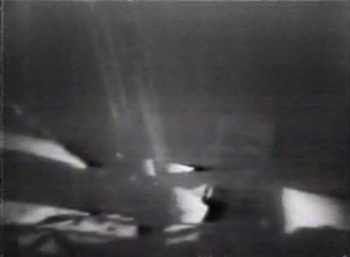
It doesn’t look much now, but this photo was the very pinnacle of all that. Or perhaps the apogee. Neil Armstrong stepping onto the surface of the Moon. One small step etc, taken from the original TV footage.
I was mesmerised — even though half the time my nine-year-old self couldn’t figure out what was going on. I’d been following the story as it unfolded in the newspapers, reading every word and memorising every diagram. It was front page news every day. But the TV images were just crap.
Of course the reason they were crap was the circuitous journey they took from the Apollo mission’s slow-scan TV cameras. The signal was compressed from arsehole to breakfast time and bounced from the Moon to the Parkes Radiothermal Telescope in rural New South Wales, then somehow to NASA Mission Control in Houston where the audio was mixed in, then back to Australia to the TV stations, and finally out through the normal broadcast chain.
It’s a miracle they arrived at all, as the film The Dish portrayed — along with its historical inaccuracies.
But historians and popular culture tell us that the world stopped to watch these blurry images, and we all remember where we were. And it’s true.