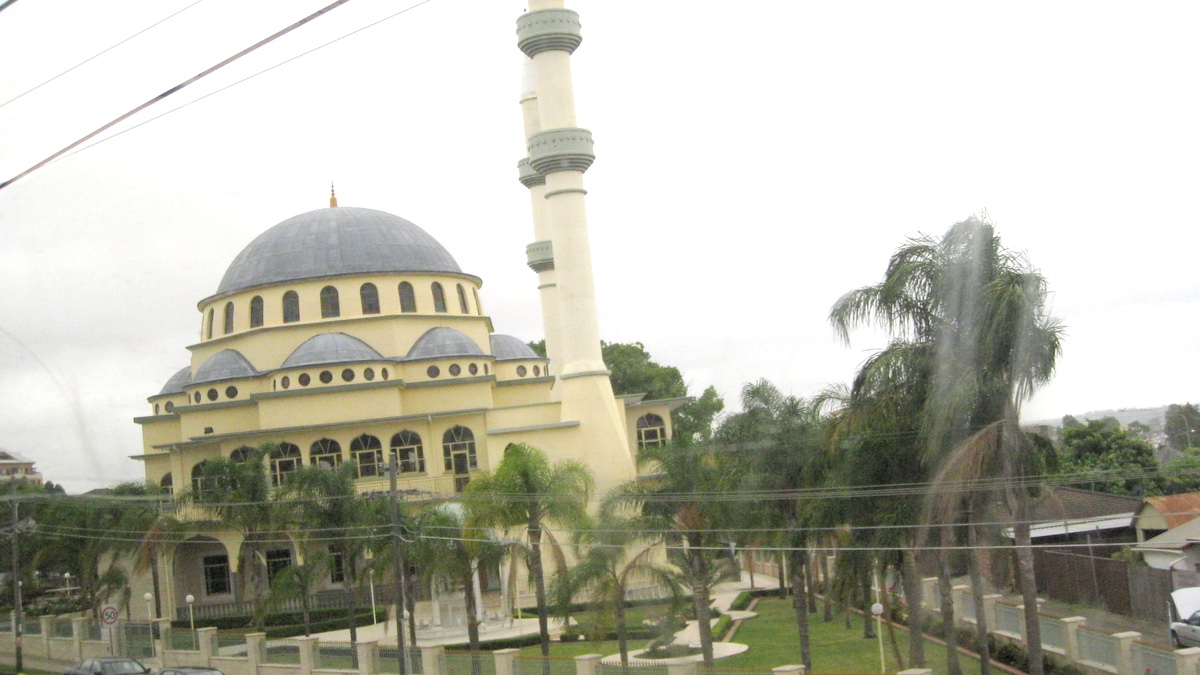
People were surprised by racist abuse on a Melbourne bus this week? They need to get out more. I’ve had two racist encounters on Sydney trains this week alone.
Continue reading “Two casually racist encounters concerning Auburn”
Word-whore. I write 'em. I talk 'em. Information, politics, media, and the cybers. I drink. I use bad words. All publication is a political act. All communication is propaganda. All art is pornography. All business is personal. All hail Eris! Vive les poissons rouges sauvages!
People were surprised by racist abuse on a Melbourne bus this week? They need to get out more. I’ve had two racist encounters on Sydney trains this week alone.
Continue reading “Two casually racist encounters concerning Auburn” “ASIO don’t seem to realise how privileged they are compared to intel orgs in other Western democracies,” tweeted terrorism researcher Andrew Zammit (pictured) yesterday.
Zammit is a researcher at the Global Terrorism Research Centre (Monash University) and Australian Policy Online (Swinburne University), and he was responding to my blog post from yesterday, “Insulted, ASIO? That’s not really the problem, surely?” and the attached podcast.
Here are his subsequent tweets, turned into continuous prose:
CIA for example has ongoing congressional oversight (of actual operations) as opposed to our occasional parl[iamentary] inquiries, people can FOI CIA docs only a few years old (ASIO has 20-30 year exemption) and some of the CIA’s analytical roles are transparent, as in analysts will have CIA business cards whereas even an ASIO kitchen hand’s identity will be kept secret. And CIA isn’t even a domestically-focused agency. So yes, ASIO needs to be less precious about being asked questions.
I agree. From the perspective of the United States I’m a foreign national, yet I’ve spoken with officers from the FBI, NSA and the Secret Service — all of whom had business cards with their full names. The closest I’ve gotten in Australia is chatting briefly with a DSD chap, one of two attending Linux.conf.au in January this year — given names only, and I suspect that those given names were really in scare quotes.
The excuse always given is “operational security”, but I do think the world has changed. The tools and methods are surely not so different from SEKRIT agencies to private-sector security companies and even analysis in non-security realms, given that so much technology is now available off the shelf to all comers.
Surely these days OPSEC is more about protecting sources and the specific operations that are or are not being conducted?
Of course I really don’t know this stuff. I’ve never worked in this field. I’ve never even held a security clearance. I’m just an interested bystander mouthing off. But I am intrigued.

Last month I took part in a fascinating discussion about the impact of social media and related breakthroughs at Consilium [PDF], an invitation-only annual conference put together by the Centre for Independent Studies. Here’s part of what I said.
Continue reading “Consilium: Social media is destroying society? Good!”Back in February I spoke at the “Freedom of Information? panel held in Redfern by Recordkeeping Roundtable. I’ve previously posted the audio of my contribution. Here’s a transcript.
Recordkeeping Roundtable’s website has the raw transcript as supplied, but I’ve decided to edit it up a little to make it more readable. Enjoy.
Continue reading “Transcript: Hacking and irrational actors in Redfern”
[Update 2.25pm: Comments on Twitter have persuaded me to emphasise that the question here is specifically about “personal safety” only, not lame and replaceable possessions, and my personal safety at that. As the second-last paragraph says, the risk profile might not be the same for everyone. These are the choices I’ve made with open eyes.]
 “How do you think that tweeting your day plans affects your personal safety?” asked Ravneel Chand a short time ago. Overall, I reckon it actually increases my safety. Here’s why.
Background first. Here’s today’s “daily plan” tweet which, like those on pretty much every other day, is tweeted shortly before I settle down to work.
Thu plan: Bump out Waratah Cottage; 1032 train to Sydney; lunch (where?); errand Newtown/Enmore; write something; evening TBA.
Later in the morning I mentioned that I’d be catching a later train. And then, just as I left the house:
Mobile: Cab, shortly, to Wentworth Falls; 1132 train to Sydney Central; train to Town Hall station; 1335 walk to SEKRIT hotel and check in.
Clearly the fear being expressed is that by knowing my movements some bad person could more easily do me harm. But let’s do a proper risk assessment. You start one of those by enumerating the risks, and then you look at how this additional information might change those risks.
Continue reading “Why tweeting my movements isn’t a safety risk”
So there was a student who tweeted at me the other night to ask if they could ask me some questions for their marketing and public relations course at some university somewhere and I said yeah sure because I’m like polite and stuff and they emailed me questions and I sent off some answers today and because it took me ages and it was all about the nature of journalism and shit I thought I should share them with you to see what you think.
Here’s what I said, unedited. Well, except for fixing a few obvious mistakes.
Continue reading “Stilgherrian’s advice to a PR student, uhoh”