The Internet is The Enemy

Our defence institutions need a certain amount of healthy paranoia. They have to imagine all the terrible things which might conceivably be done to us, and have plans in place to counter them. But the Pentagon goes too far when it says the Internet is an enemy. Fundamental rights are put at risk.

At GlobalResearch.ca, Brent Jessop says the Pentagon’s Information Operations Roadmap bluntly states that the Internet, with its potential for free speech, is in direct opposition to their goals. The Pentagon reckons the Internet needs to be dealt with as if it were an enemy “weapons system”.

Continue reading “The Internet is The Enemy”

Wednesday, in which I fail to learn about Web 2.0

Well if you were following my Twitter feed just now, you’d know that I abandoned the “Web 2.0” presentation put on for the ACS Web Technology SIG. 15 minutes in, I hadn’t heard anything I didn’t already know, and there was no sign that would change. Disappointed.

It unfolded like this:

  • I arrive just after Mr IBM started. Room of cubicle droids are astounded by a YouTube video of “Does it blend?” Much polite lolz. Apparently you can upload your own videos to YouTube.
  • We’re told there’s a trend away from the desktop. Gosh. Does that explains how I can Twitter from my phone? I notice there’s no pizza left. I don’t want pizza anyway.
  • Mr IBM introduces Runescape as an example of a virtual world, and then shows a static screenshot of IBM’s tennis presence in Second Life from the Australian Open. Why not actually demo SL?
  • Audience member asks what the most popular site is. Mr IBM says it’s hard to say, probably BigPond in Australia and hard to say globally. Audience member asks if he means “the web or Second Life”. SL, he says. Sheesh, if you don’t know for sure, just tell ’em it’s the furrysex dungeon and go for lolz, yeah?
  • I decide there’s no way I can raid the chocolate biscuits without drawing attention to myself, and I’m not learning anything new.
  • Pub.

The guy from IBM would be wrapping up and chatting with the crowd about now. I’ve already gone to the pub, had a beer and a “Thai” chicken salad, and posted this. That’s Web 2.0.

Reminder: ACS Web 2.0 presentation tonight

A reminder: I’m going to the Australian Computer Society’s Web Technology SIG’s presentation on Web 2.0, in Sydney from 1800 tonight. Apparently the redoubtable Laurel Papworth will be there too, so the presenter from IBM ain’t gonna have an easy time.

I’ll be Twittering it at twitter.com/stilgherrian and writing something afterwards. You don’t need a Twitter account to follow what I’ll say. My Twitterings also appear in the sidebar of my website, but only refreshed every 15 minutes or so.

Whoring my Bloggerati vote

Bloggerati is running a straw poll on who should go to the Australia 2020 Summit. Some people have been shameless whoring their vote link. So shall I. Click here to vote for me, using the “Vote” button when you get there. It isn’t part of any official process, but it might help someone summarise something, somehow.

Enlightenment is about Conversation

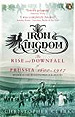
Cover of Iron Kingdom by Christopher Clark

“Dare to Know!” is the title of chapter 8 of Iron Kingdom: The Rise and Downfall of Prussia 1600-1947. And the opening words will bring a wriggle of delight to social media evangelists everywhere. (Hi, Laurel!)

The Prussian enlightenment [of the 18th century] was about conversation. It was about a critical, respectful, open-ended dialogue between free and autonomous subjects. Conversation was important because it permitted the sharpening and refinement of judgement. In a famous essay on the nature of enlightenment, the Königsberg philosopher Immanuel Kant declared that:

Enlightenment refers to man’s departure from his self-imposed tutelage. Tutelage means the inability to make use of one’s own reason without the guidance of another. This tutelage is self-imposed if its cause lies not in an intellectual insufficiency, but in a lack of will and courage… Dare to know! [Semper aude!] Have the courage to use your own reason! This is the motto of the Enlightenment!

[…] In the percolation through society of this spirit of critical, confident independence, conversation played an indispensable role. It flourished in the clubs and societies that proliferated in the Prussian lands…

The conversation… also took place in print. One of the distinctive features of the periodical literature of this era was its discursive, dialogical character. Many of the articles printed in the Berlin Monthly (Berlinische Monatsschrift), for example, were in fact letters to the editor from members of the public… The Berlin Monthly was thus above all a forum in print that… was not conceived as fodder for an essentially passive constituency of cultural consumers. It aimed to provide the public with the means of reflecting upon itself and its foremost preoccupations.

In other words, the strength and integrity of the Prussian state came not from the King or the bureaucrats telling everyone how things worked, but from people engaging in an on-going conversation about their own society.

In the age of “emerging social media”, this sounds very familiar…