Crikey: China isn’t our biggest hacker threat

Crikey logo

Despite all the news about Google being, it is alleged, hacked by attackers in China, from an Australian perspective China probably isn’t our main problem.

I made this point in Crikey‘s lead story yesterday, quoting a security consultant at a leading outsourcing firm.

Australian attacks targeting the private sector have come from other so-called ‘friendly countries’. Which country is a problem closely correlates with business competition in the particular sector…

You could pick any one of our major trading partners and I could tell you a story about a sophisticated and well-executed attack sourced from that country. Examples at the top of my mind include Japan, Canada, US, India and France.

The story is free to read. Do click through.

Patch Monday: Contactless EFTPOS and Google privacy

ZDNet Australia logo: click for Patch Monday episode 26

Privacy issues on the Patch Monday podcast this week.

Contactless EFTPOS and credit cards that allow you to make payments without a signature or entering a PIN, and the vast honey pot of personal data that is Google. It’s not just Gmail, but everything else.

My guest is the Chair of the Australian Privacy Foundation, Professor Roger Clarke.

You can listen below. But it’s probably better for my stats if you listen at ZDNet Australia or subscribe to the RSS feed or subscribe in iTunes.

Please, let me know what you think. We now accept audio comments too. Either Skype to “stilgherrian” or phone Sydney 02 8011 3733.

Time to dump 20th Century “leadership”?

British Airways Corcorde G-BOAC at Manchester Aviation Park. Photo by Ian Britton, © FreeFoto.com.

Do we really think we can just bolt some sort of “government 2.0 module” onto steam-era bureaucracies and magically bring them into the 21st Century?

Sure, our governments served us fairly well in the 20th Century, at least in the West. They beat the bad guys in WWII, brought us through the scary Cold War and delivered health and prosperity our grandparents would have found unimaginable.

Not to mention Windows ME.

But times are changing. We’re starting to notice that things don’t work as well as they used to. We’re spending taxpayers’ money bailing out economies only to have bankers suck out more bonuses anyway. Conferences intended to agree on Climate Change action produce… well… nothing concrete. Sydney’s suburban railway network is slower than in the 1920s!

Having invested so much time and money on these institutions, though, we’re reluctant to let them go.

This is the sunk cost fallacy.

Concorde is the classic example. Long after it must have been clear to the French and British governments that no-one was going to buy this aircraft, they continued investing in it simply because they’d already spent so much and didn’t want to lose those “sunk costs”. Yet those costs were gone, no matter what. To continue spending was irrational.

The same happened in the Vietnam War, where US President Lyndon Johnson kept committing thousands of troops after he’d realised the cause was hopeless and America could not win.

Afghanistan, anyone?

I’ve written before, in Risk, Fear and Paranoia: Perspective, People!, that change is being held back by, well, fear and paranoia. But this morning I stumbled across Umair Haque’s The Builders’ Manifesto. He’s got it in one.

20th century leadership is what’s stopping 21st century prosperity.

Continue reading “Time to dump 20th Century “leadership”?”

Al Jazeera: Email is “old fashioned”

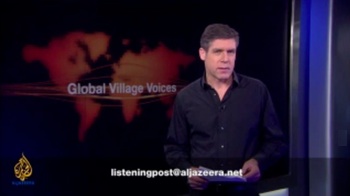
I continue to get blown away by the quality of material coming from Middle Eastern media network Al Jazeera.

I’ve just watched the latest Listening Post podcast and have learned more about Yemen in a few minutes than from a lifetime of watching, reading and listening to Australian media.

And fascinatingly, this is how Listening Post presenter Richard Gizbert explained how you can take part in the program.

We are now closing in on four thousand viewers following us on Facebook and Twitter. They check in to find out what stories we’re working on and in case they want to weigh in as one of our Global Village Voices. If you’d like to do the same, just go to either of those sites and search us out. Or you can get in touch with us the old-fashioned way on email. We’re at listeningpost@aljazeera.net.

Yes, that’s right. Email is now “old-fashioned”. Love your work, guys.

Patch Monday: Intel’s new 32nm 2010 Core chips

ZDNet Australia logo: click for Patch Monday episode 25

Amongst the goodies at the huge Consumer Electronics Show in Las Vegas last week, Intel announced new processor chips that scale down to 32 nanometres — and that’s the topic for this week’s Patch Monday.

The chips are faster and use less power, sure. But what else does it mean? My guest is Benno Rice, a freelance systems architect based in Melbourne who’s particularly interested in embedded systems — so he knows about processor chips.

You can listen below. But it’s probably better for my stats if you listen at ZDNet Australia or subscribe to the RSS feed or subscribe in iTunes.

Please, let me know what you think. Feedback very, very welcome. And do let me know if there’s any topics I should cover, or guests we should interview.

Patch Monday: Smart Grids a critical infrastructure risk?

ZDNet Australia logo: click for Patch Monday episode 24

In the first Patch Monday for 2010, a look at the potential security risks of Smart Grids.

In theory, Smart Meters that monitor your energy usage and Smart Grids that manage your electricity consumption should save money and reduce carbon emissions. But do we really want to have cheap wireless-enabled devices connected to our home networks and the electricity grid?

A good mate of mine, security consultant Crispin Harris, is a tad concerned and, as he explains in this week’s feature interview, he’s not alone.

You can listen below. But it’s probably better for my stats if you listen at ZDNet Australia or subscribe to the RSS feed or subscribe in iTunes.

Please, let me know what you think. Feedback very, very welcome. And do let me know if there’s any topics I should cover, or guests we should interview.