Talking Instagram on ABC 666 Canberra

ABC logoBy the time I got to doing my third radio spot about the Instagram saga, the issues were clear in my mind and I had a few well-rehearsed sound bites. So my final spot on ABC 666 Canberra was smooth.

I don’t think I need to provide any more background. My conversation with Louise Maher stands for itself, I think. We didn’t speak for as long as we’d originally intended, but they also had to update their listeners on the progress of some bushfires and that does have priority.

This audio is ©2012 Australian Broadcasting Corporation, and is an unedited copy of what went to air, though the ABC has not posted it online as far as I know.

At some point in the next few days I’ll post further thoughts about this Instagram incident. Stay tuned.

Talking Instagram on ABC Radio’s “PM”

ABC logoWith ABC Radio National Breakfast out of the way, I settled down to write my Crikey story about the Instagram saga.

By that stage my understanding of the story had evolved.

I was becoming increasingly cranky with so many people, including many who should know better, pushing the “Instagram wants to sell your photos” line. Failing to distinguish between selling a license to use a photo in various ways and selling the ownership of the photo itself was a massive failure. The difference is as clear at that between selling a house and renting it out to a tenant.

There was also a clarification from Instagram, making it clear that they weren’t seeking such ownership, admitting that they really hadn’t figured out precisely what it was they wanted to do with users’ photos, and agreeing that the language was open to misinterpretation.

I incorporated this into my Crikey piece, which was given the headline: Users snap over Instagram, but should have seen it coming.

In hindsight, and had I know this was to be the headline, I wouldn’t have been so blunt in my final paragraph.

The core lesson here is that services like Instagram aren’t free. You pay for them by licensing the operator to use your content and other data in various ways. If you don’t like that, well, pay for your goddam internet hosting yourself.

All I meant by this was that internet hosting is pretty cheap these days, and there’s plenty of low-cost providers to choose from. It’s not as if Instagram is a public service that owes you anything.

In any event, I filed the Crikey story before midday as usual. It seemed to me that Instagram was responding appropriately, and I’d always thought they were at the responsible end of social networking. My thoughts were now moving to the future. Would Instagram be able to prove they were worth their billion-dollar price tag? How would they behave if they didn’t start generating revenue?

But on the way to a lunch in the Sydney CBD, I ended up discussing the issue with a journalist for ABC TV’s 7.30 and a producer with ABC 666 Canberra. It was becoming clear to me that for most people in the media this was a brand new issue. Further media spots were being organised.

The next to be recorded, though not the next to go to air, was with ABC Radio’s national current affairs program PM. What pleases me about this piece, I think, is that the “tape ID” — the bit at the front of a recording where you identify who you are so there’s no confusion later — was included as part of the story. Because I used the word “arsehattery”.

This audio is ©2012 Australian Broadcasting Corporation, and is an unedited copy of the original audio posted on their website. There’s a transcript over there too, where they spell arsehattery “ass-hattery”. The journalist was Will Ockenden.

Talking Click Frenzy on ABC 702 Sydney

I hadn’t even heard of Click Frenzy until the thing fell over, which shows how much attention I pay to the realm of commercial retail. But I ended up talking about it on ABC 702 Sydney the other day, because, well, it fell over.

I’ve posted the entire radio segment here, including the comments by Margie Osmond, chief executive of the Australian Retailers Association, because I was baffled by her excuse that technical incompetence is OK because other people are sometimes incompetent too.

I think the important thing to understand with this is that it’s been running for about five, six years in overseas countries. It runs in the US and UK and a whole range of other places under the Cyber Monday banner. And for all of that period that it has been operating overseas, as recently as last year, they routinely have crashes as part of this mechanism, simply because of the unpredictable peaks and troughs that occur as part of the mechanisms.

Traffic analysis is a thing, folks, and so is robust network design. Just because you can’t do it, doesn’t mean it can’t be done.

I was fairly even-handed in my commentary, pointing out that it’s possible for the developers to have recommended a more robust architecture that then wasn’t implemented because of cost or whatever. But later in the day I discovered more about the technical problems and I’d have gone in harder.

In particular, I discovered that they’d committed a rather bad security mistake, which I wrote about for ZDNet: Password exposed in Click Frenzy security slip.

The morning presenter at ABC 702 Sydney is Linda Mottram.

The audio is ©2012 Australian Broadcasting Corporation.

Talking censorship and more on ABC Download This Show

This week saw my third appearance on Marc Fennell’s program Download This Show on ABC Radio National. Great fun.

Cleaning up the web: Nearly three years since announcing the proposed mandatory internet filtering system Cleenfeed, Communications Minister Stephen Conroy’s scheme is dead. But what have they replaced it with and were we better off with Conroy’s old system? Meanwhile, we peek into the secret UN meeting that could radically change the way the net is governed, and take time out to ask whether games can truly change our minds and society.

The internet “filtering” stuff of course relates to the Interpol blacklist that I’ve written about for Crikey once or twice, and which was also the subject of this week’s Patch Monday podcast.

My fellow guest was digital arts evangelist Fee Plumley. The audio below is linked directly from the ABC’s website.

The audio is ©2012 Australian Broadcasting Corporation.

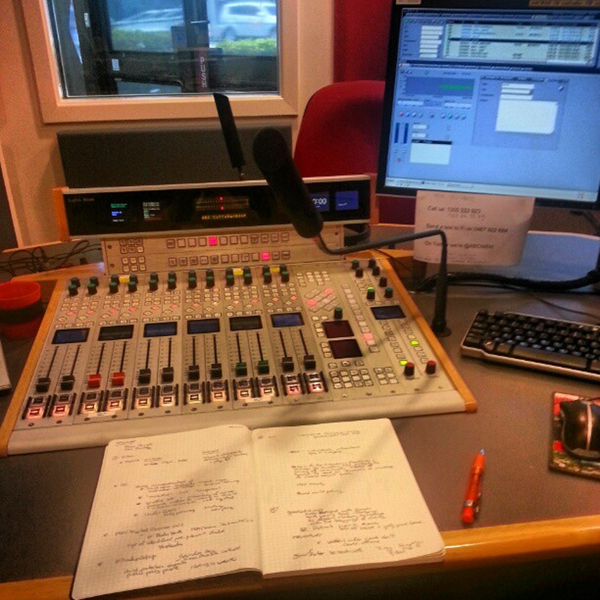
[Photo: Waiting in ABC Studio 291, Coffs Harbour, the location from which I joined the program.]

Talking data mining on ABC Gippsland

Every now and then I end up doing an explainer that starts at the very beginning — like this radio spot about data mining for ABC Gippsland this morning.

Breakfast presenter Gerard Callinan has posted the audio under the title Mapping key strokes. Who’s watching?

For many of us, the idea of going a day without using the internet either at work or at home is almost unimaginable. Have you ever thought what happens to the information that you leave behind when visiting your favourite websites? Every page you visit, every survey you take, every ad you click on builds up a profile which is used by marketing companies and increasingly, political parties to build up a picture about what sort of things you are interested in and how you might be swayed to buy items or even vote in an election.

Here’s a slightly different version of the audio here, with the volume re-normalised — which just means it’s now supposedly at the optimal volume.

I think Mr Callinan got slightly paranoid after he’d read a certain op-ed I wrote earlier this year.

I’m not so sure how well I explained things. This was a live-to-air piece at 0720 AEDT after I’d had just three and a half hours of sleep and a few hours dealing with, um, a very aggressive intestinal problem. So I wasn’t as focused as I’d like to have been.

If I had my time again, I’d have made sure to explain how the advertising embedded in web pages, or the Facebook “Like” buttons, allow those organisations to track you across multiple sites. And I’d have made sure to have a link I could give out for some concise “How to protect your privacy online” guides.

The audio is of course ©2012 Australian Broadcasting Corporation, but as usual I’m posting it here as an archive.

Talking Google’s defamation loss on Balls Radio

Milorad “Michael” Trkulja’s defamation case against Google was also the topic for my regular spot on Phil Dobbie’s Balls Radio this week.

Here’s the audio of my segment — Skype drop-outs and all — in which we go well beyond defamation law and Google’s reliance on the defence of “innocent defamation” and the argument put in my Crikey piece about needing a third category of “speech”, to talk about a lack of vowels and discovering that the missing $50 was actually spent on vodka.

There’s also references to Mark Pesce, Senator Stephen Conroy and Naomi Robson, as well as our impromptu plan to replace the justice system with a TV program that’s a cross between The X Factor and Judge Judy.

If you’d like more Balls Radio, have a listen to the full episode. You can subscribe over at the website.