efa

You are currently browsing articles tagged efa.

Here’s the complete audio recording of last weekend’s panel discussion iSpy at the Sydney Writer’s Festival with Tommy Tudehope, me and moderator Marc Fennell.

Even before Google controversially demolished the privacy walls between its various products, we were already living in the total surveillance society. With every keystroke we are voluntarily telling companies, governments and heaven knows who else an awful lot about ourselves. Should we be worried about the uses to which this information could be put?

The panel was originally inspired by my Sydney Morning Herald op-ed You are what you surf, buy or tweet, and I thought we’d also talk about some of the issues I raised in my more recent ZDNet Australia story The Facebook experiment.

But we covered a lot more, including research by Sophos that showed around 50% of people would automatically befriend anyone on Facebook, the progress of the Cybercrime Legislation Amendment Bill and the Council of Europe Convention on Cybercrime, the fact that The Greens’ Senator Scott Ludlam seems to be the only Australian politician paying attention to this stuff, using TOR to help make your web browsing anonymous, the surveillance policy split between the NSA and FBI, anonymous currencies like Bitcoin and Canada’s MintChip, Electronic Frontiers Australia, the Pirate Party Australia, Georgie Guy’s blog, and data mining company Acxiom — which in the recording you’ll hear me misspell as “Axxiom”.

Play

The recording was made using my Zoom H4n sitting mid-way between me and Mr Tudehope, so Mr Fennell is off in the distance somewhat. But at least we have a recording.

If there are any issues you’d like to follow up, well, please post a comment.

A weekly summary of what I’ve been doing elsewhere on the internets. Despite succumbing to a random fever for two or three days, I got quite a bit of writing done — and then forgot to post this until Monday. Sigh.

Podcasts

  • Patch Monday episode 79, “Cybercrime convention: civil liberties risk?”. Australia intends to sign on to the Council of Europe Convention on Cybercrime. My guests? Cybercrime specialist Nigel Phair from the Surete Group, who’s previously been with the Australian High Tech Crime Centre. His second book has just been published, Cybercrime: The Challenge for the Legal Profession. And Electronic Frontiers Australia chair Colin Jacobs.

Articles

Media Appearances

Corporate Largesse

None.

Elsewhere

Most of my day-to-day observations are on my high-volume Twitter stream, and random photos and other observations turn up on my Posterous stream. The photos also appear on Flickr, where I eventually add geolocation data and tags.

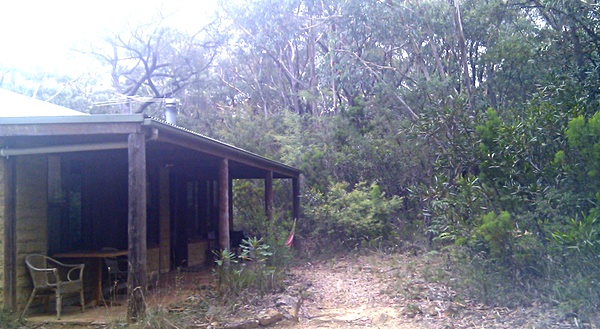
[Photo: Tea Tree Cottage, one of the Bunjaree Cottages at Wentworth Falls, where I've been living. I'll write more about this experience very soon.]

“The only difference between a Nation State and a Mafioso protection racket is the letterhead and the rituals — and the series of concessions, hard-won over eight centuries, that we call ‘civil liberties’.”

That’s the start of my guest post today for Electronic Frontiers Australia, entitled Without civil liberties, government is just a criminal racket.

It’s an essay that combines some thoughts about the constant battle for civil liberties with my reaction to the video posted by Wikileaks at Collateral Murder. It’s footage from 2007 showing a Reuters photojournalist and his driver and others being killed by US helicopter gunfire in Baghdad. It’s footage the US Department of Defence didn’t want you to see. It’s challenging to watch.

This is one of a series of guest posts for the EFA as part of their current fundraising campaign.

ZDNet Australia logo: click for Patch Monday episode 30

A scoop in the Patch Monday podcast this week: an interview with c0ld blood, one of the organisers of the denial-of-service attack on the Parliament House website by Anonymous.

While Anonymous is better known for its masked protests against the Church of Scientology, some people operating under the Anonymous brand have branched out into protests against the Rudd government’s mandatory internet “filtering” program. Their attack in September 2009 brought down the Prime Minister’s website for about 10 minutes.

This time they were a lot more effective, with the target site being with with up to 7.5 million requests per second.

As well as c0ld blood, we hear from security consultant Crispin Harris, the vice-chair of Electronic Frontiers Australia Colin Jacobs, and a statement from AnonSA who distance themselves from the attacks.

You can listen below. But it’s probably better for my stats if you listen at ZDNet Australia or subscribe to the RSS feed or subscribe in iTunes.

Please, let me know what you think. We now accept audio comments too. Either Skype to “stilgherrian” or phone Sydney 02 8011 3733.

Breaking Down the Barriers logo: click for website

On Sunday, I’ll be at the Breaking Down the Barriers conference at the Sydney University law School, talking Internet content regulation — that is, censorship.

I’m on a forum panel (scroll down to “Forum 5″) with Geordie Guy from Electronic Frontiers Australia; James McDougall, Director, National Children’s and Youth Law Centre; network engineer Mark Newton; and moderator David Vaile, Executive Director of the Cyberspace Law and Policy Centre at UNSW.

I’ve been asked to talk about:

The debate surrounding the government’s filtering proposal, with an overview of how the issue is played out in the media; the different tactics used by proponents and opponents of the proposal; how the issue has been framed and how moral panic has been used in the debate; how evidence is used by proponents and opponents of the filtering proposal and in particular how the Government uses evidence to support its “evidence-based policy”; the potential impact of the proposal if any on free speech and different interpretations of actions that have been taken.

Whew!

I’ll record my presentation, perhaps with video if it can be organised, so stay tuned.

[Update 4.35pm: I suppose I should mention that the forum is scheduled for 2.15pm Sunday.]

Photograph of fibre optics

My friends over at newmatilda.com have been running a series of public forums on Internet regulation. The Sydney forum is this coming Tuesday 5 May. I’ll be liveblogging it right here.

As newmatilda.com explains:

The Federal Government’s proposal to block websites with a mandatory filter or “clean feed” has drawn vocal opposition from the online community, who are concerned about its impact on civil liberties as well as on the technical functionality of the internet. Meanwhile, many people are unaware of the proposal and its potential impact on their day to day lives.

Speakers are Fiona Patten from The Australian Sex Party, Geordie Guy from Electronic Frontiers Australia and Kerry Graham from Inspire Foundation. It’s chaired by David Vaile, head of UNSW’s Cyberspace Law and Policy Centre.

As a preview, you might like to read about last week’s forum in Melbourne or watch the video, or listen to the Brisbane one.

Bookmark this page, ‘cos the liveblog will start here at around 6pm Sydney time on 5 May. [Update 6 May 2008, 3pm: The session is complete, and I've fixed the spelling and added a few links.]

Read the rest of this entry »

Stilgherrian’s links for 19 March 2009 through 29 March 2009, posted not-quite-automatically in a great lump for your weekend reading pleasure:

I really must think of a better way of doing this…

Crikey logo

[This article was first published in Crikey on Monday 2 March. Nothing's changed since then.]

The villain gets thrown off the cliff. He bounces off the rocks into the river and his limp, bleeding form is flushed downstream. Hurrah! But just as our heroes down their first celebratory drinks, the door bursts open and the villain is back — soaking wet and angrier than ever…

“The Government’s plan to introduce mandatory internet censorship has effectively been scuttled,” wrote Asher Moses last Thursday when independent Senator Nick Xenophon withdrew support for the Rudd government’s internet “filtering” plans. Opponents of Senator Conroy’s scheme popped open the virtual champagne and started sending congratulatory messages to anti-censorship lobbyists.

But as blogger Kieran Salsone’s headline put it, “Twitterati blow load over Xenophon: Lobbyists still without cigarette”. Despite Senator Xenophon’s announcement, nothing has actually changed and Senator Conroy has yet to comment.

True, any legislation would need support in the Senate from the Coalition or all seven minor party and independent senators. With the Coalition expressing grave reservations and calling the proposal insulting, and with the Greens and now Xenophon opposed too, any legislation would be blocked.

Blocked, that is, unless someone changes their mind.

Read the rest of this entry »

Stilgherrian’s links for 25 February 2009 through 02 March 2009, gathered with gin and joy.

  • Information Commissioner Richard Thomas warns of surveillance culture | Times Online: Laws that allow officials to monitor the behaviour of millions of Britons risk “hardwiring surveillance” into the British way of life, the country’s privacy watchdog has warned.
  • Porn in the USA: Conservatives are biggest consumers | New Scientist: “Some of the people who are most outraged turn out to be consumers of the very things they claimed to be outraged by,” says researcher Benjamin Edelman.
  • Chatham House Rule | Wikipedia: A rule for running a meeting where people can speak freely but their confidentiality is respected. The rule itself is: “When a meeting, or part thereof, is held under the Chatham House Rule, participants are free to use the information received, but neither the identity nor the affiliation of the speaker(s), nor that of any other participant, may be revealed.” The Wikipedia article gives the background.
  • Australian Internet Filtering Debate at Kickstart 2009 | Midnight Update: A video of the Internet Filtering debate at Kickstart 09 from the weekend, including Bernadette McMenamin from Child Wise, Anthony Pillion from Webshield, Geordie Guy from EFA, and Mark Newton. I’ll write more upon this later, maybe.
  • Internet Study 2007 | ipoque: A report on the impact of peer-to-peer (P2P) file sharing, Voice over IP, Skype, Joost, instant messaging, media streaming such as YouTube, from a traffic point of view.

Here are the web links I’ve found for 29 January 2009, posted automatically with some manual editing and lubricants.

  • Media 09: I’ll be going to this and liveblogging on 13 February. “Media 09 is a one-day international gathering of the world’s leading digital media executives and entrepreneurs, showcasing global best practice in digital media innovations. Media 09 is designed to assist you shape successful digital media content offerings, business models, and advertising appeal to make the best weather of these turbulent times.”
  • Labor’s Plan for Cyber-Safety | Australian Labor Party: This is the actual text of the ALP’s policy, as it was stated for the 2007 federal election. Note on page 5 that the policy talks about it being mandatory to “offer” a “clean feed”, not make it compulsory.
  • 2007 policy documents | Australian Labor Party: The complete official ALP policy documents for the 2007 federal election are listed under “downloads” on this page.
  • Modern Security Thinkers | Kotare: A list of current thinkers in the realm of strategy and security. Much to explore.
  • SYN: Student Youth Network: Launched in January 2003, SYN is proudly Melbourne’s only independent youth media organisation. SYN broadcasts on 90.7 FM, and has 5 hours per week on Channel 31 community TV. Plus there’s a regular email newsletter and this website. I shall explore further!
  • Netspace’s Government ISP Filtering Survey Results: When asked “Do you agree with the Federal Government’s policy to make ISP level filtering mandatory for all Australians?”, 79% of respondents said they disagreed or strongly disagreed. There were 9700+ respondents, roughly 10% of Netspace’s customer base.
  • Time Line of Mandatory ISP Filtering Proposals 2003-2006 | Electronic Frontiers Australia: An invaluable chronology of the current push for mandatory Internet filtering in Australia. It all really does seem to have started with Clive Hamilton.
  • How the Press, the Pentagon, and Even Human Rights Groups Sold Us an Army Field Manual that (Still) Sanctions Torture | AlterNet: Yes, the new edition of the US Army’s field manual still permits the torture of “unlawful enemy combatants”, that strange new category of people invented by the US to circumvent the provisions of the Geneva Conventions.

« Older entries