Talking Myspace on ABC 774 Melbourne

In 2005 Rupert Murdoch bought MySpace, as the orthography went, for USD 580 million. Yesterday he sold the operation, now branded Myspace or even just My_____, depending where you look, for a mere USD 35 million. Not exactly a profit.

The buyer was Specific Media, an advertising targeting company. One of the investors is musician and actor Justin Timberlake, although the size of his stake has not been revealed.

There’s now plenty of speculation about whether Myspace will build on its recent music focus, and how it’ll shape up against the monster that is Facebook and the new contender, Google+.

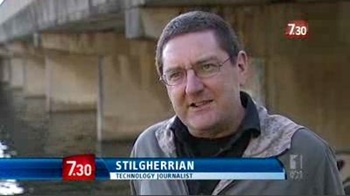
Yesterday I chatted about all this stuff with Lindy Burns on ABC 774 Melbourne. This time she got my name right.

The audio is ©2011 Australian Broadcasting Corporation, but it hasn’t been posted on their website so here it is. In return, I reckon you might choose to listen to Lindy Burns’ drive program next week.

CSO: Voluntary filtering removes the controversy

My first op-ed for CSO, “The Resource for Data Security Executives”, has just been posted. It’s voluntary ISP-level internet filtering, but a different angle from my Crikey piece earlier today.

After nearly four chaotic years, Australia’s internet filtering scheme is finally coming together in a way that makes sense technically and politically, if not necessarily for effective child protection.

The chaos wasn’t all communications minister Senator Stephen Conroy’s fault. The “clean feed” was announced as Labor policy back in March 2006 by then-leader Kim Beazley. ISPs would filter out the nasties hosted overseas, where they couldn’t be hit with a takedown notice from the Australian Communications and Media Authority (ACMA).

But Conroy’s name was on Labor’s Plan for Cyber-safety published just five days out from the federal election in late 2007, and once in government it was Conroy’s job to explain that plan and sell it to voters. Everyone presumably imagined it’d be a protect-the-kiddies no-brainer.

Problem was, neither the plan not Conroy’s explanations were clear…

As I say, it’s my first outing for CSO, but if all goes according to plan there’ll be more. And in case you’re wondering, CSO is a job title. Chief Security Officer.

Crikey: Internet filtering isnt compulsory, but…

Over at Crikey I’ve written a summary of what’s happening with Australia’s internet filter.

Australia’s mandatory internet filtering by internet service providers (ISPs) won’t happen for at least two years. But we’re getting filtering anyway. Voluntarily. By ISPs. Next month…

Telstra and Optus are expected to have their filters ready within weeks, although the situation with Primus is unclear…

The Internet Industry Association (IIA) is also about to release a voluntary industry code that would see an estimated 80% to 90% of Australian internet connections filtered by the Interpol blacklist over the next year. Attempts to access domains on the list would be redirected to an Interpol block page.

Overall, I reckon the process that’s now unfolding could well result in the gvernment’s planned mandatory ISP-level filtering disappearing off the table entirely.

As a bonus link, here’s Interpol’s explanation of their “worst-of” blacklist of child exploitation material.

Wanted: Your infosec war stories, anonymity preserved

Information security has an image problem, I reckon. No-one apart from the infosec geeks themselves know what’s really involved in hacking or fighting hackers. So the public thinks it’s all like the bullshit in movies.

Like Hugh Jackman creating a virus in Swordfish, pictured.

Does anyone remember the episode of Spooks where the office lights went out when the hacker breached the firewall?

Let’s fix that.

Let’s hear more about the real war stories. OK, everything has always gotta be so goddam SEKRIT! No-one wants to admit to an embarrassing problem. But I reckon we can tell some of these stories while leaving out the identifying details.

We don’t need to reveal which bank nearly had its data centre pwned by a 14-year-old Ukrainian, nor which vendor’s product provided the bloody great hole he came through. But we can certainly talk about the processes, the time pressures and the paranoia.

This week I’ve started writing for a certain as-yet-undisclosed masthead. I reckon we could do regular stories from the front line of cybersecurity. I’ve been told to go for it. And I reckon it’d be fun to write in a stronger narrative style for a change.

If you are, or know of, someone that I should meet for a few drinks in a quiet place while I take notes, please contact me.

Talking business information security on BTalk podcast

Yesterday I was the guest on Phil Dobbie’s BTalk podcast at BNet Australia, a CBS Interactive masthead. The topic? Information security for small business.

I covered quite a bit of stuff fairly quickly. The state of anti-banking malware. Virus protection for smartphones. Password management. Encrypting you hard drives. Mandatory data breach notification laws. And more.

You can see the podcast in its written context as a BNet blog post, A Security Breach is Only a Matter of Time. Or you can just listen below.

This podcast is ©2011 CBS Interactive.

Talking Google vs Facebook on ABC Gold Coast

I continue to be fascinated by what I get asked to talk about on the radio. Today it was news about Google, with an amused emphasis on the product names.

The station was ABC Gold Coast, the presenter was Bernadette Young, and producer Nicole Gundi had chosen two specific stories. The Australian’s coverage of the launch of Google+, the competitor to Facebook, and the Herald Sun’s story on the smartphone operating system wars.

Speaking live from the pub at fairly short notice, I managed to wrap a few facts and opinions into the 10-minute interview. And here’s a recording.

This material is ©2011 Australian Broadcasting Corporation, presented here as always because the ABC doesn’t post it and it’s a decent plug for them.