
A sordid tale from the dot-com boom

Photograph of Marc Collins-Rector from Florida sex offenders registerAh, this story has it all, but where to start? Money, drugs, underage sex, venture capital, Hollywood stars, Interpol and dodgy TV programs!

The chap in the picture is Marc Collins-Rector, and the rather unflattering photo is from the Florida sex offenders register. Back in the dot-com boom, he founded a company called DEN (or >en) for “digital entertainment network”.

“TV is dead,” he proclaimed, because we’d all be streaming video off DEN. Somehow he got millions in venture capital funding, even though most people were still on dial-up and video streaming just wasn’t happening. Most of the money, it seems, went on drugs and parties where… ahem! young men were invited when they were perhaps not of appropriate age.

Some $12 million was spent on a TV series called Chad’s World. Yet the pilot episode is “low-rent porn” quality rather than “network TV”.

For a highly amusing and somewhat smutty summary, check out this parody video of DEN’s business model.

Needless to say, it all imploded — but this investigative report makes for compelling reading. If only because it’s like watching a slow-motion car crash. And because the key characters are still out there, and involved in new business ventures which on the surface sound less than salubrious too.

Thanks to Boing Boing for the pointer. I think.
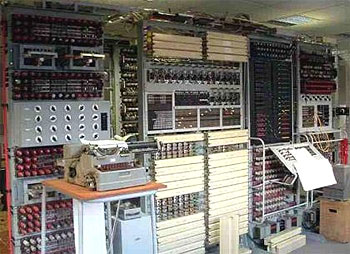
Colossus reborn! And the race is on…

Photograph of Colossus computer

Colossus, the world’s first programmable digital computer that Alan Turing and the team at Bletchley Park used to crack the German Enigma code in WWII, is being rebuilt.

And what’s even more cool, it’s going to be used in a race against a modern PC to crack codes!

Tony Sale and his team of British vintage computer enthusiasts have a job a head of them, as the original Colossus machines were destroyed at the end of WWII. However the surviving Colossus engineers have been found, and they’re on the case.

Hat tip to Boing Boing.

Greens to support computer games industry

Today The Greens are launching a policy to support the computer games industry in Australia.

There was a story earlier this year that the gaming industry is now bigger than the film industry. That’s only true if you compare the whole gaming industry with just film box-office sales and ignore DVD sales and rentals, exports and other non-cinema income. Still, it does make a point: gaming is a lot bigger than most people realise.

The gaming industry wants the same tax breaks as the film industry. I figure that to be consistent, yes, either they both get these breaks or they both don’t.

Face facts: Macs get malware, people look at porn

Some days (like today) I get thoroughly annoyed with society’s continual states of denial. Yes, “states” plural. This BBC news story about the “first” Trojan Horse for the Mac is wrong in four important ways — and it perpetuates another “myth of denial”.

[T]he first serious threat to Mac users has been observed “in the wild”.

It’s a Trojan Horse, a piece of code that pretends to do one thing but actually compromises your computer.

This one spreads through online video sites…

That puts my son right in the middle of the vulnerable population because he likes to watch video clips via sites like YouTube and Flixster…

The Trojan sits behind an online video and when you try to play it you get a message from Quicktime telling you to get a new codec, and if you follow the link you’ll be sent to a site that hosts the malicious software.

Click “ok” and enter your systems administrator’s password and it will be installed on your computer with full system access after which you are, to use the jargon, “pwned”, or scuppered.

And you don’t even get to see the video you were after….

At the moment the fake codec is being spread via porn sites, but it will quickly spread to more mainstream sites, and that’s when it will get dangerous…

Here’s why this article is wrong…

Continue reading “Face facts: Macs get malware, people look at porn”

793k/second

I must admit, since upgrading our Internet link to ADSL2+ it is rather nice seeing notices like “download 793k bytes per second”.