
On stage for the Microsoft Politics & Technology Forum

I’ve attended the previous two Microsoft Politics & Technology Forums in Canberra as their guest, but this year there’s a difference. I’ll be on stage. The date is 1 June 2011. The venue is the Parliament House Theatrette. And it’s free.

The theme is Do we trust the internet? That’s all about openness and transparency in politics.

Technology and politics is more interwoven than ever before.

We’ve seen sensitive government information being revealed on Wikileaks, and mobilisation of communities across the Middle East using social media resulting in regime change in Tunisia, Egypt and unrest in Libya and Bahrain.

The first social media election in the UK saw an incoming Conservative Coalition government, overturning 13 years of Labor rule. David Cameron’s Conservative party trumped other parties in social media campaigning.

The Australian Government has its own Declaration of Open Government, a central recommendation of the Government 2.0 Taskforce. The declaration promotes “greater participation in Australia’s democracy, and is committed to open government based on a culture of engagement, built on better access to and use of government held information, and sustained by the innovative use of technology.”

This and much more will be discussed when UK’s leading political blogger Iain Dale (pictured) will be addressing Microsoft’s 3rd Politics and Technology Forum: Openness and Transparency in Politics. The Forum is supported by Open Forum.

Iain Dale will then participate in a panel discussion of distinguished speakers including Senator Kate Lundy, Parliamentary Secretary to the Prime Minister; Joe Hockey MP, Shadow Treasurer; Stilgherrian; and Microsoft’s Gianpaolo Carraro. The event MC is Mark Pesce.

I’m particularly amused by the facts that I’m “distinguished” and that I’m not explained by any job title or description. I am self-explanatory. Or possibly indescribable.

It’ll cost you nothing to register for this free event, but you’ll need to use the SEKRIT ticket code. Which is “dale”.

Previous Microsoft Politics & Technology Forums

The first Forum was in 2008. Thanks to Microsoft’s Nick Hodge, you can view videos of Matt Bai’s keynote address, Panel 1 on Blogging, social networks, political movements and the media with Annabel Crabb, Peter Black and Mark Textor, and Panel 2 on Politics 2.0: information technology and the future of political campaigning with Joe Hockey, Senator Andrew Bartlett, Senator Kate Lundy and Antony Green.

During this first event, I provided commentary via Twitter and was, um, generally helpful to the discussion from the audience. My most important outburst is during the first panel discussion, though I can be heard but not seen. I have yet to dig the tweets out of Twitter’s archive.

The second Forum was in 2009, with the theme “Campaigning Online”. I did a live blog, and later turned my notes of Joe Trippi’s keynote address into the post Notes on Obama’s election campaign.

I daresay there are videos somewhere, but I couldn’t be arsed looking for them just now.

Covering the AusCERT 2011 Conference on the Gold Coast

In just 11 9 days, I kick off a week and a half of travel. I’ve already mentioned that on 9 May I’m heading to San Francisco for NetSuite’s SuiteWorld event. The very day that I return to Sydney, 15 May, I’m leaving again for the Gold Coast to cover the AusCERT 2011 information security conference as part of the ZDNet Australia team for CBS Interactive.

I haven’t even begin to think about what’s happening there. I’m assuming that a production meeting some time this coming week will help. But I figured I should at least mention it in case you’re going and want to meet up.

I do know that the following Monday’s episode of the Patch Monday podcast will include material from AusCERT. But I’m also doing news-cycle journalism, because in essence I’m filling the gap in ZDNet’s coverage created by journalist Darren Pauli leaving to start his new job as editor of SC Magazine. So there’ll be plenty for me to do. It’ll be hectic.

[Updated 9.50pm: Edited to show the correct number of days until I leave. See, I’m so stressed I can’t even count.]

Livestream’s depressing obsession with celebrity

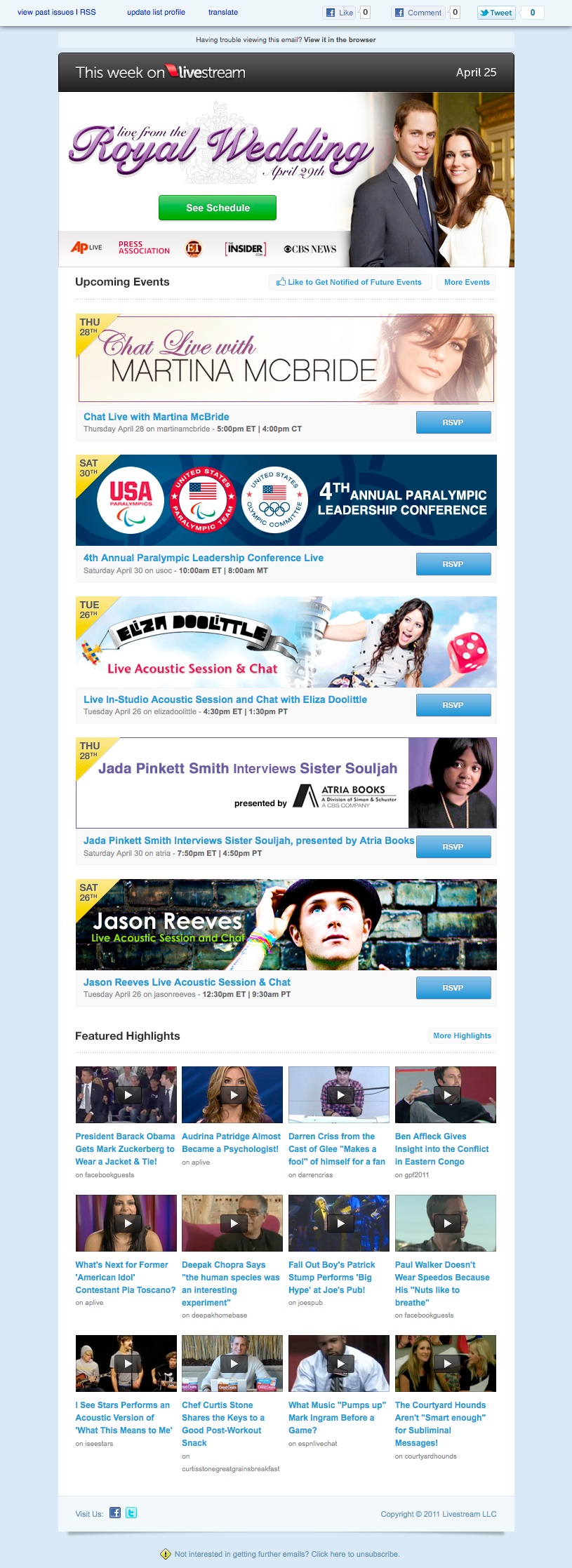
Hey Livestream, your This Week On Livestream email depresses me. Every time it arrives it looks like you still reckon the most worthy thing to aspire to is being an old-fashioned broadcast TV network. Stars, celebrities, musicians, TV chefs, sportspeople, American Idol contestants, and this week — yay! — a royal wedding.

In other words, you’re promoting Livestream as being a wonderful new source of video, so very different from TV, by pointing to the exactly the kinds of people and things we can already see on TV. Gosh, there’s a unique selling proposition!

Now I get that you need to attract the attention of the great unwashed masses. Even though the royal wedding will probably be available on free-to-air and pay TV everywhere on the goddam planet, you still feel the need to wrap your lips around that revenue tit just like every other media business. You can’t help yourself. It’s in your blood.

But how about each week you highlight one, just one, innovative use of online video that simply wouldn’t have been possible before we had services like Livestream? Something made by and featuring no-one we’ve ever heard of before. Something that might only have an audience of a hundred people, maybe even only ten.

One.

Just one.

Please.

Because that might demonstrate how the ability for simply anyone to stream live video to a global audience will radically transform the media and, as a result, society itself. I’m assuming you do actually get that, right? And it’ll show people how Livestream can be a part of that.

Oh, and a few more things that aren’t white middle-class Americans speaking English wouldn’t go astray either. President Obama doesn’t count: see “celebrity”, above.

Weekly Wrap 46

A weekly summary of what I’ve been doing elsewhere on the internets. I didn’t bother including a photo this week because I didn’t take any interesting photos. Suffer. Besides, it’s a short working week thanks to Easter.

Podcasts

Articles

Media Appearances

  • On Tuesday I was interviewed for Panorama on SYN Radio in Melbourne about Facebook regulation. While the do post some items as podcasts, they haven’t done so yet, so I’ve posted the audio on this website.
  • I would’ve also been on ABC News 24’s discussion show The Drum, had I not been in Katoomba for the day and unable to make it to Sydney in time. Geography is not quite dead yet.

Corporate Largesse

None.

Elsewhere

Most of my day-to-day observations are on my high-volume Twitter stream, and random photos and other observations turn up on my Posterous stream. The photos also appear on Flickr, where I eventually add geolocation data and tags.

Talking Facebook regulation on Syn Radio

There was a bit of media interest in my opinion piece for ABC Drum Opinion on Facebook regulation, including an interview for Panorama on Melbourne’s SYN Radio.

While they do eventually put some items on their own website, it doesn’t seem to have appeared yet. So here it is for your listening pleasure.

[The Conversations category is where I post the unedited versions of interviews I do, or the various media spots I do which aren’t podcast elsewhere. If you’d like to grab all of them in the future, subscribe to the RSS feed.]

Fowler’s Assange biography is failing to impress

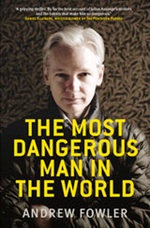
Warning! I bought Andrew Fowler’s biography of WikiLeaks front man Julian Assange, The Most Dangerous Man in the World, ‘cos it’s a bestseller with good reviews. But just 41 pages in, I’m feeling like I’ve done my dough.

If I’m paying money for a book — especially when it’s written by someone billed as an “award-winning investigative journalist” and published by a prestigious imprint like Melbourne University Press — I have two basic but very simple requirements. The book should tell me more than I already know. And it shouldn’t tell me things I know to be wrong.

Quite frankly, after the first 41 pages I’m wondering whether MUP had assigned to this book an editor who had the faintest grasp of internet technology, history and culture. Shall we run through some of the problems?

Continue reading “Fowler’s Assange biography is failing to impress”