Livestream’s depressing obsession with celebrity

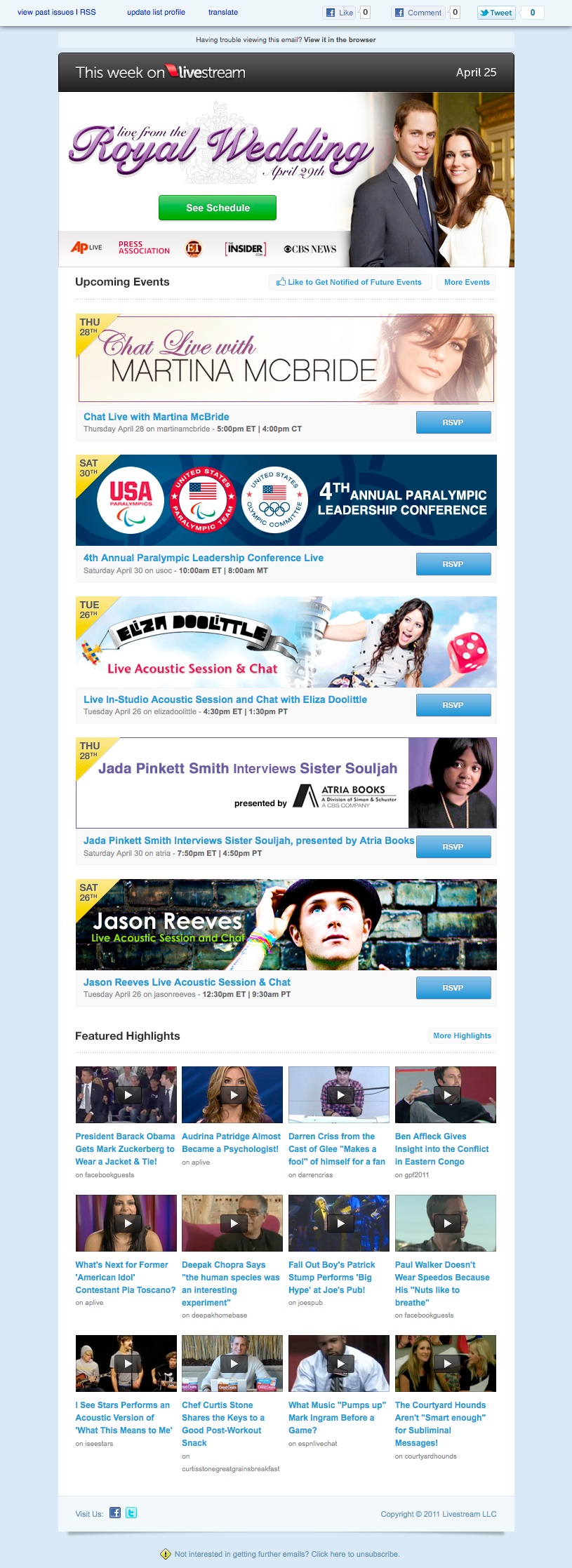
Hey Livestream, your This Week On Livestream email depresses me. Every time it arrives it looks like you still reckon the most worthy thing to aspire to is being an old-fashioned broadcast TV network. Stars, celebrities, musicians, TV chefs, sportspeople, American Idol contestants, and this week — yay! — a royal wedding.

In other words, you’re promoting Livestream as being a wonderful new source of video, so very different from TV, by pointing to the exactly the kinds of people and things we can already see on TV. Gosh, there’s a unique selling proposition!

Now I get that you need to attract the attention of the great unwashed masses. Even though the royal wedding will probably be available on free-to-air and pay TV everywhere on the goddam planet, you still feel the need to wrap your lips around that revenue tit just like every other media business. You can’t help yourself. It’s in your blood.

But how about each week you highlight one, just one, innovative use of online video that simply wouldn’t have been possible before we had services like Livestream? Something made by and featuring no-one we’ve ever heard of before. Something that might only have an audience of a hundred people, maybe even only ten.

One.

Just one.

Please.

Because that might demonstrate how the ability for simply anyone to stream live video to a global audience will radically transform the media and, as a result, society itself. I’m assuming you do actually get that, right? And it’ll show people how Livestream can be a part of that.

Oh, and a few more things that aren’t white middle-class Americans speaking English wouldn’t go astray either. President Obama doesn’t count: see “celebrity”, above.

Fowler’s Assange biography is failing to impress

Warning! I bought Andrew Fowler’s biography of WikiLeaks front man Julian Assange, The Most Dangerous Man in the World, ‘cos it’s a bestseller with good reviews. But just 41 pages in, I’m feeling like I’ve done my dough.

If I’m paying money for a book — especially when it’s written by someone billed as an “award-winning investigative journalist” and published by a prestigious imprint like Melbourne University Press — I have two basic but very simple requirements. The book should tell me more than I already know. And it shouldn’t tell me things I know to be wrong.

Quite frankly, after the first 41 pages I’m wondering whether MUP had assigned to this book an editor who had the faintest grasp of internet technology, history and culture. Shall we run through some of the problems?

Continue reading “Fowler’s Assange biography is failing to impress”

Weekly Wrap 40

A weekly summary of what I’ve been doing elsewhere on the internets. Despite succumbing to a random fever for two or three days, I got quite a bit of writing done — and then forgot to post this until Monday. Sigh.

Podcasts

  • Patch Monday episode 79, “Cybercrime convention: civil liberties risk?”. Australia intends to sign on to the Council of Europe Convention on Cybercrime. My guests? Cybercrime specialist Nigel Phair from the Surete Group, who’s previously been with the Australian High Tech Crime Centre. His second book has just been published, Cybercrime: The Challenge for the Legal Profession. And Electronic Frontiers Australia chair Colin Jacobs.

Articles

Media Appearances

Corporate Largesse

None.

Elsewhere

Most of my day-to-day observations are on my high-volume Twitter stream, and random photos and other observations turn up on my Posterous stream. The photos also appear on Flickr, where I eventually add geolocation data and tags.

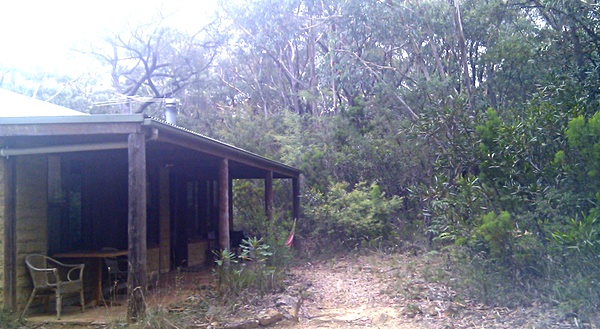
[Photo: Tea Tree Cottage, one of the Bunjaree Cottages at Wentworth Falls, where I’ve been living. I’ll write more about this experience very soon.]

Weekly Wrap 39

A weekly summary of what I’ve been doing elsewhere on the internets. With three full working days occupied by conferences, I still managed to get a few things done. And not all of it was drinking.

Podcasts

  • Patch Monday episode 78, “Bionic eyes, gigabit Wi-Fi and the NBN”. This is my wrap-up of the NICTA Techfest, including an interview with Dr Terry Percival, one of the inventors of Wi-Fi, about potential future uses of the National Broadband Network. He reckons video will be the killer technology, with the world returning to non-written communication as the norm.

Articles

Media Appearances

  • This week’s edition of the Business 21C Weekly podcast from Sydney community radio station 2SER was all about the Australian government’s plans for internet censorship, and I was one of the guests. The program also features web developer Scott David from Flock and the president of the Internet Society of Australia, Tony Hill.

Corporate Largesse

  • The Kickstart Forum on the Gold Coast continued on Monday and Tuesday. My airfares and accommodation were paid for by the organisers, Media Connect. Monday’s lunch was sponsored by Samsung. There was also plenty of freebies from the vendors, though notably less than last year. And substantially fewer USB memory sticks. Should I bother reporting all this stuff? If nothing else, it’s interesting to document for posterity.
  • On Thursday I attended the Digital Directions 2011 conference as their guest. They provided food and drink. Stories relates to the event will appear next week.
  • The lovely folks at Saasu — well, their CEO Marc Lehmann — decided to give me a three-month extension on my subscription, just as a gift. I’d still say it’s a delightful online accounting system even without that.

Elsewhere

Most of my day-to-day observations are on my high-volume Twitter stream, and random photos and other observations turn up on my Posterous stream. The photos also appear on Flickr, where I eventually add geolocation data and tags.

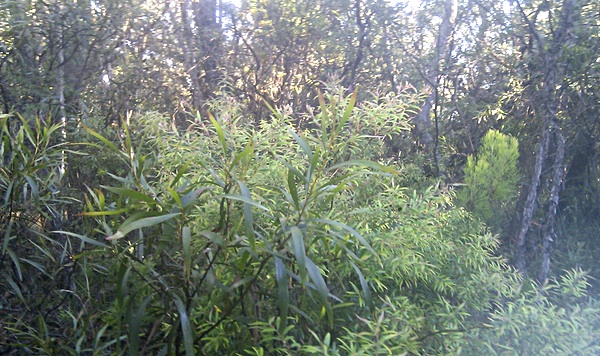
[Photo: The view this morning from the front door of Tea Tree Cottage, one of the Bunjaree Cottages at Wentworth Falls, where I’m living this week. I’ll write more about this experience very soon.]

Sydney, Gold Coast for Kickstart, Sydney

Time for a quick update on my movements. As I write this, I’m on a train returning from the Blue Mountains to Sydney, where I’ll be spending Saturday night. I’m then on the Gold Coast for the Kickstart Forum from Sunday 27 February to Tuesday 2 March, then back in Sydney for a few days to attend, amongst other things, Digital Directions 2011 [nee Media 2011] on Thursday 3 March. It’s then Mardi Gras weekend in Sydney, so I’ll probably escape back to the Blue Mountains. More details soon, or via my Twitter stream.

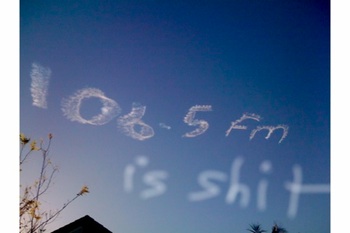
Mix 106.5, fuck off your sky spam!

Skywriting has to be one of the lowest forms of advertising, no different from an attention-seeking teenager scrawling his tag over every flat surface within reach. So I guess it’s only appropriate that the low-brow arsehats of commercial radio reckon it’s a good look.

I’ve met commercial radio executives. They’re not the sort of people you’d want to have dinner with, let alone leave with your pets unattended. Like so many who’ve congealed into the uppermost scum layers of the broadcast media cesspool, they’re arrogant beyond belief, filled with their own sense of self-importance.

Writing in The Observer yesterday, John Naughton reckons this attitude is understandable, if no longer acceptable.

What always struck me about [TV’s] senior executives — in both the commercial and public sector — was how smug and self-satisfied they seemed. In a way, this was understandable: they were masters of a particular universe, rulers of a medium that dominated the information ecosystem, dictated the political agenda, and determined the daily habits of a large chunk of the population. At that time, the most powerful apparatchiks in the BBC and ITV were the schedulers — the planners who designed ways of holding the attention of a mass audience. Their craft included tricks like not scheduling some things against stronger competitors; making sure that one had a follow-on that would keep audiences from switching channels over the 9pm watershed; winning the ratings war over the Christmas period and so on. Watching them at work, one realised that effectively they were playing chess –– and that the pawns in their arcane games were the viewers.

Embedded in the corporate DNA of push media like broadcast television is the assumption that viewers are, if not exactly idiots, then passive consumers. The deal is that they receive gratefully what we, the broadcasters, decide to create.

The same for radio. The same tricks to keep listeners from changing that dial before the next 15-minutes ratings measurement slot starts. The same arrogance.

And double same for Australian commercial radio, whose executives grew fat and lazy through the 1990s as they traded metropolitan broadcast licenses for tens of millions of dollars and their testosterone-filled 4WDs cruised the suburbs handing out largesse to the proles. The rumbling and whooshing and laser zaps and deep booming voices of their station promos underlined their self-image as intergalactic heroes.

Broadcast radio is threatened, of course, especially that which does little more than play music now that everyone has a gadget in their pocket that can play whatever music they want, when they want.

It’s becoming even more threatened now that those gadgets are connected to the grid, where they can figure out for themselves what new music we might want to listen to and download it automatically. Or hook into any audio stream on the planet, including those that we and our friends create for ourselves without the help of the music director’s computer-based music scheduling system. You know the one, the one that says it’s 8.50am so we must therefore listen to an up-tempo track from 1996 with a female vocalist, because in the last hour we’ve already had 75% male vocals and instrumentals.

How much are we paying that music director, anyway, when iTunes does the same job for free?

So in the face of this challenge, what is Mix 106.5 FM in Sydney doing to shape its future?

Smoke-pissing its frequency across the sky of one of the world’s most beautiful cities. Ruining that beauty, not just for those vast migrating commuting herds who might conceivably want to listen simultaneous to exactly the same sequence of songs by Diesel, Rihanna and Nickelback as everyone else in the city — yes, that’s what they’re playing right now, inspiring eh? — interspersed with forced cheerfulness, lowest-common-denominator inanities from a B-list comedian and, of course, advertising. Advertising that for the most part hasn’t thought of a more sophisticated strategy to grab our interest than shouting at us.

This sky spam, this moronic vandalism on a glorious summer’s morning just makes you look even more out of touch, Mix 106.5. Just fuck right off. And no, I’m not linking to you.

[Photo: More sky spam by sylmobile, taken just a few minutes ago.]