Why are corporations so paranoid, Telstra?

Telstra screenshot: click to embiggenWith all their constant worrying about whether people would recommend them or not, like this example from Telstra, I’m starting to think that most big corporations are paranoid psychotics — and not in a good way.

The other day I conducted a perfectly routine transaction at a Telstra Shop. I cancelled a mobile broadband service and replaced it with a different one. As with many businesses, my visit was followed up with a brief survey, “Please tell us how you feel.”

There were four questions, but none of them actually asked me how I felt:

Is your new Telstra service working? If you answer ‘no’ to this question, we will present you with options to get in contact with Telstra to resolve your issue on the next page.

OK, that’s fair enough. You need to know that the customer has a working broadband service. But the other three?

When you consider all aspects of buying and connecting your service — how likely are you to recommend Telstra to a friend or colleague?

Thinking about your in-store experience, how likely would you be to recommend the store to a friend or colleague?

What are the most important reasons why you gave us this score?

Guys, this goes way beyond “Does my bum look fat in this?” This is self-obsession. “What are you going to tell people about us? Why, what did I do?”

These constant questions about likelihood of being recommended are a sign of paranoia. I don’t care how you feel, I gave you money. Recommending you or not just isn’t a KPI for me.

How about you ask questions that reflect the customer’s needs and aspirations? Or even just concrete questions about how long I had to wait, whether staff were polite, or whether the service meets my needs?

“Corrupted Nerds” podcast goes cloud and big data

Cover art for "Corrupted Nerds: Conversations" episode 3: click for podcast web pageI’ve finally posted a new episode of my Corrupted Nerds podcast, a wide-ranging conversation with Peter Coffee, vice-president and head of platform research at Salesforce.com.

Cloud computing is inevitable, says Coffee. “Processing power has grown at about 25% per year, and compounded over a period of 30-some years that’s a lot. But bandwidth has grown at about 45% per year over that same period of time.”

So whatever the application, no matter how complex, eventually it’ll be cheaper to process the data somewhere else, and your device — desktop, laptop, tablet or smartphone — only has to manage presentation and interaction.

I’d been wanting to catch up with Coffee for two or three years, and we finally managed to arrange being in the same room at the same time. I thoroughly enjoyed this conversation, and I think you’ll enjoy it too.

Talking Vote Compass on ABC 666 Canberra

ABC logo“It’s not every day that I find myself agreeing with Senator Eric Abetz,” began my column at ZDNet Australia yesterday. But as the remainder of my 89-word opening sentence reveals, we’re in agreement over just one word: Orwellian.
My concerns were about the data being collected by the ABC’s Vote Compass project, and what it might end up being used for somewhere down the track.

You should probably read the full article for the nuances of what I’m on about, but here’s a taste.

Vote Compass may remove personally identifiable information (PII) from its data before sharing it, but it’d be an easy task for a third-party researcher to re-identify users by cross-matching Vote Compass’ data with their existing databases.

“Scientists have demonstrated they can often ‘re-identify’ or ‘de-anonymise’ individuals hidden in anonymised data with astonishing ease,” wrote law professor Paul Ohm of the University of Colorado in 2009. It’s become easier since, for everyone from Google, Twitter, and Facebook to all the less well-known data mining companies on the planet…

The Orwellian scenario implicit in all this is that secretive data mining companies could match your political beliefs with the psychology of how you make decisions (gleaned from that “What breed of dog are you?” questionnaire you filled out five years ago) and use that to generate (through your favourite news site) a selection of persuasive news stories, opinion pieces, and advertising designed just for you — and you’d never know.

Well this piqued the interest of ABC 666 Canberra, and earlier this morning I was interviewed by presenter Genevieve Jacobs along with the creator of Vote Compass, Cliff van der Linden.

Here’s the audio — and my apologies for it being cut abruptly at the end. Finger trouble on my part. Ms Jacobs was saying that the ABC is satisfied with the precautions being taken by Vote Compass, and I must stress that I have no direct issue with their work either.

The audio is of course ©2013 Australian Broadcasting Corporation.

The article I mention is How Companies Learn Your Secrets by Charles Duhigg of The New York Times.

“Fleeting mists” goes Android

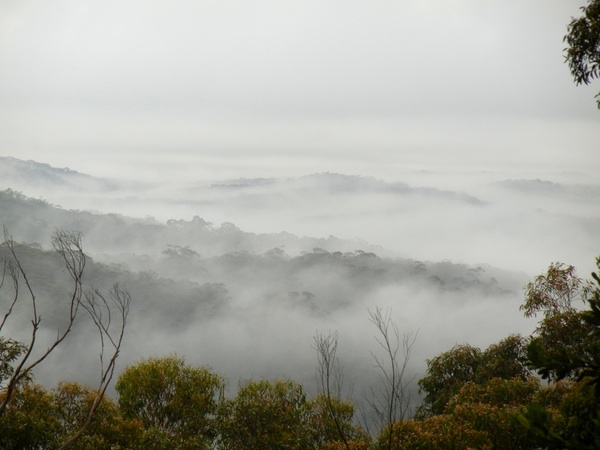
Fleeting mists: click to embiggenI’m re-posting one of my favourite photos from last year, “Fleeting mists”, because it’s being used in the new Android weather app BWeather by Denver-based developer Brit Clousing of Atomicboy Software.

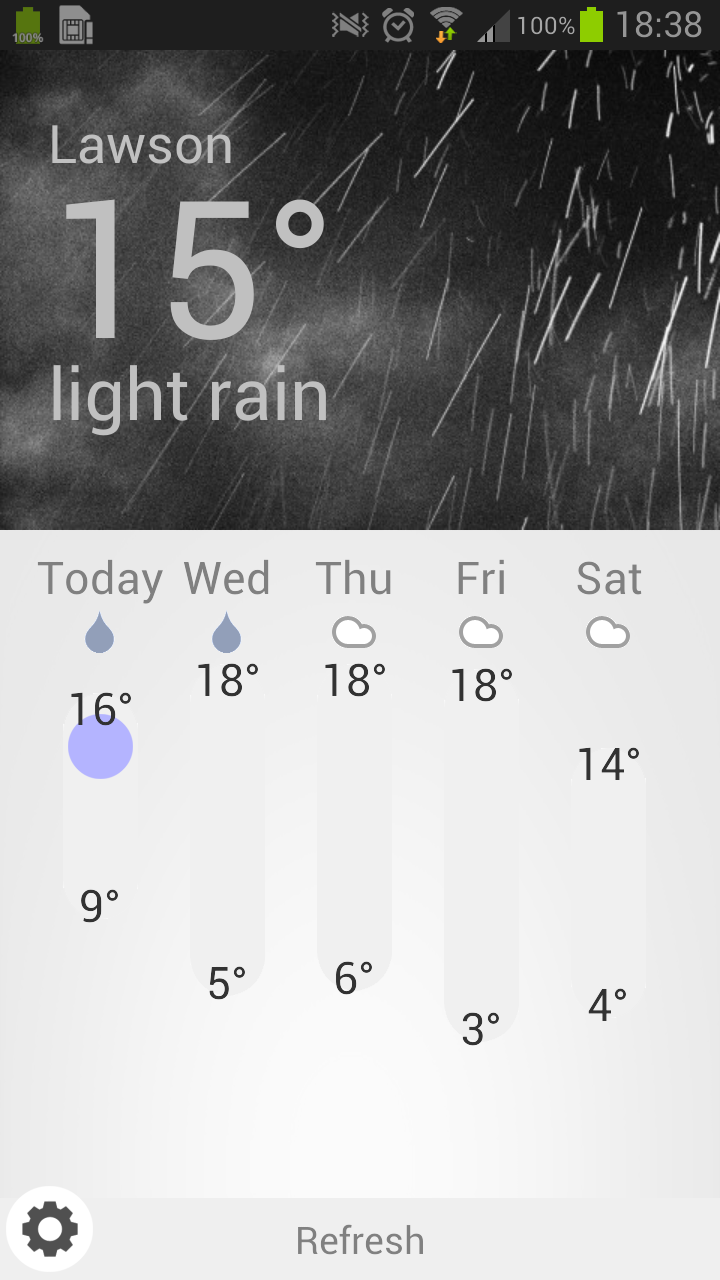
Screenshot of Android weather app BWeather by Atomicboy Software: click to embiggenThere’s a screenshot of the app at right, and you can click through to embiggen it. The app itself you can download from Google Play.

It’s Clousing’s first smartphone app and it’s pretty basic — but it’s free and there’s no advertising, and I really like the way the temperature for the days ahead is shown as a vertical bar.

“The photograph displayed on the top section is designed to match the current weather forecast. There are about 20 different photographs for the different weather and day/night conditions,” writes Clousing in an email.

I’m hanging out for a foggy day to see my photograph in context.

Clousing was previously responsible for the turn-based strategy game Empires of Steel, published in late 2009.

I publish most of my photographs under a Creative Commons Attribution license, so they can be used for pretty much everything. I enjoy knowing that they’ve been appreciated by someone else.

[Photo: Fleeting mists, originally posted in Weekly Wrap 89: Storms and too many podcasts in February 2012.]

Weekly Wrap 165: Distractions and decisions, of a sort

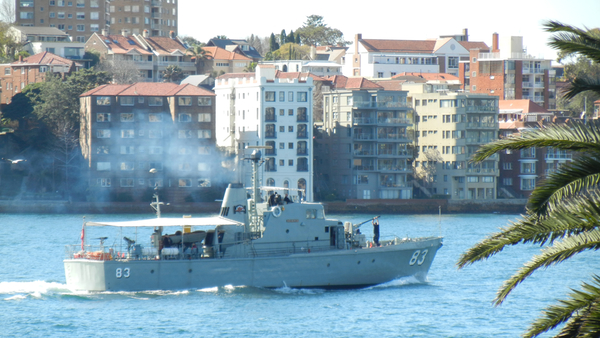
HMAS Advance (P83): click to embiggenIf there was a unifying theme for my week Monday 29 July to Sunday 4 August 2013, it was Distraction.

I distracted myself with the Nokia Lumia 925 / Windows Phone 8 trial. While I’m getting some useful real-world experience of the two products, it’s probably not going to generate any revenue, and it soaked up a lot of my time. I distracted myself even further by fiddling around with video editing.

I was distracted by delayed trains on Thursday night, sadly due to a death on the railway line at Mt Druitt, which meant I didn’t get back to Wentworth Falls until 0100 the following day.

I was distracted by Telstra’s changes to mobile broadband allowances — apparently they’ve now dropped the maximum data allowance they’ll provision to a mobile phone to a mere 9GB a month, so I was living the scenario I wrote about recently — and I had to trek to Penrith on Saturday to buy another device or risk being sodomised by their 10c/megabyte over-run charges.

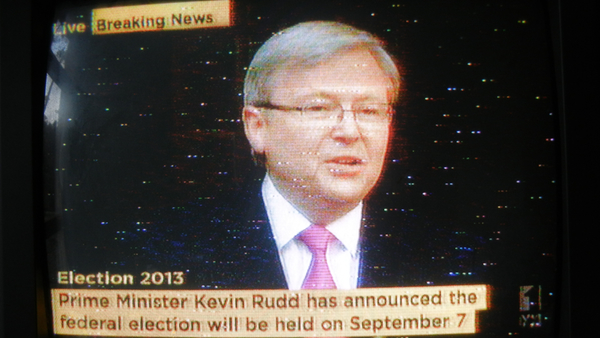
And finally, today I was distracted by Prime Minister Kevin Rudd finally deciding to call the election for 7 September — which means I’m distracting myself even more.

Articles

  • So you call yourself a geek?, ZDNet Australia, 29 July 2013. There was quite a bit of reaction to this column, possibly for the wrong reasons.

Podcasts

Media Appearances

  • On Thursday, Channel TEN’s The Project recorded some of my comments about geoblocking, but they have not been aired yet.

Corporate Largesse

None.

The Week Ahead

[Update Monday 5 August 2013, 2155 AEST: This section has been changed to reflect the unfolding reality.]

On Monday I’ll write a ZDNet Australia column, making up for the one I’d intended to write on Friday, and then rum some errands to Katoomba.

On Tuesday I’ll write for Technology Spectator, work on revenue-generation for The 9pm Election, and complete episode 3 of the Corrupted Nerds: Conversations podcast, amongst other things.

On Wednesday I’ll head to Sydney for some of the Check Point Experience, an event hosted by security vendor Check Point. Thursday will be another Sydney trip for a medical appointment and a few other bits and pieces. And Friday will be a day of podcast production,I hope.

The weekend is currently unplanned.

[Photo: Attack-class patrol boat HMAS Advance (P83) (click to embiggen photo), formerly of the Royal Australian Navy, now with the Australian National Maritime Museum, photographed on Sydney Harbour on 1 August 2013.]

Announcing “The 9pm Election”

Photograph of TV showing Kevin Rudd announcing the election date

Today Prime Minister Kevin Rudd announced that the federal election will be on 7 September 2013. Tonight I announce that I intend to produce five episodes of The 9pm Election.

They’ll bear some passing resemblance to previous episodes of The 9pm Edict, such the episode from when the last election was called.

It is my intention to post a new episode each Friday night at 9pm AEST. Provided you cough up some money, that is, and I’ll be telling you more about that over the next 72 hours.

[Update 8 August 2013: I’ve had a busy week. The first episode will appear this weekend, probably Saturday night but maybe only Sunday. Like you care. Meanwhile, listen to Corrupted Nerds.]

I’ve recorded an announcement, which you can listen to below. But if you want all of the episodes, now and in the future, subscribe to the podcast feed, or even subscribe automatically in iTunes.

If you’d like to comment on this (non-)episode, please add your comment below, or Skype to stilgherrian or phone Sydney +61 2 8011 3733.

[Credits: News excerpt from ABC TV. The 9pm Edict theme by mansardian, Edict fanfare by neonaeon, all from The Freesound Project. Photograph of Stilgherrian taken 29 March 2009 by misswired, used by permission.]