 Monday 19 to Sunday 25 November 2012 was just a little too chaotic for my liking. The overall theme, if chaos can be said to have a theme, was “The past is coming back to bite you. Several times.”
Not deep, existential shark bites. More like bee stings, or perhaps spider bites. Plus a couple of dog bites, like the one I got from that goddam collie back in the mid-1980s. The damn thing infected my hand and it took a cocktail of three heavy-duty antibiotics to be rid of it. To this day, my left hand is significantly weaker.
Yes, your past can bite you, and you are then weakened.
The lesson there is to never entrust the proper training of a dog to rent boys, no matter how good their drugs are.
Yeah I think the rest of this story can probably wait until another time.
During my two weeks in (mostly) Singapore and Coffs Harbour, I was too exhausted to mentally process Certain Events. I flew to Singapore before I’d completely killed a throat infection, and I didn’t realise that the antibiotic I was taking was increasing the severity of my insomnia. I arrived on Shopping Mall Container Terminal Island in a run-down state.
Exhaustion goes well with Endless Free Alcohol, does it not?
Fortunately I’d almost-planned this week to contain a little less work. My intention was to start pondering my plans for 2013 and beyond, both professionally and personally. For various reasons I won’t go into today, both are at turning-points. Clarity of thought must be obtained, because decisions must be made.
The Certain Events provided much food for this thought. Two of the more significant Certain Events were re-establishing contact with two people — quite unconnected with each other — who I hadn’t seen in something like 14 or 16 years.
One was a reminder of… well, let’s just say it was a reminder that our lives are full of choices, many of them unconscious. Had our choices been different, then our lives would have unfolded very differently also.
In Singapore I discovered that 16 years ago there was a choice I could have made. Had I been consciously aware of it, I might well have said yes. But that door has long since been closed. My life unfolds as it does. As does his.
The other was a reminder that… well, that 14 or 16 years is a long time, and I’m getting older. That in turn triggered some very deep reflections indeed about many other choices made, large and small, wise and less so. So many of the last.
On Friday a very different piece of the past came back to haunt me. A client decided to dredge out an HTML email template that I’d written for them some time in the Early Neolithic Era, and use it in a campaign that very day. Needless to say, this ancient code didn’t render properly in recent versions of Microsoft Outlook.
Friday suddenly became hectic. But thanks to excellent technical support from Sydney-based email marketing platform Campaign Monitor, and in particular from Stig Morten Myre in Norway, I could skip the whole “re-learn email-client HTML rendering because time plus arseholes equals frustration” bit and just focus on implementing tricks that would, in fact, work. Thank you Stig.
This extra work meant that Saturday became a long working day too. But everything was smooth, if time-consuming. And now here I sit, in the quiet of the eucalypt scrubland near Wentworth Falls. A quiet that is likely to be the calm before a literal storm this evening. Pondering.
Podcasts
- Patch Monday episode 164, “InfoSec in flux, facing fads with FUD”. A conversation with Sourcefire founder and CTO Martin Roesch.
Articles
Media Appearances
Corporate Largesse
- On Tuesday night I attended Nokia’s Lumia Lounge event at Kaya Sydney, where we were all provided with rather pleasant food and drink.
The Week Ahead
The week ahead is apparently the start of the Christmas party season. Jesus wept. Added to that, technology companies look like they’re blowing their remaining PR budgets for the quarter on media briefings. So there’ll be plenty of corporate largesse to report next time.
As far as media production goes, I’ve got the Patch Monday podcast to finalise first thing Monday morning, then a story each for CSO Online and Technology Spectator before the end of the week. I want to lock in some more, and I think I’ll be able to pitch something both to ZDNet and Crikey.
Logistically, I plan to head to Sydney on Wednesday morning and stay a few days attending various events.
On Wednesday there’s a Retail Tech Forum lunch organised by Bass PR for some of their clients, and in the evening there’s a party with Securus Global.
On Thursday there’s the lunchtime Sydney media launch for Uber (which is essentially the on-demand ordering of a black town car via smartphone apps, so screw you taxi industry oligopolists!), followed by the Internet Industry Association’s Nautical Policy Party on Sydney Harbour (don’t ask), and then an evening party held jointly by the four boutique PR firms known as “The Indies”.
How the end of the week will play out has yet to be decided, but on Sunday I’ll be transferring myself to Hurstville to house-sit for a friend through until early January.
At least that’s the plan as of now. Stay tuned. Eris is a fickle bitch.
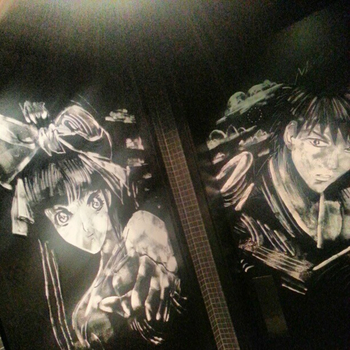
[Photo: Japanese-inspired toilet door signage, at Kaya Sydney. These cartoon characters are all well and good, but when I’m in a hurry to take a slash I don’t need the extra puzzle time of reading highly-stylised gender markers in a dimly-lit corridor.]
 The week of Monday 3 to Sunday 9 December 2012 was, by choice, somewhat less hectic than those preceding it. There was much rejoicing.
 I hadn’t even heard of Click Frenzy until the thing fell over, which shows how much attention I pay to the realm of commercial retail. But I ended up talking about it on ABC 702 Sydney the other day, because, well, it fell over.