

McLuhan’s aphorism rules at The Global Mail, alas

The Global Mail masthead“The medium is the message”, the sole phrase that seems to remembered of Marshall McLuhan’s work, certainly held true in Friday’s story at The Global Mail, Twitter Tackles Open Government.

The piece is a follow-up to an article published on Thursday, Why So Secretive?, by OpenAustralia founders Katherine Szuminska and Matthew Landauer — a stinging attack which alleges that Australia’s Department of Immigration and Citizenship (DIAC) is “unlawfully obstructing over 100 Freedom of Information (FOI) requests from the general public in an attempt to maintain secrecy”.

Friday’s article centres on a subsequent discussion on Twitter between DIAC national communications manager and “avid tweeter”, as The Global Mail quaintly describes him, Sandi Logan.

In 2013, isn’t it just a bit retro to draw attention to someone using Twitter a bit? Particularly when it’s their job to respond to public comment?

Anyway, here’s what I tried to post as a comment at The Global Mail just now, only to be told: “Your comment was unable to be posted at this time. We apologise for the inconvenience.”

The medium truly is the message. The first of Logan’s statements quoted in this story contains 68 words of substantive content, counting the URLs as one word each, and 48 of those are a direct quote from legislation.

Anywhere else this would be a “brief statement”, perhaps even a “terse statement” if the journalist was wanting to pre-judge Logan’s mood on the readers’ behalf — but I was once taught not to do that because it’s editorialising.

But because Logan’s words are spread across four tweets, it becomes a “flurry”. Really?

The Macquarie Dictionary gloss for “flurry”, skipping over the literal weather-related ones, is: “3. commotion; sudden excitement or confusion; nervous hurry.”

Logan’s entire conversation reads to me as a perfectly level-headed conversation with critics. Certainly his initial comment is one simple, coherent paragraph, spread across four tweets only because the limits of the medium demand it.

Now that I’m blogging this, I’ll add my usual gripe about the headline.

“Twitter Tackles Open Government”? No, the San Francisco-based company did no such thing. Nor did the abstract communications network that operates via their servers. People tackled a DIAC staffer. And as far as I can see, all but one of the people quoted was a journalist. The medium through which that happened is hardly relevant.

A handful of journalists and sprinkling of public policy advocates is hardly representative of Twitter users as a whole. If we analysed the level of Twitter discussion about DIAC that night, in comparison with the global firehose of tweets, I doubt that we’d even see a prostate-corked dribble.

Still, a more accurate headline, such as “A few journalists question a media adviser”, would detract somewhat from the “power to the people” theme.

The icing on the cake for me is that the article is about demands for DIAC to be more transparent, and that commenters at The Global Mail are advised that “you have a lot more credibility when you use your full name”, and yet it’s bylined… “By Staff”.

Goose, gander etc, folks.

[Disclosure: I know Katherine Szuminska and Matthew Landauer, and have had dinner and drinks with them on numerous occasions. For what it’s worth, I generally support their calls for more government transparency. Browsing through what I’ve written previously will soon reveal my attitude towards the government’s asylum-seeker policies.]


My fish are dead: the black dog ate them (an explanation?)

[This blog post ended up being too long and way too pointless. It was meant to be a simple statement that I’ve just been diagnosed with a depression disorder again — the black dog being a familiar visitor, of course, but recently more seriously, so I wanted to tell friends and colleagues why things might have seemed a bit erratic — but it took on a bizarre 1000-word life of its own. So that’s the main facts dealt with, right here in the preface. But do feel free to read the post — provided you’ve got nothing better to do with your time. Or you like cartoon fish.]

No, see, that solution is for a different problem than the one I have: click for Allie Brosh's original articleDepression is such an ankle of a thing, and it’s a thing that I’ve got. “Ankle”, you ask? Yeah, it’s an old Australian expression, one that has even been discussed in the NSW Supreme Court. Yes, Depression is an ankle of a thing. It’s three feet lower than a cunt.

That’s certainly set the tone, hasn’t it, boys and girls!

It’s been that kind of a week. Or two weeks. Or a month. Two months? Longer? Yes. Two and a half years, actually. Maybe even longer than that. I really don’t know.

So here’s the story…

Continue reading “My fish are dead: the black dog ate them (an explanation?)”

Vodafone Australia’s new 4G network ain’t bad

Vodafone logoFor the last few week’s I’ve been using Vodafone Australia’s new 4G network, and I must say it ain’t bad at all. Here’s quite a long post about what I’ve experienced.


Since Saturday 8 June 2013 — that is, since about a week before the network was launched to the public — I’ve used Vodafone’s network as my primary data link to the internet, via a Samsung Galaxy S IV 4G handset that Vodafone loaned me, along with a SIM that gave me uncapped data. Generally I used that smartphone as a Wi-Fi hotspot for my everyday internet use.

Normally I use Telstra’s Next G 4G network — or their 3G network outside 4G coverage areas. The hardware is either a Sierra Wireless pocket Wi-Fi hotspot, or sometimes my Samsung Galaxy S III 4G handset configured as a Wi-Fi hotspot. So what you’re about to read is, I think, a reasonable comparison.

That said, I’d call this a “trial”, not a “test”. I was not rigorous at all about this, and the results only reflect what I experienced on the days in question. Your mileage may vary.

Key Observations

  1. I often work on the train between Sydney and the Blue Mountains. So, on Saturday 8 June, I did a side-by-side comparison. With all other data usage removed from the handsets, I did speed tests as speedtest.net as they sat on my lap. On the train. The detailed results are over the fold. As you’ll see, Vodafone’s network was often faster than Telstra’s, especially where Telstra was likely to suffer congestion. This is unsurprising: there weren’t any customers on Vodafone’s network yet.
  2. Over the three weeks of the trial, my general impression was that where both Vodafone and Telstra had 4G coverage, they offered similar speeds. In highly congested locations, such as the Sydney CBD, North Sydney or Newtown, Vodafone often pulled ahead. But Vodafone obviously has far less geographic coverage for now. See below for the maps.
  3. Up at my Blue Mountains base near Wentworth Falls, neither Vodafone nor Telstra had 4G coverage, only 3G. While I didn’t do speed tests there, as a user I found no noticeable difference between the two networks. That is, there were no occasions when I felt the urge to whinge that Vodafone’s network was causing me more problems that Telstra’s usually did. Both seemed to have the same difficulty punching a signal through a eucalypt forest that’s waving in the wind. That’s not Science, obviously, but it says… something. Probably that there’s not much to choose between the two networks in that location, given the sort of things I do.
  4. On my regular train runs up and down the mountains, there was no real experiential difference between Vodafone’s network and Telstra’s — except, of course, where Vodafone has no 4G. Apart from one factor, that is. My impression was that the Telstra handset was better at noticing when 4G became available and switching to that, whereas the one on Vodafone would stay on 3G all the way into Central even though there’s plenty of 4G areas — but I didn’t test this properly.
  5. Using mobile broadband is a very different experience when you’re not worried about how many gigabytes of data you’re sucking down. As I wrote the other week, the promise of mobile broadband is years away.

Overall, it would appear that Vodafone is rolling out a 4G network that will match Telstra’s in terms of performance, at least once the coverage is in place. Assuming there’s coverage where you need it, the choice will come down to the pricing and support, as always. Whether this will be enough for Vodafone to win back the customers they’ve lost is another question.

Continue reading “Vodafone Australia’s new 4G network ain’t bad”

Weekly Wrap 160: Black dog, black sky and more NSA

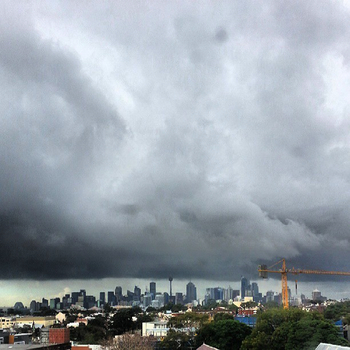
Sydney under the clouds: kick to embiggenMy week Monday 24 to Sunday 30 June 2013 was rather complicated, at least emotionally.

As will be explained tomorrow on Tuesday Thursday.

Nevertheless, I managed to create some media objects along the way. And here they are.

Podcasts

I’m very pleased to have launched my new podcast and website, Corrupted Nerds.

  • Corrupted Nerds: Conversations 1, a conversation with Eugene Kaspersky, founder and CEO of Kaspersky Lab. If we’re going to be accurate, then this was really published in the previous week. But I forgot. So sue me.
  • Corrupted Nerds: Extra 1, being Senator Brett Mason’s “corrupted nerds” speech in the Australian Senate from 21 August 2012, which inspired the title. This was published last week too.
  • Corrupted Nerds: Conversations 2, a chat with Sean Richmond, senior technology consultant from Sophos Australia and New Zealand, about personalised malware, defense in depth, and why advanced persistent threats (APTs) and cyberwar are over-hyped.

I have yet to arrange any funding for this podcast, so I’ll be seeking that soon — and I’d be more than happy to hear your suggestions.

Articles

Media Appearances

None.

Corporate Largesse

  • Since Saturday 8 June I’ve been using Vodafone’s new 4G network while in Sydney, and their existing 3G network while in the Blue Mountains, with a Samsung Galaxy S4 handset that they’ve loaned me. I’ll be writing about my experiences on Monday. [Update 2 July 2013: I’ve just posted my write-up of my experiences. Yeah, it’s Tuesday.

The Week Ahead

The new financial year starts on Monday, so I daresay the morning will be full of administrivia. I’ll then be heading down to Sydney, because…

On Tuesday morning I’m attending a discussion on data sovereignty and the cloud, hosted by data centre firm NEXTDC, along with financial services company Aon and law firm Baker & McKenzie. That will be followed at the same event by the launch of the University of New South Wales’ report Data Sovereignty and the Cloud — A Board and Executive Officers’ Guide. I’ll be reporting this for someone, but as yet I don’t know who that will be.

I’ll be in Sydney again later in the week, probably Thursday, for a medical appointment, but that’s not confirmed yet. When it is, I’ll arrange my writing and media production schedule around that. There’s definitely stories to write for ZDNet Australia and CSO Online, plus an episode of Corrupted Nerds, and there’ll certainly be things that pop up along the way.

And then the weekend is unplanned.

[Photo: Sydney under the clouds, photographed from the Rydges Camperdown hotel in Sydney on 25 June 2013.]

I’ve just launched “Corrupted Nerds”, with many cybers

Corrupted Nerds: Conversations cover image: click for the first episodeLast night launched a new website and podcast, Corrupted Nerds, and the first episode is an interview with Eugene Kaspersky.

Yes, this is a “replacement” for the Patch Monday podcast I used to do for ZDNet Australia, but which was killed off in a budget cut at the beginning of 2013 — with my approval, by the way, because I agreed that from ZDNet Australia’s point of view the money would be better spent on a written column, The Full Tilt.

I won’t got into details about Corrupted Nerds, apart from saying that the subtitle is “information, power, security and all the cybers in a global internet revolution that’s changing… everything”, and to point to the introductory blog post for more details.

I’ve got four episodes in the pipeline, but no funding yet. So I’d be grateful if you could both spread the word and comment upon what I’m doing. I thank you.

Weekly Wrap 159: Solstice, silence and sound

http://www.flickr.com/photos/stilgherrian/9112287422/My week Monday 17 to Sunday 23 June 2013 was marked by the Winter Solstice, as (almost) illustrated above, a certain amount of radio silence, and much sound.

The Winter Solstice was something that, in the past, I’d celebrate regularly in a private ceremony similar to Sunreturn. I’d sometimes write reflective pieces about that, as I did in 2005, 2008 and 2009. And yet nothing along those lines has appeared for four years. I think that’s significant, and that will now change — although I won’t elaborate on that.

Nor will I elaborate on the fact that I haven’t uttered a word on Twitter in more than a week, and generally left messages pile up unless they really were urgent, except to note that sometimes a little quiet is beneficial. Most of the world could handle a bit of STFU now and then, actually. Maybe I’ll elaborate on that little observation at some point. Or not.

Actually, I’ve written previously about how (faux) urgency in poisonous — and in looking up the link to that post just then, I discovered this observation about Kevin Rudd’s management style. It’s not just Rudd who needs to think about that stuff.

And the sound? You’ll find out at 2132 AEST tonight. There is a clue: “CN”.

Articles

Media Appearances

None.

Corporate Largesse

  • On Wednesday I attended a media roundtable hosted by Websense at Establishment in Sydney. A rather elaborate morning tea was served.
  • Also on Wednesday I attended the launch of IBM’s Truth Behind the Trends whitepaper at Arras Restaurant in Sydney, which doesn’t seem to have its own website. Still, I photographed the menu, the butter and my entrée, but not the main course. You’ll cope.
  • Since Saturday 8 June I’ve been using Vodafone’s new 4G network while in Sydney, and their existing 3G network while in the Blue Mountains, with a Samsung Galaxy S4 handset that they’ve loaned me. I’ll be writing about my experiences some time this coming week.

The Week Ahead

I’ll simply note that there’s plenty to write, and plenty to do in this last week of the financial year. And then there’s a new financial year, which brings possibilities…

There will be tweets and suchlike starting again from 1100 AEST today.

[Photo: Pas de Deux, a cloud and a crane photographed shortly after the moment of Winter Solstice in Sydney, Australia on Friday afternoon. Sadly the contrast is pretty bad, ‘cos it was just a quick snapshot and I didn’t have time to play with the exposure.]