Wanted: Your infosec war stories, anonymity preserved

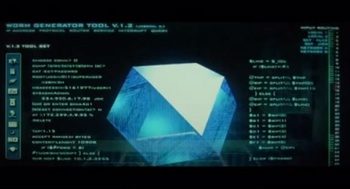
Information security has an image problem, I reckon. No-one apart from the infosec geeks themselves know what’s really involved in hacking or fighting hackers. So the public thinks it’s all like the bullshit in movies.

Like Hugh Jackman creating a virus in Swordfish, pictured.

Does anyone remember the episode of Spooks where the office lights went out when the hacker breached the firewall?

Let’s fix that.

Let’s hear more about the real war stories. OK, everything has always gotta be so goddam SEKRIT! No-one wants to admit to an embarrassing problem. But I reckon we can tell some of these stories while leaving out the identifying details.

We don’t need to reveal which bank nearly had its data centre pwned by a 14-year-old Ukrainian, nor which vendor’s product provided the bloody great hole he came through. But we can certainly talk about the processes, the time pressures and the paranoia.

This week I’ve started writing for a certain as-yet-undisclosed masthead. I reckon we could do regular stories from the front line of cybersecurity. I’ve been told to go for it. And I reckon it’d be fun to write in a stronger narrative style for a change.

If you are, or know of, someone that I should meet for a few drinks in a quiet place while I take notes, please contact me.

Talking business information security on BTalk podcast

Yesterday I was the guest on Phil Dobbie’s BTalk podcast at BNet Australia, a CBS Interactive masthead. The topic? Information security for small business.

I covered quite a bit of stuff fairly quickly. The state of anti-banking malware. Virus protection for smartphones. Password management. Encrypting you hard drives. Mandatory data breach notification laws. And more.

You can see the podcast in its written context as a BNet blog post, A Security Breach is Only a Matter of Time. Or you can just listen below.

This podcast is ©2011 CBS Interactive.

Talking Google vs Facebook on ABC Gold Coast

I continue to be fascinated by what I get asked to talk about on the radio. Today it was news about Google, with an amused emphasis on the product names.

The station was ABC Gold Coast, the presenter was Bernadette Young, and producer Nicole Gundi had chosen two specific stories. The Australian’s coverage of the launch of Google+, the competitor to Facebook, and the Herald Sun’s story on the smartphone operating system wars.

Speaking live from the pub at fairly short notice, I managed to wrap a few facts and opinions into the 10-minute interview. And here’s a recording.

This material is ©2011 Australian Broadcasting Corporation, presented here as always because the ABC doesn’t post it and it’s a decent plug for them.

Patch Monday: ISP filtering goes ‘voluntary’, plus updates

Australia’s mandatory internet filter is at least two years away, but Telstra and Optus are only weeks from implementing their “voluntary” equivalents. Where are we up to with this controversial issue?

That’s what I covered in yesterday’s Patch Monday podcast for ZDNet Australia. And as I explained on the weekend, I’m returning to my habit of doing a blog post here for each episode.

For this internet filtering update, I spoke with Peter Black, who teaches internet and media law at the Queensland University of Technology; network engineer Mark Newton; and Lyle Shelton, chief of staff for the Australian Christian Lobby.

You can listen below. But it’s probably better for my stats if you listen at ZDNet Australia or subscribe to the RSS feed or subscribe in iTunes.

Since this podcast was recorded, we’ve discovered that Primus isn’t so sure about voluntary filtering any more. They were the third ISP to commit to the plan last year. However the Internet Industry Association (IIA) has said most Australian ISPs will filter via the Interpol list this year.

Previous podcast on this issue covered the meaning of the Refused Classification content category, Senator Conroy’s announcement of the strategy in July 2010, and the apparent fact that parents don’t act on their cybersafety fears.

Please let me know what you think. Comments below. We accept audio comments too. Either Skype to stilgherrian or phone Sydney +61 2 8011 3733.

ABC: The only NBN monopoly seems to be on ignorance

Over at ABC’s The Drum opinion website, I’ve written a piece that argues the National Broadband Network won’t kill competition in the telco industry.

They did the headline, not me, but I do like it.

The article explains the structure of the telco industry before getting to the key points.

In most parts of Australia, the only CAN [customer access network] has been Telstra’s copper network. The NBN will replace that with NBN Co’s optical fibre CAN — at least for 93% of the population, roughly any location with a population of 1000 or more. In other words, the NBN replaces an ageing CAN that’s reaching the limits of its capacity technically, with a new one that provides vastly increased capacity for the future.

What doesn’t change is the fact that customers, both domestic and business, can still choose whichever retail telco offers the best deal for them. That is, there’s still the same capacity for competition between telcos. The only difference is that those retail telcos are provisioning their services via NBN Co fibre rather than Telstra copper.

[I give a few examples and then…]

[T]o claim that telco competition will end because of an “NBN monopoly” is as silly as claiming there’s no competition in the road transport industry because everyone has to use the same monopoly public-funded roads. Different freight companies use those same roads to deliver different styles of service at different prices, and competition seems healthy enough.

The Australian Communications Consumers Action Network just described it as the most factually accurate piece they’ve seen in weeks. That’s flattering but seems over the top. But I will say that I’m happy the article — particularly as this morning broadcast radio arsehole Alan Jones is claiming the exact opposite. And we know what he’s like with facts.

There’s also an article by Alan Kohler that analyses the Telstra-NBN deal from a financial perspective. Well worth a read.

Weekly Wrap 55

A weekly summary of what I’ve been doing elsewhere on the internets. If last week was a bit thin, this week more than made up for it — and as I noted yesterday, I’m knackered.

Podcasts

  • Patch Monday episode 93, “Are we missing the bus on Gov 2.0 data?” A popular Sydney Buses app died when Sydney Transit cut off the data feed after just a few weeks, citing lack of server capacity. Developer Ben Hosken is disappointed, but he’s more concerned that developers aren’t making enough use of the government data on offer. I also speak with developers Benno Rice and Adrian Chadd.

Articles

In addition to these, I wrote a fifth piece for ABC’s The Drum, but that hasn’t been published yet. And there’s a couple of pieces I’ve been working on that I must finish and file tomorrow.

Media Appearances

I did five radio spots this week, which is a record I think. Well, except for when I worked full time in radio, obviously.

  • On Tuesday I spoke with Louise Maher on ABC 666 Canberra about the photographic project Everyday Photographs, Extraordinary Journeys, which I inspired. Well, partly inspired.
  • On Thursday morning I spoke with Adelaide radio 1395 FIVEaa about the National Broadband Network. I’ve already posted the audio.
  • A little later on Thursday morning I spoke on ABC Radio National’s Life Matters about the current state of play in information security. I’ve already posted about that.
  • While I was talking live on Radio National, ABC North Coast NSW broadcast an interview with be about Facebook and Social Media that has been pre-recorded. Alas, I don’t have a copy.
  • On Thursday afternoon I spoke with ABC 774 Melbourne about Bitcoin a digital currency. And I’ve posted that audio too.

Corporate Largesse

None. We’ll have to fix that. Dear PR Operatives, my junket calendar for July is empty. You know what to do. I prefer an aisle seat.

Elsewhere

Most of my day-to-day observations are on my high-volume Twitter stream, and random photos and other observations turn up on my Posterous stream. The photos also appear on Flickr, where I eventually add geolocation data and tags.

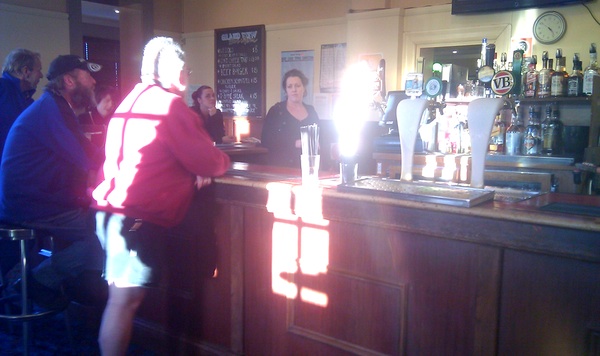
[Photo: The afternoon sunlight can be fierce at The Grand View, an image taken in The Grand View Hotel, Wentworth Falls, yesterday.]