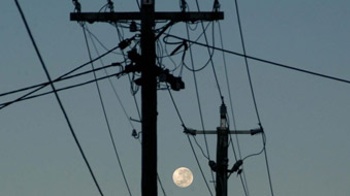
Sydney dust storm, 23 September 2009

Sure, the Sydney dust storm was ages ago. But I’m setting up a Posterous account and playing with its ability to post automatically to Flickr, Twitter and my WordPress website.

This photo was taken on Enmore Road, Enmore at about 7.30am on 23 September 2009. It’s a frame grab from my HD video camera.

I hate doing live experiments like this, because I care about how material is presented on my website. Perhaps that’s old-fashioned, but I don’t like things turning ugly. Presentation counts. OK, you’ve seen my dress sense? Sorry.

Posted via email from Stilgherrian’s Stream

[Update: I’ll leave the formatting of this post as-is. If you look at the code, you’ll see that Posterous has its own somewhat shitty ideas about HTML. It also scaled the photo to Posterous’ 500-pixel width rather than my layout’s 600-pixel width. Bother. I have, however, changed the category from “Uncategorised” (ugh!) to stuff that fits my taxonomy. I’ve also added tags. The tags I’d added for Posterous didn’t make it through to WordPress.]

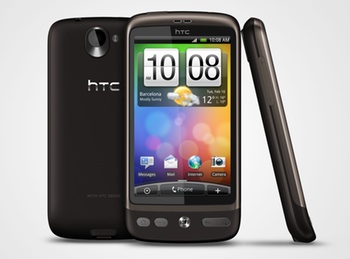
HTC Desire to OS X tethering via USB

[Update January 2011: Note the date on this post, and the fact that it refers to Android version 2.1 specifically. Android 2.2 features Wi-Fi and USB tethering as a standard feature. If you’re running that or later this article probably isn’t the droid you’re looking for.]

Here’s how to connect your HTC Desire (or perhaps any Android phone) to a Mac via a USB cable so that your computer can use the phone’s mobile broadband connection.

In my opinion, this sort of functionality should be built into the operating system, but I’ll save that rant for another day.

This uses the PdaNet for Android app, which costs USD 23.95 (currently on special at USD 18.95 for a limited time). However there’s a free trial which will suit my fellow reviewers in the Telstra HTC Desire Social Review. You can still use the app after the free trial is over, with the limitation that you can’t connect to secure sites.

Continue reading “HTC Desire to OS X tethering via USB”

Patch Monday: Is Facebook the Antichrist of privacy?

ZDNet Australia logo: click for Patch Monday episode 41

Has Facebook gone too far? Is it out of control? Another change to its privacy settings and a new 5800-word privacy policy have triggered concerns by US authorities and European privacy organisations. In Sydney the death of 18-year-old Nona Belomesoff has been dubbed another “Facebook murder”. Is regulation needed?

In this week’s Patch Monday podcast, I cover Facebook privacy from two angles.

First, security and the risk to you and your employer. Paul Ducklin is Sophos’ head of technology for Asia Pacific. His research shows that half the time people will befriend anyone who asks — exposing all their personal details to strangers. Criminals wanting to steal your identity or probe your business have it easy.

Second, the policy implications. David Vaile, who heads up the Cyberspace Law and Policy Centre at the University of New South Wales thinks Facebook’s privacy model is “dangerous”. He foresees a time when personal information is considered as valuable and vulnerable as financial information — and any IT systems that hold that information will need network security as strong as the banks.

You can listen below. But it’s probably better for my stats if you listen at ZDNet Australia or subscribe to the RSS feed or subscribe in iTunes.

Please let me know what you think. Comments below. We accept audio comments too. Either Skype to stilgherrian or phone Sydney +61 2 8011 3733.

Experiencing the Desire, part 1

I’m reviewing the HTC Desire smartphone as part of the Telstra HTC Desire Social Review program.

Telstra has given 25 people, including me, a free HTC Desire handset as well as a bunch of credit on their Next G mobile network to provide “a mix of opinions and perspectives” on this so-called “superphone”.

Before we received our phones, we were asked to explain our expectations of the Desire. “We will be interested to compare this to your thoughts after the review,” said Telstra.

Here’s what I said:

HTC Desire is a “superphone”, eh? It should therefore integrate quickly and reliably into my workflows, and have the grunt to last a long working day. I reckon it could replace my laptop for staying in touch, coordinating my business and gathering media when I’m away from my desk. Android‘s meant to be “open”, so it should let me do things the way I want. I should beat my current Nokia N96 in every way.

Us reviewers will be using the hashtag #telstradesire so you can find our tweets, and Telstra will lead our discussions through a series of posts at Ben Bevins’ blog starting on Wednesday.

I’ve only just started to use the Desire. But here’s my initial impressions, along with a bit more information about what I hope to be able to do.

Continue reading “Experiencing the Desire, part 1”

ABC Unleashed: NBN analysts miss the point

I’ve just written an opinion piece on the National Broadband Network for ABC Unleashed.

As you read the emerging analyses of the National Broadband Network (NBN) Implementation Study ask yourself three questions.

One, does the analyst realise that the NBN isn’t an internet service provider (ISP)? Two, are they demanding that the NBN gives the government a direct financial return on investment at commercial rates? Three, are they understanding the difference between now, the year 2010, and a decade from now?

The main thrust of my argument is that the NBN is national infrastructure, something the government should be spending money on even if it doesn’t make a direct profit. There’s only a moderate amount of tangential snark.

Enjoy. And, ideally, add comments.