
Weekly Wrap 24

A weekly summary of what I’ve been doing elsewhere on the internets and in the media and so on and so forth.

Articles

Podcasts

  • Patch Monday episode 65, “Hello cloud, meet cookies. Goodbye privacy”. My interview with Kevin Shaw from iappANZ.
  • A Series of Tubes episode 119. Ruckus Wireless engineer Steve Chung talks 802.11n streaming and I talk about the OECD’s comments on the National Broadband Network, privacy and crowdsourcing.

Media Appearances

Corporate Largesse

They have lovely biscuits at the Department of Foreign Affairs and Trade.

Elsewhere

Most of my day-to-day observations are on my high-volume Twitter stream, and random photos and other observations turn up on my Posterous stream. The photos also appear on Flickr, where I eventually add geolocation data and tags.

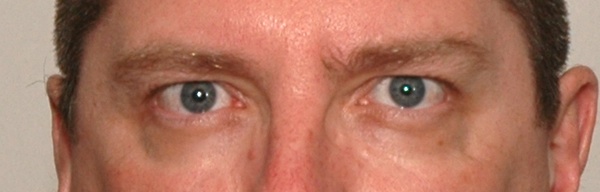
[Photo: A close-up of my eyes, taken by Trinn (‘Pong) Suwannapha, cropped out of the photo he took for my US visa application.]

Weekly Wrap 23

A weekly summary of what I’ve been doing elsewhere on the internets and in the media and so on and so forth.

Articles

Podcasts

Media Appearances

  • On Monday I spoke with Fiona Wyllie on ABC Radio’s Statewide Afternoons and the Fairfax tracking cookie beat-up and a father who installed a radio jammer to kill the internet so his kids wouldn’t spend so much time online. Alas, there is no recording. That’s a shame. It’s not often you’ll hear me giving parenting advice on the radio.

Geekery

  • I learned how to use Google Site Search by plugging it into the Fender Australia website. It’s fairly straightforward, but it quickly shows you the problems with how your site is constructed. As an aside, if you’re a web developer visiting that site for the first time you’ll be horrified to see that in many places it uses tables for layout. That’s because the site was originally built in 2001 and has just been re-skinned a couple of times since. It’s also maintained manually, all 950 pages of it. There’s little business case for a major overhaul — the numbers are not compelling — but we’re planning to build a proper modern database-driven site early in 2011.

Corporate Largesse

None.

Elsewhere

Most of my day-to-day observations are on my high-volume Twitter stream, and random photos and other observations turn up on my Posterous stream. The photos also appear on Flickr, where I eventually add geolocation data and tags.

[Photo: Old bar sign at the Town Hall Hotel, Newtown. Gender roles were a little different back then.]

Senate to re-open Bloggers versus Journalists

That tired “bloggers are not journalists” debate looks like it’ll surface in Australia’s Senate soon, thanks to The Greens. It’ll be annoying. But it’ll be a Good Thing.

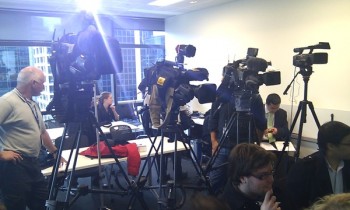
At the end of October the House of Representatives passed the Evidence Amendment (Journalists’ Privilege) Bill 2010, which is all about protecting the confidentiality of journalists’ sources. In the usual jargon, it’s a “journalist shield law”.

Australia was apparently the only major democracy without such a law in place or in progress, so it’s welcome. And, in the words of the new Greens MP for Melbourne, Adam Bandt, “this bill is a good example of how all parties can collaborate on a worthwhile initiative in a way that would not have happened without the currently composed parliament.”

Bandt continued:

To facilitate its passage, the Greens will support the bill in its current form in the House, but I indicate now that we will seek minor amendments to it in the Senate. In particular, we believe that it should be made explicit that the bill covers bloggers, citizen journalists and documentary filmmakers, and that the privileges provided by the bill cover anyone engaged in the process of journalism, no matter who they are or in what medium they publish.

Well I reckon it’s great that the new law might cover more people, not just those who work as employee-journalists in the industrial media factories. It’s great that it might be technology- and medium-neutral. But…

What the heck is a “blogger” or a “citizen journalist”?

Continue reading “Senate to re-open Bloggers versus Journalists”

Weekly Wrap 22

A weekly summary of what I’ve been doing elsewhere on the internets and in the media and so on and so forth — and this week I’ve done a lot of writing.

Articles

Podcasts

  • Patch Monday episode 63, “The govt’s data retention dreams revealed”. If you’d prefer to listen to the edited highlights of that Senate hearing rather than read about it, this is the go.

Media Appearances

  • Parity Bit episode 1. A new IT-related video podcast produced and presented by Owen Kelly. I was chatting with him and the other panellists about #ozlog and other news stories. I didn’t swear once.

Geekery

Not a sausage.

Corporate Largesse

Elsewhere

Most of my day-to-day observations are on my high-volume Twitter stream, and random photos and other observations turn up on my Posterous stream. The photos also appear on Flickr, where I eventually add geolocation data and tags.

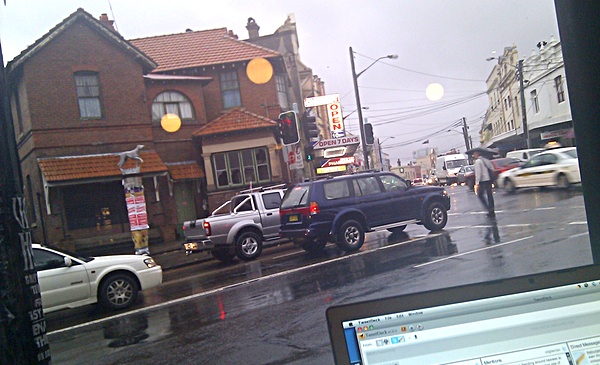
[Photo: Enmore village in the spring rain, taken from the Warren View Hotel. Compare this with the similar view from a few weeks ago.]

Data retention by ISPs: your comments?

Tomorrow’s Patch Monday podcast will be about data retention for law enforcement. Specifically, internet service providers (ISPs) retaining the metadata of all your online communications, possibly for years. I’d like your comments.

Here in Australia, it was revealed in June that the Attorney-General’s Department (AGD) had been discussing these issues in secret with ISPs, law enforcement and other government agencies. I covered that in Patch Monday in July, Is Australia’s data retention idea that scary?

Since the AGD activities were revealed, and following the Google Wi-Fi sniffing incident, the Senate Standing Committee on Environment, Communications and the Arts has been running an inquiry into The adequacy of protections for the privacy of Australians online.

On Friday the committee heard evidence, and late in the afternoon the discussions turned to ISP data retention. Delimiter has published a summary, and a story explaining that the Privacy Commissioner won’t talk about those AGD discussions. ZDNet.com.au stories say the Privacy Commissioner is against the idea although Neil Gaughan, Assistant Commissioner of the Australian Federal Police reckon it’s really just the status quo translated to the new medium.

Here’s a recording of Friday’s Senate hearing, starting from when the AGD’s Catherine Smith introduced the topic. She’s Assistant Secretary, in charge of the Telecommunications and Surveillance Law Branch.

This was recorded off the internet, so there are some gaps where the audio stream re-buffered. I have cleaned up the sound but it’s otherwise unedited. I’m compiling a 10- or 15-minute summary for Patch Monday. This is really only for the political tragics — or those who simply can’t wait to hear the persistent questioning by Greens Senator Scott Ludlam.

If you’d like to provide an audio comment on this issue for Patch Monday, Skype to stilgherrian or phone Sydney +61 2 8011 3733 and leave a voicemail. The deadline is 8.30am Monday morning, Sydney time. The podcast is now online, but you cal still leave an audio comment for next week’s episode.

[Photo: SATA beehive data storage, adapted from an original photograph by Konstantinos Koukopoulos, used under a Creative Commons Attribution license. Audio: Many thanks to journalist Josh Taylor for providing the audio recording.]

Return of the Hallucinating Goldfish: Help!

“My preferred term is that we’re governed by Hallucinating Goldfish. No long-term memory, and a world of imagined horrors,” I said last night.

My comment was triggered by a discussion about Australia’s debt-to-GDP ratio, which stands at 6%. Here’s a picture from March 2010, showing that even with the recent rise in debt to deal with the global financial crisis our government is debt still within the usual range historically.

Personal debt, on the other hand… Ahem!

The United States, by comparison, sits at 60%. According to one economist even that figure is wrong. It’s really 14 times greater, and he reckons the US is actually bankrupt.

But opposition parties here in Australia screech that 6% is “out of control” — even though, as Ric Hayman reminded me, it’s only a few years since one of their own was congratulated for settling things down to 6%. It was acceptable then. But now…

A debt ratio at 6% of GDP is nothing, of course. To use the traditional analogy, it’s like a household with a combined income of $100,000 taking out a loan of $6000. Quite manageable. Families regularly take out loans of 500% of their GDP to buy their own homes and it’s considered normal, even admirable.

Yes yes, if they spent that money on cocaine instead then might be different, but that’s not the issue here. Anyone who tries to equate stabilising a national economy so people can keep their jobs with a drug habit is in my opinion nothing more than a blind political tribalist. If such comments are made here I shall mock and insult you personally.

This is all part of what my Crikey colleague Bernard Keane calls the Perpetual Present of politics, “in which what happened two days ago, let alone two years ago, is forgotten”. But my preferred term is Hallucinating Goldfish

That must’ve struck a chord, because when I mentioned it last night my comment was retweeted around 30 times. I therefore pointed people to my original post, Post 801: Kill the Hallucinating Goldfish.

I was also reminded that political journalism fails to cover the vast majority of what happens in Parliament and government.

As Tim Dunlop put it, here’s “some stuff you might’ve missed if you relied on the media for all your information.” Like the House passing 29 bills, the Senate 16, and 11 bills passing both houses. Nothing important there, eh?

Quite.

Now my original Hallucinating Goldfish post now seems quite dated, and I haven’t posted anything in the Hallucinating Goldfish category in most than two and a half years. I reckon we need new examples. This is where you come in.

Please help me identify more Hallucinating Goldfish. Where are policies being proposed, or decisions being made, based on a paranoid fantasy worldview and ignoring the lessons of the past?

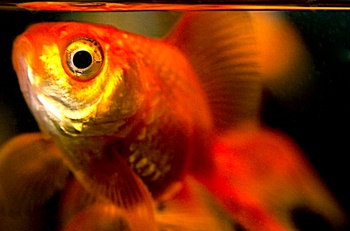
[Photo: Goldfish by Helga Birna Jónasdóttir, used under a Creative Commons attribution license.]