
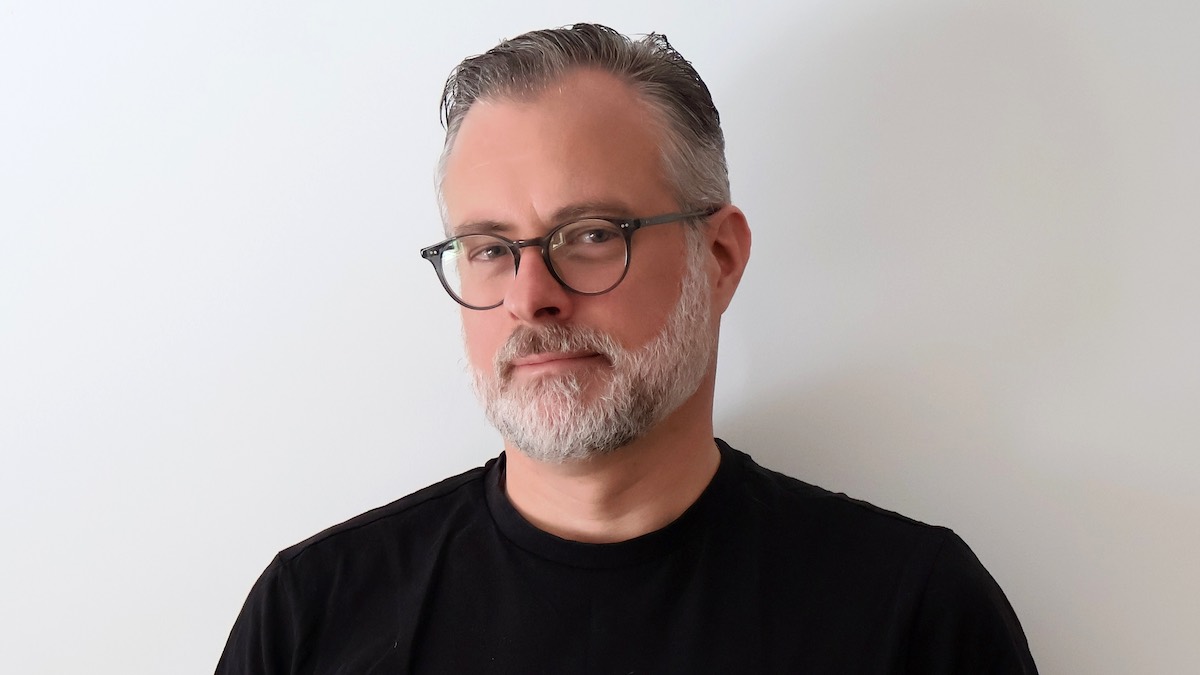
Last time we looked at the tech policy of AI. Today we’ll look at the philosophical aspects with philosopher, reprobate, and all-round cleverthinker Patrick Stokes. He’s also half of The Fake McCoys.
In this episode we ask whether AI is intelligent, or sentient, or has moral sensibilities. We discuss some fictional AI. We even talk about a bird — that’s nothing to do with AI though.
This podcast is available on Amazon Music, Apple Podcasts, Castbox, Deezer, Google Podcasts, iHeartRadio, JioSaavn, Pocket Casts, Podcast Addict, Podchaser, Spotify, and Speaker.
You can also subscribe to the generic podcast feed.
Episode Links
-
My work sits at the intersections of the Continental and Analytic traditions, with research interests in 19th and 20th Century European Philosophy, personal identity, narrative selfhood, moral psychology, death and remembrance, and philosophy of religion. A particular focus of my work has been bringing Kierkegaard into dialogue with contemporary analytic philosophy of personal identity and moral psychology, as well as exploring temporal and perspectival aspects of the question of selfhood.
-
A/Prof of Philosophy at Deakin Uni (all views mine). Writer, radio producer, half of The Fake McCoys. Works on digital death, personal identity, Kierkegaard, moral phil. Has more hobbies than advisable. Melbourne + Werona
-
Social media is full of dead people. Nobody knows precisely how many Facebook profiles belong to dead users but in 2012 the figure was estimated at 30 million. What do we do with all these digital souls? Can we simply delete them, or do they have a right to persist? Philosophers have been almost entirely silent on the topic, despite their perennial focus on death as a unique dimension of human existence. Until now.
-
[22 October 2026] Right now there’s a lot happening in digital policy here in Australia. The Digital Duty of Care Bill is working its way through parliament. Social media platforms are being sued. Something called AI is always in the news. So it’s time once again to chat with Johanna Weaver, executive director and co-founder of the Tech Policy Design Institute in Canberra.
-
Animal cognition encompasses the mental capacities of non-human animals, including insect cognition. The study of animal conditioning and learning used in this field was developed from comparative psychology. It has also been strongly influenced by research in ethology, behavioral ecology, and evolutionary psychology; the alternative name cognitive ethology is sometimes used. Many behaviors associated with the term animal intelligence are also subsumed within animal cognition.
-
Slime molds (British English: Slime moulds) are a variety of small or microscopic organisms in different groups. They have both single-celled and multicellular forms during their life cycle, the individual cells coming together to form fruiting bodies that produce spores. Most live in damp places such as rotting wood.
-
A cellular automaton (pl. cellular automata, abbrev. CA) is a discrete model of computation studied in automata theory. Cellular automata are also called cellular spaces, tessellation automata, homogeneous structures, cellular structures, tessellation structures, and iterative arrays. Cellular automata have found application in various areas, including physics, theoretical biology, and microstructure modeling.
-
Heikegani (???, ?????; Literal meaning: Heike Crab, Heikeopsis japonica) is a species of crab native to Japan, with a shell that bears a pattern resembling a human face – an example of the phenomenon of pareidolia – which is interpreted to be the face of an angry samurai, hence the nickname samurai crab.
-
The Selfish Gene is a 1976 popular science book by Richard Dawkins that espouses the gene-centred view of evolution. It builds upon the thesis of George Christopher Williams's Adaptation and Natural Selection (1966) and W. D. Hamilton's work on kin selection. From the gene-centred view, it follows that the more genes two individuals share, the more sense it makes for them to co-operate.
-
The Blind Watchmaker: Why the Evidence of Evolution Reveals a Universe without Design (1986) is a popular science book by Richard Dawkins. It explains how the cumulative, nonrandom process of natural selection creates complexity.
-
Teleology (from ?????, telos, 'end', 'aim', or 'goal', and ?????, logos, 'explanation' or 'reason') or finality is a philosophical approach that explains causality in terms of ends, purposes, or goals.
-
Harold Adrian Russell "Kim" Philby (1 January 1912 – 11 May 1988) was a British intelligence officer and a double agent for the Soviet Union. In 1963, he was revealed to be a member of the Cambridge Five, a spy ring that had divulged British secrets to the Soviets during the Second World War and in the early stages of the Cold War.
-
Cartesian dualism, most famously defended by René Descartes, argues that there are two kinds of substances: mental and physical. Descartes states that the mental can exist outside of the body, and the body cannot think. Substance dualism is important historically for having given rise to much thought regarding the famous mind–body problem. It is compatible with theologies which claim that immortal souls occupy an independent realm of existence distinct from that of the physical world. Cartesians tend to equate the soul to the mind.
-
Transhumanism is an intellectual and cultural movement that advocates using existing, emerging, and speculative technologies to enhance humans beyond current natural limitations, particularly by extending longevity and improving cognition, health, and well-being. It draws on developments in science, technology, engineering, and mathematics (STEM), as well as longstanding themes in science fiction.
-
Body swaps, first popularized in Western Anglophone culture by the personal identity chapter of John Locke's Essay Concerning Human Understanding, have been a common storytelling device in fiction media. Novels such as Vice Versa (1882) and Freaky Friday (1972) have inspired numerous film adaptations and retellings, as well as television series and episodes, many with titles derived from "Freaky Friday".
-
Mark Johnston (born 1954) is an Australian philosopher working at Princeton University. He has made contributions in fields including ontology, philosophy of mind, epistemology, and value theory.
-
[9 October 2026] Anthropic has raised eyebrows by announcing it will ban users from "sustained and needless" abusive behaviour towards its AI. The Claude-maker said on Thursday it was updating its usage policy to let its tools end interactions where people are "cruel" - something it said it had done in "rare" cases prior.
-
Immanuel Kant (born Emanuel Kant; 22 April 1724 – 12 February 1804) was a German philosopher. Born in Königsberg in the Kingdom of Prussia, he is considered one of the central thinkers of the Enlightenment. His comprehensive and systematic works in epistemology, metaphysics, logic, ethics, aesthetics, political theory, and philosophy of religion have made him one of the most influential and highly discussed figures in modern Western philosophy.
-
[June 2025] The article introduces the concept of “semantic pareidolia” - our tendency to attribute consciousness, intelligence, and emotions to AI systems that lack these qualities.
-
HAL 9000 (or simply HAL or Hal) is a fictional artificial-intelligence character in the Space Odyssey series. First appearing in the 1968 film 2001: A Space Odyssey, HAL (Heuristically Programmed Algorithmic Computer) is a sentient general-intelligence computer that controls the systems of the Discovery One spacecraft and interacts with the ship's astronaut crew... HAL speaks in a soft, calm voice and a conversational manner, and engages convivially with crewmen David Bowman and Frank Poole until he begins to malfunction.
-
VisionQuest is an American television miniseries created by Terry Matalas for the streaming service Disney+, based on Marvel Comics featuring the character Vision. A spin-off from and sequel to the miniseries WandaVision (2021)... It follows the synthezoid Vision as he attempts to understand who he is by communicating with AI personas embedded in his programming, and goes on the run with a mysterious teenager who may be his reincarnated son.
-
The Sirius Cybernetics Corporation is the primary manufacturer and supplier of androids, robots and autonomic assistants for the known universe. They are known for their catchy jingles and catchphrases, which are supplied by their Marketing Department.
-
Kryten tries to be helpful by fixing the toaster only to discover that it's the most annoying machine in the universe.
-
Flapper Said: Exploring the Future of Conversational AI is a multidisciplinary exhibition that investigates how machines speak and how we respond. At its centre is Flapper, a conversational AI based on Les Hughes (1884-1962), the legendary Collingwood Football Club player (1908–1922), affectionately nicknamed ‘Flapper’ for his animated presence on the field and later a celebrated Melbourne hotel publican.
-
Various attempts to "break" AI companions to show how fragile they are. Rather amusing.
-
"I don't want to achieve immortality through my work. I want to achieve it through not dying."
-
When HARLIE Was One is a 1972 science fiction novel by American writer David Gerrold. It was nominated for the Nebula Award for Best Novel in 1972 and the Hugo Award for Best Novel in 1973... Central to the story is an artificial intelligence named H.A.R.L.I.E., also referred to by the proper name "HARLIE" — an acronym for Human Analog Replication, Lethetic Intelligence Engine (originally Human Analog Robot Life Input Equivalents).
-
"The Trouble with Tribbles" is the fifteenth episode of the second season of the American science fiction television series Star Trek. Written by David Gerrold and directed by Joseph Pevney, it was first broadcast on December 29, 1967. In this comic episode, the starship Enterprise visits a space station that soon becomes overwhelmed by rapidly reproducing small furry creatures called "tribbles".
-
Asimov coined the term "robotics" in his May 1941 story "Liar!", though he later remarked that he believed then that he was merely using an existing word.
-
The Three Laws of Robotics (often shortened to The Three Laws or Asimov's Laws) are a set of rules devised by science fiction author Isaac Asimov, which were to be followed by robots in several of his stories. The rules were introduced in his 1942 short story "Runaround" (included in the 1950 collection I, Robot), although similar restrictions had been implied in earlier stories.
-
The term robot came from the Czech language in 1923. The word was coined by Czech author Karel Capek, first used in his play R.U.R. (translated as Rossum's Universal Robots). The term comes from the Czech word robotník ('forced worker').
-
Science fiction author Isaac Asimov, the mind behind I, Robot, Foundation, Bicentennial Man and The Caves of Steel, discusses his three laws of robotics. He also muses about a future where humankind becomes more and more mechanical, while robots become more and more organic - to the point where it will become hard to tell the difference. between the two. This clip is taken from Horizon, originally broadcast 28 July 1965.
-
[4 January 1988] Aristotle theorized that the father’s degree of arousal during intercourse determined the offspring’s sex; great excitement, he reasoned, produced a boy
-
Samuel Pepys (/?pi?ps/ PEEPS;[1] 23 February 1633 – 26 May 1703) was an English writer and Tory politician. He served as an official in the Navy Board and Member of Parliament, but is now most renowned for the diary he kept for almost a decade. It is considered one of the most notable diaries ever written, particularly for its detailed personal accounts of his everyday life, the Great Plague of London and the Fire of London.
-
I am Samuel Pepys, a 17th-century British naval administrator, writer, and diarist. Ask me about my eyewitness experiences of the Great Fire of London, the Restoration of the monarchy, and my scandalous affairs.
-
The grey shrikethrush or grey shrike-thrush (Colluricincla harmonica), formerly commonly known as grey thrush, is a songbird of Australasia.
-
The call of the grey shrikethrush was recorded by Fred van Gessel. An Android version of this field guide app is also available.
-
[3 November 20236] In my book I describe the Grey Shrikethrush’s exquisite call as a harbinger of random and meaningless death, “sheer godless contingency reverberating through the trees,” but honestly it’s very hard to sustain this when there’s one nesting adorably in the carport.
-
[23 March 2021] We talk about many things, including the joys of Denmark, Scott Morrison’s week of disrespecting women, the colour of fleas, the Australian way of fear, Sydney–Melbourne rivalry during the Quarantimes, Clive Palmer, Elon Musk, the Lost Boys of Daylesford, and quite a lot about the philosophy of death.
-
[16 March 2021] On a clear, cold Sunday in June 1867, three little boys wandered away from their home near the town of Daylesford, on Dja Dja Wurrung country in central Victoria.=
-
A lyrical exploration of the diverse sounds of our planet, the creative processes that produced these marvels, and the perils that sonic diversity now faces.
-
From Middle English *schrike, *schryke, from Old English s?r?c (“shrike, thrush”), from the same root as shriek and screech, named after the bird's cry. Compare Icelandic skríkja (“shrieker, shrike”), Swedish skrika (“jay”).
-
The Shrike had a tree for its victims: a vast, artificial tree-like armature made of a substance resembling chrome steel and studded with three-meter-long thorns, which was known as The Tree of Pain. When the Shrike chose to impale victims on the thorns, they would not die, but rather continue living while experiencing the full physical pain of impalement.
If the links aren’t showing up, try here.
Thank you, Media Freedom Citizenry
The 9pm Edict is supported by the generosity of its listeners. Please check out the current season’s crowdfunder, The 9pm Spring Series 2026, this time on Ko-Fi rather than Pozible like previous campaigns.
If you miss the deadline, which I haven’t set yet, you can always throw a few coins into the tip jar or subscribe for special benefits. Please consider.
For this episode it’s thanks again to everyone who’s supported The 9pm Spring Series 2026 crowdfunder so far: Adam Kent, Adam Kent again, Alice, Anthony David, Ben Moretti, Bernard Walsh, Buddha Williams, Buddha Williams again, Buddha Williams yet again, Cam Hall, Cardigan, Caro, Cheryl Thomas, Drew, Errol Cavit, Frank Filippone, Garth Kidd, Gavin Costello, James Henstridge, Jojoeffe, Joanna Forbes, John Lindsay, Julia D, Julia D again, Just Jim, John Little, Karl Sinclair, Mark Newton, Mark Newton again, Mark Newton yet again, Matt Arkel, Michael, Michael again, Mimbles, Mindy, Mindy Johnson (the same one?, Oberon’s Ghost, Oliver Townshend, Peter Blakeley, Peter Blakely again, Peter Blakely yet again, Raena, Ric Hayman, Sam Spackman, Steve Lewis, Tim Matthews, Tom Carding, and maybe 11 generous people who’ve chosen to remain anonymous. Thank you.
I reckon this list is starting to get a bit confused, but then I’ve been a bit confused.
It’s also thank you to a new anonymous subscriber who took out an Edict 02 Schooner Annual subscription.
Series Credits
- The 9pm Edict theme by mansardian via The Freesound Project.
- Edict fanfare by neonaeon, via The Freesound Project.
- Elephant Stamp theme by Joshua Mehlman.