OK, here’s the plan…

I’ve written about the strategic planning day we did for my business, and I showed you the view from the hotel and the whiteboard. But I haven’t said anything about the outcome. So here goes… my first attempt at a coherent summary.

Starting today I’ll focus more of my time on “media stuff” rather than “IT stuff”. I’ll include Internet-related media in the mix, but I’ll phase out the time I spend farting around with other people’s computers. I’m interested in computers and the Internet as tools to achieve my own goals, not fixing other people’s tools. I hope to get all the hands-on IT stuff off my plate by the end of September.

This “media stuff” includes quite a few projects, some of which have been slowly incubating for years. There’s 3 book concepts (one of which would also make a good TV series), a set of 6 short films, a piece of music and a couple of things which will take the form of blogs. These will start being developed under the (probable) name Skank Media — more of that one day very soon.

I must admit, I’ve been longing to return to my media roots for ages. It feels good to see a coherent plan emerging to achieve just that.

So what happens to the existing business?

I still want to work with small businesses and their information systems — but by helping them make better use of emerging Internet technologies. And doing that within a planned framework — not just responding to failures or ad hoc requests. We may still provide IT support services, or that might be outsourced, but it certainly won’t be me worrying about misbehaving printers or crawling under desks fixing cables.

My friend and colleague Zern Liew developed a 3-point to-do list which is a delightful example of simplicity:

  1. Don’t take on any new clients of the wrong sort. Knowing that you can say “Sorry, I don’t do that any more” is immensely empowering.
  2. Work out how to transition the existing clients. That’s what I’m working on today, and I hope to have contacted every existing Prussia.Net client by the end of business tomorrow.
  3. Start the new business. Well, there’s a lot under that one point. And there’s actually two businesses to think about: Skank Media and whatever Prussia.Net evolves into. But it puts the focus onto the future, not the past.

I feel really good about this. My target mix for the rest of this month is 20 hours per week billable time on IT and Internet work for existing clients, 10 hours on redeveloping Prussia.Net and 10 hours on Skank Media. Plus the usual extra 10 or 15 or 20 hours on making everything else work. I’ll report back on Friday evening.
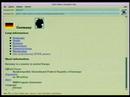

The Internet, 1994

1994 promotional video for the web, from Digital: click to watch video

“A global electronic mall is under construction,” enthuses this wonderful promotional video from 1994 extolling the virtues of the Internet.

“Come, take a look at the future we can build together,” says Digital Equipment Corporation, once one of the world’s most important computer companies.

Here [on the Internet], the smallest of companies can search and shop on a global scale for the best resources and products at the best prices. Here those same small companies can market their own abilities and products in a global marketplace. This means a new array of risks and opportunities. In the future you’ll be forced to compete with distant companies you’ve never encountered before. And you’ll be able to expand to new markets at low cost.

Only 13 years on, watching this video is already a retro experience. The grey pages of the Mosaic web browser were state of the art in 1994 — pictures as well as text! 1994 is still a year before the Internet exploded into popular awareness. A year before Netscape and Yahoo! and Amazon.com and Windows 95. A year before I was headhunted to move to Sydney to play in the dot.com boom.

DEC logo

For me, there’s two levels of nostalgia in his video — nostalgia for the Internet before it really did become that “shopping mall”, and nostalgia for Digital.

Digital Equipment Corporation made the most popular scientific computers from the late 1960s. The PDP-10 mainframe (later DECsystem-10) was at the heart of every decent computing science department in the 70s.

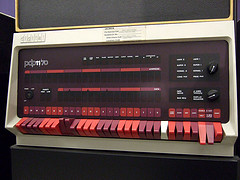
But what every programmer wanted was the coolest toy of all, the PDP-11 minicomputer. From a programmers point of view it was well-engineered, it was designed for mass production — and it just looked so goddam cool.

Digital PDP-11/20 minicomputer: click for a closer view

I never encountered a PDP-11 in real life, so I never saw those glorious purple buttons with my own eyes. But at university I did play with its successor, the VAX-11 — essentially a souped-up PDP-11 with integrated circuits instead of transistors — and soon understood why programmers thought it was so good. It just worked.

The BSD Unix operating system which underpinned the Internet and which inspired Linux was first written for PDP-11s and Vaxen (the accepted plural of “VAX”). They inspired the design of Motorola’s microprocessors — clean and simple to program — which were used by Apple’s early machines right through to only two years ago. Much cleaner and more logical than the clunky Intel processors which powered IBM’s PC and its clones.

Digital made computers designed by programmers for programmers — it was as simple as that.

“Digital is here already as a leader in the field,” boasts the video. But alas Digital is no more. “There is no reason for any individual to have a computer in his home,” said Digital’s founder, Ken Olsen. But he was wrong. The minicomputer market disappeared as the PC revolution took hold. Digital was bought out by Compaq, who in turn were bought out by HP.

Look at that video a couple of times. Remember, that’s only 13 years ago. Now look at the Internet available right in front of you now — and try to imagine what it’ll all be like in another 13 years.

Thanks to Memex 1.1 for the pointer and further observations.

Optimal copyright only 14 years

In most countries, copyright in creative works lasts for 50 years after the death of the creator. In the US, the Copyright Term Extension Act of 1998 extended that protection to 70 years for works created by individuals and 120 years for corporations. But a new paper by Cambridge University PhD candidate Rufus Pollock reckons copyright terms should be reduced, not extended [PDF file, 256k] — to just 14 years.

The US copyright extension was widely criticised as the Mickey Mouse Protection Act. Walt Disney’s Micky Mouse would have otherwise entered the public domain in 2003 — depriving the Disney corporation of income. Critics said the Act was nothing but more corporate welfare from the Bush II government.

Pollock’s paper argues that the optimal duration of copyright falls as the cost of producing and distributing creative works goes down. But since copyright laws are created through political lobbying rather than “a benevolent and rational policy-maker”, copyright terms steadily increased through the 20th century.

Politically it’s hard to remove rights which have already been granted — unless, of course you can pretend there’s some terrible threat such as terrorists or black paedophiles — so Pollock notes:

It is prudent for policy-makers to err on the low side rather than the high side when setting the strength of copyright.

Somehow, given the media industry’s current terror (!) of falling revenues thanks to that very process of falling distribution costs, and their close connection to political power, I just don’t see Pollock’s arguments winning any time soon.

Thanks to Ars Technica for the pointer.