
I came for the gin, I stayed for the social revolution

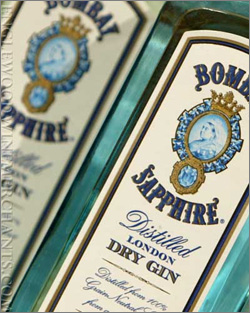
Photograph of Bombay Sapphire Gin bottle

“Television, the drug of the nation / Breeding ignorance and feeding radiation,” rapped American poet and musician Michael Franti of the Disposable Heroes of Hipocrisy Hiphoprisy”, now of Spearhead. Could this literally be true?

I’ve just read the most amazing speech, Gin, Television, and Social Surplus by Clay Shirky, which you can also watch on Blip.tv. It begins:

A British historian [argued] that the critical technology, for the early phase of the industrial revolution, was gin.

The transformation from rural to urban life was so sudden, and so wrenching, that the only thing society could do to manage was to drink itself into a stupor for a generation. The stories from that era are amazing — there were gin pushcarts working their way through the streets of London.

And it wasn’t until society woke up from that collective bender that we actually started to get the institutional structures that we associate with the industrial revolution today. Things like public libraries and museums, increasingly broad education for children, elected leaders — a lot of things we like — didn’t happen until having all of those people together stopped seeming like a crisis and started seeming like an asset.

Shirky goes on to argue that when WWII ended, we suddenly had to cope with another social surplus: all that leisure time thanks to a 5-day working week and all those new-fangled gadgets which made household chores a breeze. So what did we do? We slothed in front of the TV. For a generation.

As we turn off our TVs and connect to each other, this cognitive surplus is creating things like Wikipedia. An estimated 100 million hours of work has gone into it. Yet this is but a drop in the ocean…

Continue reading “I came for the gin, I stayed for the social revolution”

Drop that goddam Citizenship Test, Senator Evans!

I agree with Tim Dunlop: “Just dump the stupid, politically motivated, shallow, ill-conceived thing.”

Today The Age reports that fear of failure is turning away potential citizens in droves.

Some migrants were too frightened to apply to become Australians because they feared they would be deported if they failed the controversial citizenship test, Immigration Minister Chris Evans has admitted…

Just 16,024 migrants applied to be citizens between January and March, compared with 38,850 at the same time last year.

I’ve written about this before, of course, both to point out how the whole concept is teh FAIL (to use current lingo), and how it was just pre-election dog-whistle politics anyway.

It’s pointless. I’m assuming there’s already a black market in the answers — though they’re in the book anyway. As one soon-to-be-citizen told me, “It’s all easy enough: 1. Barton. 2. Bradman. 3. Wattle.” And exactly how does that arcane knowledge prove you’re not a “bad person” in a way that isn’t covered by the police and other checks already in place?

Senator Evans, ruling out scrapping the test but setting up a committee to analyse its impact is just wasting taxpayers’ money. Just make a cup of tea, get yourself an Iced Vo-Vo or two, and work through the logic yourself. If you can, that is.

Anzac Day Rememberings

Photograph of a sprig of rosemary, for remembrance

Where the fuck do I start? For me, Anzac Day is a tangled mess of emotions and ideas — some about grand themes of global and national politics, others deeply personal.

What pleases me most about Anzac Day is that Australia and New Zealand commemorate the sacrifice of their war dead not through parades of tanks and missiles and a glorification of war but with highly personal ceremonies of remembrance starting before dawn.

We talk not of our nation’s military prowess — though Australia is, by all accounts, capable of fielding professional military forces which make almost everybody else look like disorganised amateurs — but of the personal qualities which have made this nation great.

Those qualities were listed in an Army recruitment advertisement designed by a soldier. They were reiterated this morning by Major General Mark Kelly:

Regardless of religion, racial background, or even place of birth, we gather not to glorify war, but to remind ourselves that we value who we are and the freedoms we possess, and to acknowledge the courage and sacrifice of those who contributed so much in shaping the identity of this proud nation…

The term Anzac has transcended the physical meaning to become a spirit, an inspiration which embodies the qualities of courage, discipline, sacrifice, self reliance, and in Australian terms, mateship, and a fair go. This is what Anzac means to me.

These are the qualities which once gave Australia such a fine reputation overseas — before our foreign policy became one of subservience to American Neocons, and before symbols of military might were perverted into supporting a never-ending War on Abstract Nouns. Before quiet patriotism turned into loud but ignorant flag-draped jingoism. John Birmingham wrote about this in his Quarterly Essay, A Time for War: Australia as a Military Power. But what does it all mean now under Chairman Rudd?

Continue reading “Anzac Day Rememberings”

Olympic hatred

I won’t bother linking to news stories about the shambles that is the Olympic Torch Relay. I’ll just quote George Orwell. “Even if one didn’t know from concrete examples (the 1936 Olympic Games, for instance) that international sporting contests lead to orgies of hatred, one could deduce it from general principles.” Hat-tip to John Quiggin.