Oi, The Online Circle! Don’t spam! Don’t lie!

[Update 8 June 2010: The Online Circle’s CEO Jeff Richardson emailed an apology and explanation today. I think it’s a superb response, dignified yet accepting the very harsh criticism I served out. I’m impressed. And of course I accept the apology. So do bear that in mind as you read this rant. — Stilgherrian]

Speaking personally, I wouldn’t trust a “full-service interactive agency” that can’t even get the basics of the Spam Act 2003 right. So here’s my Big Fat Monday Night Hello to The Online Circle, the arsehats who just spammed me.

Guys, here’s how your email starts:

Hi Stilgherrian,

Firstly, thank you very much for your effort and involvement in our [redacted] campaign (We hope you enjoyed the chocolate). We saw some great blog articles and Twitter updates written that have really helped people understand more about [redacted] and why we all should get involved.

Erm, I wasn’t involved in this campaign, with or without any effort. So there’s arsehattery #1. And I never got any chocolate. There’s arsehattery #2.

Oh, and that sentence in parentheses? The full stop should be inside the closing parenthesis. That’s #3.

I’ll skip over the plug for your “we’re excited to announce” thing because — and OMFG how original is this? — you’re inviting people to upload videos to promote your client’s product! A video competition! How unique is that?

“Not at all,” is my answer there. Video competitions have to be the most overworked cliché in social media marketing.

But here are the bits which really shit me.

You are receiving this email because The Online Circle has found you to be an online influencer in Australia. This is our first contact with you and we promise not to share your name or any details with anyone.

An “online influencer”, eh? So it’s not that I’m an “interesting writer” or “respected commentator” or “glutton for chocolate” or even just “nice guy” or perhaps even “dangerous psychotic” — but an “online influencer”. Great. I fit some smegging buzzword du jour category for your marketing effort. T’riffic. How depersonalising.

“This is our first contact with you,” you say?

Bullshit.

You previously emailed me on 24 February, subject line “Social Media Influencer — How about free samples?”, to say that you “understand generating content for your blogs and social media channels can sometimes be challenging”. No, I don’t “generate content”. I write. I take photos sometimes.

And you emailed me again on 1 March, subject line “We are ready to send you some free chocolate”, with the same content.

All three emails claim “This is our first contact with you”. Liars.

And if you’d bothered to even look at my website…

… as opposed to, I presume, just finding me on some list of Australian bloggers somewhere, you might even have discovered that I don’t fill my website with random plugs for multinational corporations. Especially corporations that pull more than USD 7 billion a year in revenue but still want the punters to do their creative work for them in exchange for a few chocolates.

Arsehats. Exploitative spammy bloody arsehats.

Notes on Obama’s election campaign

[Last week, Australia’s Finance Minister Lindsay Tanner wrote about Government 2.0 in The government wants to blog. Later today ABC Radio wants me to talk about how Barack Obama’s presidential election campaign used social media and social networking, so I’ve been reviewing my liveblog of the presentations made by Ben Self at Media 09 and Joe Trippi at the Microsoft Politics and Technology Forum. Trippi has worked on various Democrat campaigns including as campaign manager for Howard Dean‘s 2004 unsuccessful presidential nomination campaign. Self’s company Blue State Digital managed Obama’s online fundraising, constituency-building, issue advocacy, and peer-to-peer online networking during the primaries. I figured I might as well share my notes. Enjoy.]

More than two years since Barack Obama’s presidential election campaign, the numbers are still staggering. $770 million was raised, roughly 65% of that online. There were 3.2 million individual donors, with the average donation under $100.

This is completely different from traditional political fundraising, which revolved about dinners and other events costing $2300 a ticket — the maximum unreportable donation donation allowable from a couple at that time under US electoral laws. Obama’s campaign really did reach out and mobilise millions of ordinary Americans.

Yes, millions. The progressive Democratic Party network is now 15 million people online.

Online social networking tools made all this possible, sure, but the success came through the clever application of those tools. The key word here is “personal”.

Continue reading “Notes on Obama’s election campaign”

Yes, I wrote about iPad, but not here

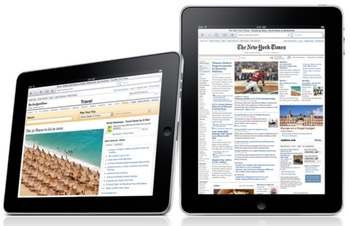
Not posting here for a week makes it look like I’ve vanished. But increasingly, more of my work is elsewhere. Like my Crikey piece It’s called iPad, and the Kindle is rooted. Like the 2000-word feature I’m slaving to finish today for ZDNet.com.au. Look in the sidebar under “More Stilgherrian”. My online presence is now scattered amongst so many streams of data!

There’s an essay here about the meaning of all this fragmentation. But if I write that essay, I’ll end up having to admit this is precisely why Facebook has been so successful. So much of your life can happen through Facebook and its myriad third-party data-sucking privacy-perverting applications, from organising a BBQ to marketing a business.

The ease with which Facebook can become your all-encompassing social portal means Facebook will win.

That means I’ll probably never write that essay. I don’t want to admit Facebook will win. Because it’s ugly. And because they’re cunts.

Al Jazeera: Email is “old fashioned”

I continue to get blown away by the quality of material coming from Middle Eastern media network Al Jazeera.

I’ve just watched the latest Listening Post podcast and have learned more about Yemen in a few minutes than from a lifetime of watching, reading and listening to Australian media.

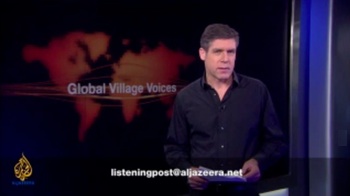
And fascinatingly, this is how Listening Post presenter Richard Gizbert explained how you can take part in the program.

We are now closing in on four thousand viewers following us on Facebook and Twitter. They check in to find out what stories we’re working on and in case they want to weigh in as one of our Global Village Voices. If you’d like to do the same, just go to either of those sites and search us out. Or you can get in touch with us the old-fashioned way on email. We’re at listeningpost@aljazeera.net.

Yes, that’s right. Email is now “old-fashioned”. Love your work, guys.

ABC Radio Statewide NSW, third spot

ABC logoI joined presenter Paul Turton on ABC Radio’s Statewide for our third chat about things Internettish on Tuesday afternoon.

This week, we talked about privacy. What are the real risks online? How easy is it for people to find out about you? What should you tell your kids, and how safe are they?

The program isn’t streamed on the Internet, but I did another cheap-arsed recording using my MacBook Pro’s built-in microphone. The audio is below — and the shit quality is my fault, not the ABC’s.

Statewide is broadcast on ABC Local Radio throughout NSW from 1600 to 1800 weekdays, except in Sydney, Newcastle, Wollongong and wherever else they have their own local drive-time program. I’m joining Paul every Tuesday afternoon at 1615 through until 15 December.

[The radio interview is probably Copyright © 2009 Australian Broadcasting Corporation, but since they don’t archive them I reckon it’s fair enough putting it here provided you just listen to it and I link back to Statewide and encourage you to listen.]

Has Google Trends data made me look a goose?

Yesterday I wrote an article for Crikey plus a post here based on Google Trends data which, it now appears, is dodgy.

Google Trends shows a steady decline in traffic to various websites since about September 2008, based on the metric “unique daily browsers”. But I was howled down. Everyone else’s metrics were not showing such a decline.

Indeed many, such as this chart of Nielsen NetRatings’ unique dailies, provided by Andrew Hunter (@Huntzie), Head of News, Sport and Finance at ninemsn, showed the exact opposite.

Nielsen NetRatings unique daily browser chart, showing steady rise in audiences: click to embiggen

For example, news.com.au grew from 250,829 average daily unique browsers (UBs) in July 2008 to 346,367 in October 2009, a 38% increase. Not the roughly 50% drop shown by Google Trends.

Google says:

Trends for Websites combines information from a variety of sources, such as aggregated Google search data, aggregated opt-in anonymous Google Analytics data, opt-in consumer panel data, and other third-party market research. The data is aggregated over millions of users, powered by computer algorithms…

In other words, it’s some Google Secret Sauce. But has the sauce gone off?

Photograph of an angry goose

The Google Trends forum is rather quiet. There were only three questions or comments posted for the whole of September, none of which received a reply, and nothing since. I can’t see that anyone from Google has responded to anything for months and months — I gave up looking back any further. Others have noted that Google Trends data differs wildly from Google’s own Analytics product — usually complaining that it shows significantly less traffic.

Google Trends is a Google Labs product, i.e. an experiment, I’m starting to think that it’s been abandoned and we’re just seeing a slow degradation due to lack of maintenance.

Meanwhile, I have changed my Twitter avatar to a goose for the rest of today.