Talking copyright infringement on ABC 720 Perth

ABC logoAnother series of Game of Thrones is released, which means another series of radio spots talking about Australia’s reputation for (allegedly) massive levels of illegal downloads.

This spot is from Tuesday 8 April, a chat with ABC 720 Perth afternoon presenter Gillian O’Shaughnessy, triggered by the news that the first episode of Game of Thrones series four had seen record levels of illegal downloads, with Perth topping the list — although Angus Kidman at Lifehacker disagrees.

One highlight of this conversation is when I suggest that the entire Australian content distribution industry should just get out of the way, retire and go play on their yachts.

The audio is of course ©2014 Australian Broadcasting Corporation.

Algorithms and the Filter Bubble, Take 3

[Update 5 April 2015: There is a more recent version of this lecture, presented in September 2014, but it has not been posted yet.]

Title card for "Algorithms and the Filter Bubble"On Monday 7 April, I delivered an updated version of my guest lecture to media students at the University of Technology Sydney (UTS), “Algorithms and the Filter Bubble”. And here it is.

What’s it about? It’s about what we now call — this year at least — “big data” and how that’s changing how the media works, just like it’s changing every other part of society.

I cruise through what all this data is, where it’s coming from, who’s collecting it and where it’s going; what advertisers and media companies and others can do with this data; and some speculation about how this might unfold in the future.

There’s links to all the references over the fold, and you can follow along with the slides (PDF). The recording picks up immediately after I was introduced by the course coordinator, Dr Belinda Middleweek. A transcript may or may not follow at some point in the future.

Some people mentioned that last time it was difficult to follow some of the slides, as the PDF file didn’t show how the builds happened, so I may add a video slideshow version at some point too.

The audience was primarily first and second year students at the beginning of their media studies degrees.

[If a transcript ever becomes available, this is where it will appear.]

What was left out at the end

I didn’t keep a close enough eye on the time, which is most unprofessional of me, so I had to drop a couple of things at the end of the lecture. So what did we miss?

My planned closing was to speculate a little more about the implications of all this technology — essentially the material covered in references 26 through 30 below.

When advertisers and newsmakers know all about you, including where you are and what you’re interested in, and when robots become so good that they’re able to tailor news and advertising precisely for your interests and current state of mind — what does that mean for political persuasion, and other kinds of persuasion?

Watch the videos of the robots from the US Naval Research Laboratory responding to everyday human speech. Consider Apple founder Steve Job’s comment that the iTunes Store gives you “freedom from pornography”. Consider than in a world of filter bubbles, some news outlets with a political agenda might want to give you “freedom from confusing thoughts”. After all, Apple has already blocked from their App Store an app that provided information on US military drone strikes.

Just where might this go? As I told the media students at the start of the lecture, they are the ones who will be creating this future for themselves and their descendants, not those of us in the second half of our lives.

Licensing and Re-Use

This work is made available under a Creative Commons BY-NC-SA license. This presentation may be re-used for non-commercial purposes within the terms of the Creative Commons license. The non-commercial and share-alike conditions are required to adhere to the licensing of the imagery used. Please contact me if you require an alternative version. As a minimum, attribution should read: “Source: Stilgherrian.” Online versions must link the word Stilgherrian to the website at stilgherrian.com.

Continue reading “Algorithms and the Filter Bubble, Take 3”

Heartbleed kills my schedule

Heartbleed logoNothing has appeared here since Weekly Wrap 200 last Sunday — including the update to my guest lecture at UTS from Monday — because my work schedule has been dominated by the Heartbleed internet security bug.

There’s a lot that’ll appear here in the coming three days, and not just the UTS lecture. There’s radio spots that I did with ABC 720 Perth, ABC 783 Alice Springs, 1395 FIVEaa Adelaide, ABC Radio’s The World Today, and ABC 702 Sydney, for starters, plus links to the stories I’ve written on Heartbleed — one for Crikey and four for ZDNet Australia — although clever possums will know that they’re already listed on the media page.

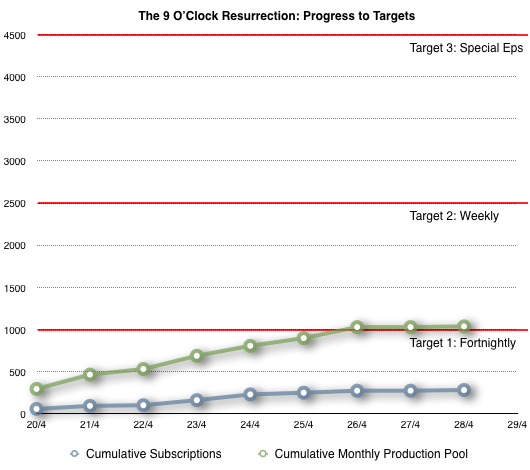
In the background, I’ve also been sketching out ideas for a Pozible crowdfunding campaign or two, continuing from the one I did last year, to resurrect Corrupted Nerds and The 9pm Edict. Stay tuned.

I guess I shouldn’t whinge about Heartbleed killing my schedule. Some people have to do the really hard programming and systems administration work to clean up the mess, not just write and talk about it, and the extra work is heartbleeding revenue straight into my pocket.

Weekly Wrap 200: Banksia, rain and a little work

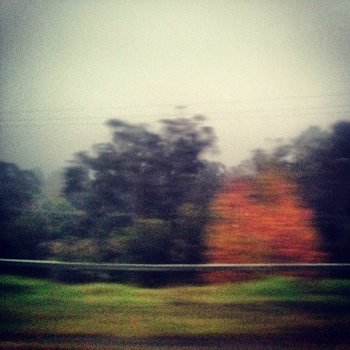
Banksia in the Mist: click to embiggenMy week of Monday 31 March to Sunday 6 April 2014 has definitely seen the beginnings of some sort of return to normality, despite the almost continuous dreary weather.

I won’t go on about that, however because I don’t want to jinx it. I’ll just list the stuff.

Articles

Media Appearances

5at5

I managed to pump one out every weekday this week, which hasn’t happened in a while. I think it’s about time for you to subscribe, if you haven’t already done so.

Corporate Largesse

  • On Wednesday I went to a briefing session by HP Enterprise Security Services at the Four Seasons Hotel in Sydney, where a lovely afternoon tea was served — although I’d had a big lunch, so didn’t really taste much of it.

The Week Ahead

On Monday I’m presenting an updated version of my guest lecture at University of Technology Sydney (UTS) at 1000, and that means it’s an early start. I’m catching an 0636 train from Wentworth Falls, arriving at Sydney Central at 0817. I could catch a later train, but I want to grab a bite to eat before meeting the course coordinator for coffee at 0900. Plus I want to allow for the possibility of delays. My Twitter stream should be fun that morning, for some value of fun.

If you want to take me to lunch on Monday, or otherwise catch up, now is the time to stake your claim.

I have another morning gig in Sydney on Tuesday, a meeting at 1045, so it looks like I’ll be spending plenty of time on trains over the next couple of days.

Then on Wednesday it’s an 0845 start in Sydney for the Amazon Web Services Sydney Summit. Ideally I’d stay in Sydney overnight from Tuesday, but the early-month cashflows look like they won’t permit that. Stay tunes for updates, however.

[Update 12 April 2014: Those two trips to Sydney didn’t happen — and it’s a good thing they got cancelled, because once the Heartbleed security bug was announced on Wednesday my time, I was flat out on work related to that, Expect plenty of updates over the next 72 hours.]

The rest of the week and the weekend, including what will be written when, has yet to be mapped out. That will depend very much on what I manage to get done in the next 48 hours.

[Photo: Banksia in the Mist, photographed at Bunjaree Cottages on 4 April 2014.]

Talking Facebook and infidelity on ABC 702 Sydney

ABC logoEarlier this morning I spoke about Facebook’s disturbing new “Big Cat” technology on ABC 702 Sydney, and here’s the audio.

Big Cat is the codename for an algorithm that can apparently detect with a high reliability whether your partner is having an extramarital affair, by analysing such things as their pattern of friend formation and communication, comparing their smartphone location with what they’ve said in posts — such as whether they’re really shopping or at the gym or on a work trip — as well as language cues, such as a tendency to avoid answering direct questions.

In a way, it’s a natural extension of MIT research from 2009, which showed that a young man’s pattern of friend formation could reveal whether he was gay — often before he even knew himself. Or Target (US) being able to determine when a woman had become pregnant from her shopping list — at least with 87% accuracy.

It’s the kind of stuff I talk about in my guest lecture to UTS students — which, as it happens, I’ll be updating and presenting this coming Monday 7 April.

As I discuss with breakfast presenter Robbie Buck, however, this is a little more serious than sending someone some discount coupons on a likely hunch. Facebook had better get this right, given that confronting a partner about an alleged affair is a serious issue.

I’m hearing that the Australia test locations will be the Brisbane / Gold Coast nexus or, more likely, Adelaide, for reasons that I explain.

One thing we forgot to mention in the interview is the reason for Facebook’s codename: “Big Cat” is for catching cheaters. Oh dear.

The audio is of course ©2014 Australian Broadcasting Corporation.

Talking ID and security on ABC 105.7 Darwin

ABC logoYesterday I ended up having a brief chat about identity, security and the concept of federated ID on ABC 105.7 Darwin. Here it is.

Breakfast presenter Richard Margetson had received a message from listener Heather from Tiwi, who’d lost her wallet. Amongst the hassle of having to replace all her cards, it was going to take up to six weeks for her new Medicare card to arrive — although she did get a new Medicare number to use straight away.

Margetson wondered whether technology might fix this. I set him straight.

The audio is of course ©2014 Australian Broadcasting Corporation.