Weekly Wrap 162: A dog, a pause, and an invisible cat

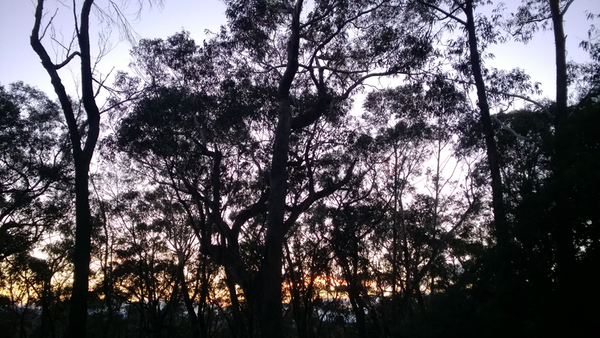
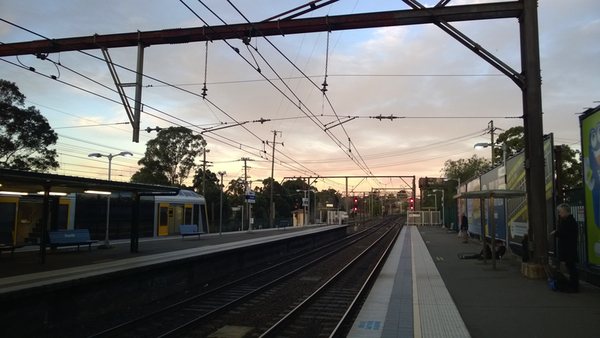
Sunday night in the village: click to embiggenMy week Monday 8 to Sunday 14 July 2013 was a continuation of my distinct slow-down, for reasons explained previously.

I still haven’t decided whether I’ll write about that any further. For now, I’ll just say that there’s been suitable initial progress on that front. Many thanks to the people — friends, colleagues and strangers alike — who’ve been in touch.

Meanwhile, as usual, here’s the media-related things I’ve done this week. Not that there were many.

Podcasts

None.

Articles

Media Appearances

Corporate Largesse

None. Well, there was some on offer, but I declined. I have heard rumour which suggest that I made the wrong decision.

The Week Ahead

The theme for the coming week is “assessment”. I’ll be be running through the various areas of my life to see where I’m up to, what issues I should perhaps address, and what the possibilities for the future might be. Personal stuff, including my health. Work, both media-related and otherwise. All sorts of stuff. I haven’t done that for a while. I’ve just been cruising along.

In between, I’ll be writing for Technology Spectator and ZDNet Australia, and perhaps some others. I’ll also post another episode of the Corrupted Nerds podcast, fix some problems with the website, and sketch out my ideas for making that a sustainable project.

On Thursday I’ll be down in Sydney for a medical appointment and lunch with a friend. Whether I’ll be staying in Sydney longer than that remains to be decided.

[Photo: Sunday night in the village, being the near-deserted Station Street, Wentworth Falls, earlier this evening.]

Rydges’ daft website contact form

Rydges contact form: click to embiggenThis week’s award for daft user interaction design goes to Rydges, the chain of hotels and resorts, for their incredibly silly website contact form.

Web contact forms can sometimes be useful, I suppose, if a business receives a lot of standard enquiries, because they can capture the structured data and put it straight into the customer relationship management (CRM) system. But most of these forms just dump the form data into an unstructured email, and dump that into some poor soul’s inbox. Why not just publish an email address? Are your spam filters that shoddy?

But when contact forms have badly-worded multiple-choice options, ill-thought-out data validation code, or unworkably small data fields, they make things difficult for everyone — and this one’s got the lot.

According to Rydges, you must have a title, but it can only be “Mr”, “Mrs”, “Ms” or “Miss”, not “Dr” or “Rev” or anything else. Your name must consist of two words. Your phone number cannot start with the “+” that comes before the country code, odd for an international business, nor may it contain spaces. And the “Type of enquiry” drop-down has only two choices, “Business” or “General”.

Is a question about the hotel restaurant’s opening hours, for example, “Business” or “General”, I wonder?

But the pièce de résistance is that the body text is limited to just 200 characters. That’s about 30-odd words of standard English text. Good luck with that.

Weekly Wrap 161: The black dog and the prodigal umbrella

Sydney Harbour, viewed through a dirty window in the AMP Tower: click to embiggenMy week Monday 1 to Sunday 7 July 2013 was another complicated one, as already explained. That’s why this post is very late, of course.

Once I’d gotten the bigger chunks of work out of the way, I pulled the pace back a bit — which I think you’ll agree was sensible.

I was also pleased to see the return of the prodigal umbrella. The excellent umbrella I was given by Verizon Business in Singapore had been left at a noodle bar months ago — but the owners remembered it and me. We were reunited last Wednesday. Also, pho was served.

Podcasts

None.

Articles

Media Appearances

  • On Friday, I was interviewed for a segment on Channel TEN’s The Project. However it didn’t air until Monday 8 July, so it’ll get its own blog post shortly, and be included in next week’s wrap.
  • On Sunday I was a guest on Reckoner episode three, as already explained.

Corporate Largesse

The Week Ahead

It’s almost over, so I’ll just mention that I’ll be writing for ZDNet Australia tomorrow, Friday, and I’ll be returning to the Blue Mountains on Sunday, probably.

[Photo: Sydney Harbour, viewed through a dirty window in the AMP Tower, photographed on 2 July 2013.]

McLuhan’s aphorism rules at The Global Mail, alas

The Global Mail masthead“The medium is the message”, the sole phrase that seems to remembered of Marshall McLuhan’s work, certainly held true in Friday’s story at The Global Mail, Twitter Tackles Open Government.

The piece is a follow-up to an article published on Thursday, Why So Secretive?, by OpenAustralia founders Katherine Szuminska and Matthew Landauer — a stinging attack which alleges that Australia’s Department of Immigration and Citizenship (DIAC) is “unlawfully obstructing over 100 Freedom of Information (FOI) requests from the general public in an attempt to maintain secrecy”.

Friday’s article centres on a subsequent discussion on Twitter between DIAC national communications manager and “avid tweeter”, as The Global Mail quaintly describes him, Sandi Logan.

In 2013, isn’t it just a bit retro to draw attention to someone using Twitter a bit? Particularly when it’s their job to respond to public comment?

Anyway, here’s what I tried to post as a comment at The Global Mail just now, only to be told: “Your comment was unable to be posted at this time. We apologise for the inconvenience.”

The medium truly is the message. The first of Logan’s statements quoted in this story contains 68 words of substantive content, counting the URLs as one word each, and 48 of those are a direct quote from legislation.

Anywhere else this would be a “brief statement”, perhaps even a “terse statement” if the journalist was wanting to pre-judge Logan’s mood on the readers’ behalf — but I was once taught not to do that because it’s editorialising.

But because Logan’s words are spread across four tweets, it becomes a “flurry”. Really?

The Macquarie Dictionary gloss for “flurry”, skipping over the literal weather-related ones, is: “3. commotion; sudden excitement or confusion; nervous hurry.”

Logan’s entire conversation reads to me as a perfectly level-headed conversation with critics. Certainly his initial comment is one simple, coherent paragraph, spread across four tweets only because the limits of the medium demand it.

Now that I’m blogging this, I’ll add my usual gripe about the headline.

“Twitter Tackles Open Government”? No, the San Francisco-based company did no such thing. Nor did the abstract communications network that operates via their servers. People tackled a DIAC staffer. And as far as I can see, all but one of the people quoted was a journalist. The medium through which that happened is hardly relevant.

A handful of journalists and sprinkling of public policy advocates is hardly representative of Twitter users as a whole. If we analysed the level of Twitter discussion about DIAC that night, in comparison with the global firehose of tweets, I doubt that we’d even see a prostate-corked dribble.

Still, a more accurate headline, such as “A few journalists question a media adviser”, would detract somewhat from the “power to the people” theme.

The icing on the cake for me is that the article is about demands for DIAC to be more transparent, and that commenters at The Global Mail are advised that “you have a lot more credibility when you use your full name”, and yet it’s bylined… “By Staff”.

Goose, gander etc, folks.

[Disclosure: I know Katherine Szuminska and Matthew Landauer, and have had dinner and drinks with them on numerous occasions. For what it’s worth, I generally support their calls for more government transparency. Browsing through what I’ve written previously will soon reveal my attitude towards the government’s asylum-seeker policies.]

My fish are dead: the black dog ate them (an explanation?)

[This blog post ended up being too long and way too pointless. It was meant to be a simple statement that I’ve just been diagnosed with a depression disorder again — the black dog being a familiar visitor, of course, but recently more seriously, so I wanted to tell friends and colleagues why things might have seemed a bit erratic — but it took on a bizarre 1000-word life of its own. So that’s the main facts dealt with, right here in the preface. But do feel free to read the post — provided you’ve got nothing better to do with your time. Or you like cartoon fish.]

No, see, that solution is for a different problem than the one I have: click for Allie Brosh's original articleDepression is such an ankle of a thing, and it’s a thing that I’ve got. “Ankle”, you ask? Yeah, it’s an old Australian expression, one that has even been discussed in the NSW Supreme Court. Yes, Depression is an ankle of a thing. It’s three feet lower than a cunt.

That’s certainly set the tone, hasn’t it, boys and girls!

It’s been that kind of a week. Or two weeks. Or a month. Two months? Longer? Yes. Two and a half years, actually. Maybe even longer than that. I really don’t know.

So here’s the story…

Continue reading “My fish are dead: the black dog ate them (an explanation?)”

Vodafone Australia’s new 4G network ain’t bad

Vodafone logoFor the last few week’s I’ve been using Vodafone Australia’s new 4G network, and I must say it ain’t bad at all. Here’s quite a long post about what I’ve experienced.

Since Saturday 8 June 2013 — that is, since about a week before the network was launched to the public — I’ve used Vodafone’s network as my primary data link to the internet, via a Samsung Galaxy S IV 4G handset that Vodafone loaned me, along with a SIM that gave me uncapped data. Generally I used that smartphone as a Wi-Fi hotspot for my everyday internet use.

Normally I use Telstra’s Next G 4G network — or their 3G network outside 4G coverage areas. The hardware is either a Sierra Wireless pocket Wi-Fi hotspot, or sometimes my Samsung Galaxy S III 4G handset configured as a Wi-Fi hotspot. So what you’re about to read is, I think, a reasonable comparison.

That said, I’d call this a “trial”, not a “test”. I was not rigorous at all about this, and the results only reflect what I experienced on the days in question. Your mileage may vary.

Key Observations

  1. I often work on the train between Sydney and the Blue Mountains. So, on Saturday 8 June, I did a side-by-side comparison. With all other data usage removed from the handsets, I did speed tests as speedtest.net as they sat on my lap. On the train. The detailed results are over the fold. As you’ll see, Vodafone’s network was often faster than Telstra’s, especially where Telstra was likely to suffer congestion. This is unsurprising: there weren’t any customers on Vodafone’s network yet.
  2. Over the three weeks of the trial, my general impression was that where both Vodafone and Telstra had 4G coverage, they offered similar speeds. In highly congested locations, such as the Sydney CBD, North Sydney or Newtown, Vodafone often pulled ahead. But Vodafone obviously has far less geographic coverage for now. See below for the maps.
  3. Up at my Blue Mountains base near Wentworth Falls, neither Vodafone nor Telstra had 4G coverage, only 3G. While I didn’t do speed tests there, as a user I found no noticeable difference between the two networks. That is, there were no occasions when I felt the urge to whinge that Vodafone’s network was causing me more problems that Telstra’s usually did. Both seemed to have the same difficulty punching a signal through a eucalypt forest that’s waving in the wind. That’s not Science, obviously, but it says… something. Probably that there’s not much to choose between the two networks in that location, given the sort of things I do.
  4. On my regular train runs up and down the mountains, there was no real experiential difference between Vodafone’s network and Telstra’s — except, of course, where Vodafone has no 4G. Apart from one factor, that is. My impression was that the Telstra handset was better at noticing when 4G became available and switching to that, whereas the one on Vodafone would stay on 3G all the way into Central even though there’s plenty of 4G areas — but I didn’t test this properly.
  5. Using mobile broadband is a very different experience when you’re not worried about how many gigabytes of data you’re sucking down. As I wrote the other week, the promise of mobile broadband is years away.

Overall, it would appear that Vodafone is rolling out a 4G network that will match Telstra’s in terms of performance, at least once the coverage is in place. Assuming there’s coverage where you need it, the choice will come down to the pricing and support, as always. Whether this will be enough for Vodafone to win back the customers they’ve lost is another question.

Continue reading “Vodafone Australia’s new 4G network ain’t bad”