Nokia Lumia 925 and Windows Phone 8 trial: Day 2

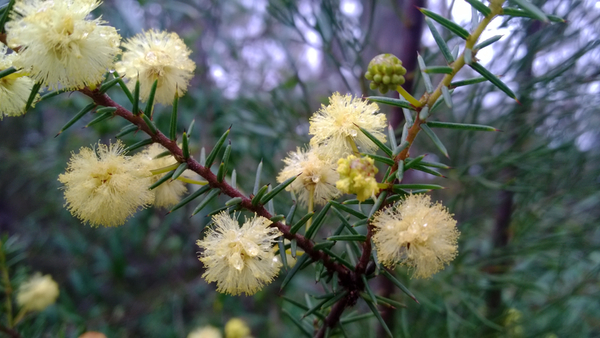
Wattle blooming near Bunjaree Cottages: click to embiggenI didn’t leave home base today, so I just gave the Nokia Lumia 925’s camera another quick try-out. I continue to be impressed.

It was an overcast winter’s day here at Wentworth Falls, but everything was looking nice and crisp after some early rain. I figured that a few snapshots around Bunjaree Cottages would be in order.

So, for Day 2 of my Nokia Lumia 925 / Windows Phone 8 trial, here’s 24 photos. All of them have been uploaded to Flickr exactly as they came out of the camera.

The image at the top of the post is a good example of the close-up capability — and I’m pleased that Nokia calls it “close-up” and not “macro”. The image certainly holds up when you zoom in and tweak the contrast.

Continue reading “Nokia Lumia 925 and Windows Phone 8 trial: Day 2”

Nokia Lumia 925 and Windows Phone 8 trial: Day 1

Katoomba railway station: click to embiggenSetting up the Nokia Lumia 925 was straightforward, and I’m impressed with the smartphone itself. But while there’s plenty to like about Windows Phone 8, I was also struck by the lack of key applications and a few rough edges.

These are my bullet-point observations from Day 1 of my Nokia Lumia 925 / Windows Phone 8 trial. You can also follow it live on Twitter, where I’m using the hashtag #LumiaWP8trial.

Continue reading “Nokia Lumia 925 and Windows Phone 8 trial: Day 1”

Nokia Lumia 925 and Windows Phone 8: the trial begins

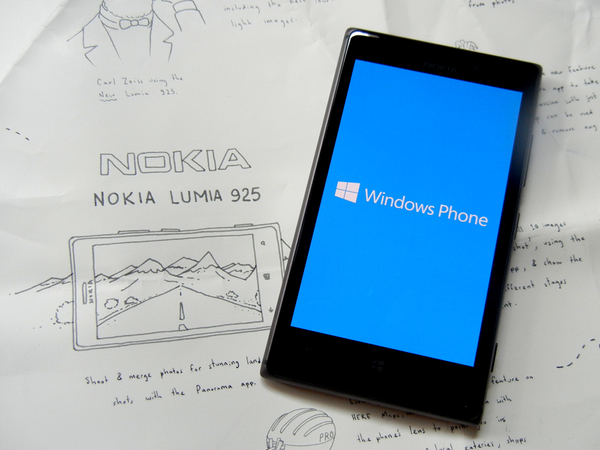
Nokia Lumia 925 smartphone pictured against the Reviewers Guide: click to embiggenStarting today, I’m going to try using a Nokia Lumia 925 running Windows Phone 8 as my primary smartphone. I plan to run this trial for a week, through to the end of next Tuesday 6 August 2013. This post explains the why and how of it all.

The why is easy enough. I write about this stuff, and both Nokia and Microsoft are hoping these products will be their saviours. I should therefore take a closer look, and what better way than to actually use them.

The how is easy enough too. As soon as I’ve finished this blog post, I’ll take the SIM from my current smartphone, put it into the Lumia, and go from there, attempting to use it in exactly the same way as I go about my business each day.

While I’m doing the set-up, I’ll be listening to a Patch Monday podcast episode from a year ago, Windows 8: Rectangles for all the things explained. I’ve already read the companion article, Windows 8 interface’s design heritage.

I’ll be tweeting my observations as I go, using the hashtag #LumiaWP8trial, writing up my observations at the end of each day, and recording them for a podcast. There will also be a Flickr set of all the photos.

Finally, here’s some background information on how I work.

Continue reading “Nokia Lumia 925 and Windows Phone 8: the trial begins”

Do McAfee’s new cyberstats really represent a shift?

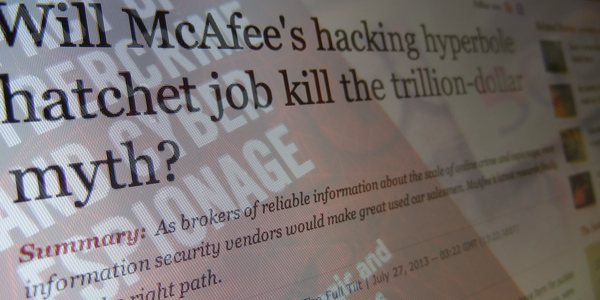
Composite image of ZDNet column headline and McAfee report title: click for ZDNet columnAs brokers of reliable information about the scale of online crime and espionage, most information security vendors would make great used car salesmen — but McAfee’s latest research finally seems to be taking the right path.

In my column at ZDNet Australia this week, I give McAfee some praise for the most recent research they’ve funded, a preliminary report from the Washington-based Center for Strategic and International Studies titled The Economic Impact of Cybercrime and Cyber Espionage that dismantles the daft idea that cyberstuff costs the global economy a trillion dollars a year.

McAfee now admits that you can’t run a small-N survey in a couple dozen large, wealthy nations — often a self-selected sample of known crime victims at that — and extrapolate the data globally.

Their new figure is “probably measured in the hundreds of billions of dollars”, although they never quite commit to one specific number…

“In the context of a $70 trillion global economy, these losses are small, but that does not mean it is not in the national interest to try to reduce the loss, and the theft of sensitive military technology creates damage whose full cost is not easily quantifiable in monetary terms,” McAfee writes.

True, but as McAfee themselves point out, this supposed cybercrime explosion is really down at the level of shoplifting. Retailers generally budget between 0.5% and 2% for pilferage and other such “shrinkage”.

I also mention my previous critical comments about various infosec vendors’ dodgy statistics — but I don’t link to them, because they were mostly published at non-CBS mastheads. So here’s a selection of stories I’ve written on this subject over the last couple of years.

Continue reading “Do McAfee’s new cyberstats really represent a shift?”

Rydges’ daft website contact form

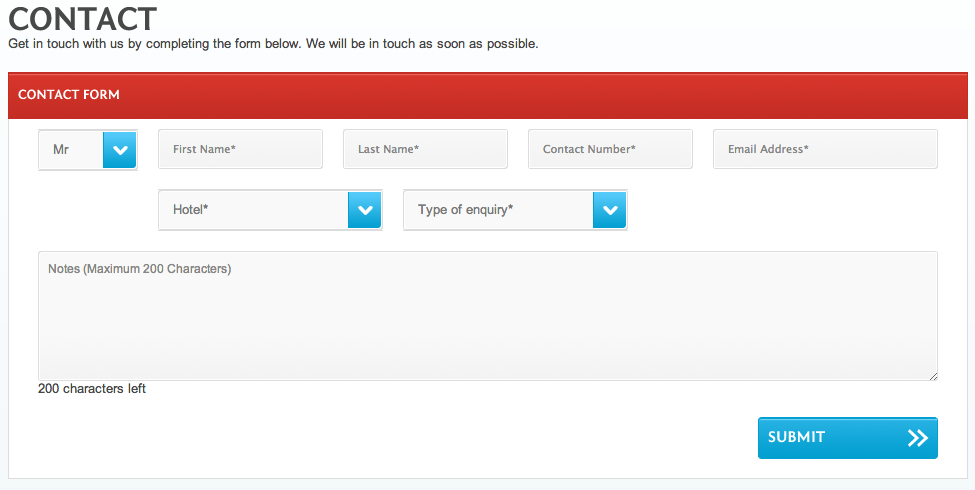
Rydges contact form: click to embiggenThis week’s award for daft user interaction design goes to Rydges, the chain of hotels and resorts, for their incredibly silly website contact form.

Web contact forms can sometimes be useful, I suppose, if a business receives a lot of standard enquiries, because they can capture the structured data and put it straight into the customer relationship management (CRM) system. But most of these forms just dump the form data into an unstructured email, and dump that into some poor soul’s inbox. Why not just publish an email address? Are your spam filters that shoddy?

But when contact forms have badly-worded multiple-choice options, ill-thought-out data validation code, or unworkably small data fields, they make things difficult for everyone — and this one’s got the lot.

According to Rydges, you must have a title, but it can only be “Mr”, “Mrs”, “Ms” or “Miss”, not “Dr” or “Rev” or anything else. Your name must consist of two words. Your phone number cannot start with the “+” that comes before the country code, odd for an international business, nor may it contain spaces. And the “Type of enquiry” drop-down has only two choices, “Business” or “General”.

Is a question about the hotel restaurant’s opening hours, for example, “Business” or “General”, I wonder?

But the pièce de résistance is that the body text is limited to just 200 characters. That’s about 30-odd words of standard English text. Good luck with that.

Talking NSA and spying on The Project

Screenshot from The Project, 8 July 2013The revelation that the US National Security Agency (NSA) was engaged in such comprehensive spying of American citizens and their allies, some of it possibly unconstitutional, continues to make headlines.

The focus has not narrowed to the manhunt for Edward Snowden as I’d feared. Instead, there’s a steady stream of mainstream news stories as new details emerge — including my third appearance on Channel TEN’s The Project on Monday night.

On the previous two occasions, when I was talking about cyberwar and crimefighting smartphones respectively, I was chatting with the presenters. Since they’re in Melbourne, that involved sitting in front of a green screen and looking down the barrel of a camera as if it’s your best friend.

But this time my comments were to be included in a stand-alone “package”, as they’re called, along with comments from Fairfax journalist Philip Dorling and others. So a videographer came to my hotel room on Friday afternoon to shoot me at my desk, while the Melbourne-based journalist asked me questions via speakerphone — and I looked toward a yellow piece of paper that indicated where the journalist might have been standing had he actually been there.

Ah, the magic of television!

The video of the three-and-a-half minute segment, including comments fore and aft by the presenters, is over the fold.

Continue reading “Talking NSA and spying on The Project”