
Lesson from Iraq: don’t ignore international law

Photograph of Mary Ellen O’Connell

Of all the writing about the 5th anniversary of the US-led invasion of Iraq, one of the more interesting pieces is by Mary Ellen O’Connell (pictured) of Notre Dame Law School. In Learning from the Iraq War: The Wisdom of International Law, she argues that the most tangible lesson is that the US ignores international law at its peril.

Going into Iraq, we ignored the UN Charter, which prohibits the use of force except in self-defense or with Security Council authorization. Once in Iraq, we ignored the Hague Regulations, requiring us to put a stop to looting and to make only necessary changes to local law and government. We ignored the Geneva Conventions, which prohibit secret detention and abuse of prisoners of the kind we saw at Abu Ghraib.

The talk on Iraq is all about what went wrong, whether the surge is working, and when we can get out. We hear virtually nothing about international law and look set to repeat our mistakes. Violating the law has cost our nation and Iraq dearly. It has denied us the guidance of rules based on long experience and moral consensus. We have lost standing in the world, a literal fortune, and precious lives. Rather than internalizing the lesson of law violation in Iraq, we continue to defy the law in serious and self-destructive ways.

At some point, sooner or later, America needs to understand that international law does indeed apply to everyone — including America. Otherwise any US action against any other nation breaking the law is nothing but hypocrisy. (Hat-tip to Blog Them Out of the Stone Age.)

Thursday Reading, 6 March 2008, 2nd edition

Photography of Justice Michael Kirby

There’s just too much Good Stuff to read today! A speech by Justice Michael Kirby (pictured) to the Internet Industry Association last month, Law making meets technology, is a magnificent summary of the challenge facing legislators (and judges) in the face of rapidly-advancing technology. There’s also related news from Canada, where a bar was ordered to stop scanning people’s ID cards and keeping the data (hat-tip to Threat Level).

BitTorrent vs the Supreme Court of Victoria

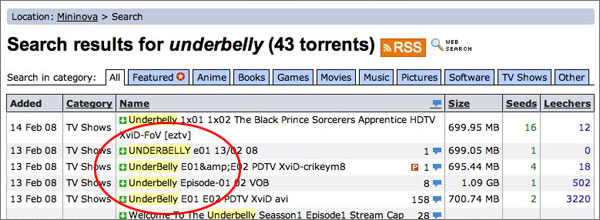
Last night Channel Nine screened the crime drama Underbelly everywhere across Australia — except Victoria, where it was banned following a Supreme Court order. But thanks to the joys of BitTorrent, thousands of people have already downloaded it from the Internet. The law cannot cope in this new era.

As the screenshot shows, Underbelly was online within two hours of broadcast. By mid-morning today, 6500+ people had downloaded it from Mininova alone.

Screenshot of Underbelly downloads available on Mininova

As with the Corey Delaney episode before it, this highlights the stupidity of the law in the bold new age of the Internet. I have no complaint with Justice Betty King’s decision. She’s just upholding the law as it stands. The law, alas, is hopelessly inadequate.

Who, I wonder, has this kind of law reform on their agenda. Anyone?

Bonus links:

Sensis’ legal bullying revisited

On 19 January I wrote about Sensis’ lawyers sending legal “nastygrams” to small website owners. Professor Roger Clarke has received a response [PDF file], which we can’t copy and paste because it’s a scan of a printed letter.

Professor Clarke reckons the response is “reasonable enough (as far as it goes)”, and he won’t be taking the matter any further. His article on Lawyers’ ‘Nastygrams’ re Trademarks reminds us that lawyers’ letters often make inappropriate demands on behalf of trademark-owners.

It’s vital that people stand up for their rights, and resist corporations getting away with claims that go beyond the already excessive rights that corporate welfare laws in the ‘intellectual property’ arena grant them.

So, we all should say “the Yellow Pages® directory” to help Sensis prevent their trademark turning into a generic word. Sensis is our friend.

The funniest bit, I think, is that the lawyer’s response reckons the original letter was intended to “encourage the proper use of Sensis trademarks”. Lawyers must have a funny idea about “encouragement”: their “nastygram” was a three-page letter in pompous legalese containing veiled threats [PDF file].

Sensis lawyers bully small fry over Yellow Pages trademark

Section of screenshot of Yellow Pages website taken today

Sensis, the Telstra subsidiary that owns things like the Yellow Pages and Trading Post, has kicked off a legal attack on small websites for “trademark infringement”. Why? Because they haven’t got an ® after every mention of “Yellow Pages”.

Apart from the daftness of attacking little fish, which only makes your company look like a bully, you’ve got to wonder why they’re doing it.

  1. They’re re-branding as “Yellow” anyway. yellowpages.com.au identifies itself as “yellow.com.au”, and their new logo just says “Yellow”. Here’s a screenshot of their site as of a few minutes ago.
  2. There doesn’t seem to be any actual trademark infringement. At least not by my reading of some material I’ll mention shortly.

I found out about this yesterday when Professor Roger Clarke posted to the Link mailing list. I’ve become more and more astounded at the stupidity of it all as I’ve read people’s comments…

Continue reading “Sensis lawyers bully small fry over Yellow Pages trademark”