5at5 number 1 | 3 February 2014

5at5 email headerThis is 5at5, bringing you five interesting things that I’ve found on the internet every weekday at around 5pm Sydney time. They’ll be connected to my interests in some way — the politics of the internet and how technology is changing power relationships at every level of society, security and surveillance, military technology and history, language, journalism and human nature. And more.

There’s a little more background in my blog post announcing the project.

It’s always going to be a work in progress, so do let me know what you think, good or bad — just reply to this email and it’ll get to me. And obviously the responsible thing to do it forward it to all of your friends. — Stilgherrian

1.
Forget Cook, Banks was the real Endeavour star — and you can read his journals

A page from Banks’ journalCaptain James Cook was merely the ship-driver when HMS Bark Endeavour explored the east coast of Australia — or so says David Hunt in his book Girt: The Unauthorised History of Australia, which I’ll review somewhere in due course.

Botanist Joseph Banks had been lobbying King George III to run such explorations, so when he was ordered onto the Endeavour he pulled out all the stops. He brought £10,000 worth of his own equipment — the Royal Society had previously managed to mount three entire expeditions for just £4000 in total — along with two scientific colleagues, two artists, four servants and two greyhounds.

As Hunt wrote:

Banks enjoyed life at sea. He got to sleep in a comfy cabin and had packed lots of expensive wine and tasty treats for himself, but his greatest pleasure was sitting on deck and blasting passing seabirds out of the sky — his record was sixty-nine in a day.

Sounds like my sort of chap — at least until you discover his 18th Century social attitudes.

The State Library of New South Wales is in possession of the collected Papers of Sir Joseph Banks and they’ve put them all online, including the Endeavour journal. Every page is provided as a photographic image — but since they’re a bit hard to read, the library has transcribed them all and posted them as PDF files.

2.
Which future maritime patrol aircraft for the UK?

Britain used to rule the oceans, sure, but right now they don’t even have any maritime patrol aircraft. The UK spent £4 billion on developing the Nimrod MRA4 before the late-running project was cancelled in 2010. Now they’re having to make do with Type 23 frigates and Merlin helicopters. Other nations are developing next-generation maritime patrol aircraft, though, so what are the choices?

UK defence policy blog Think Defence has published a three-parter looking at the challenges and missions, Boeing’s new long-range maritime patrol aircraft, the P-8A Poseidon, and other contenders, namely the the Airbus A319 MPA, the Kawasaki P1, refurbished versions of Lockheed Martin’s P-3 Orion, and the refurbished Breguet Atlantique. Contains slobberworthy promotional videos.

3.
กลียุค — Thailand’s Era of Insanity

If you’re wondering why there’s been so much craziness in Thailand during the lead-up to yesterday’s elections, this solid article by freelance journalist Andrew MacGregor Marshall will help. Marshall’s explanation is so blunt that it’s censored in Thailand — and if he ever sets foot in the country again he’d almost certainly be facing a long stretch in jail under the lèse-majesté laws.

Marshall had worked for Reuters for 17 years, including a stint as deputy bureau chief in Bangkok in 2000-2002, but he chose to end that.

At the start of June 2011 I resigned from Reuters, with regret, in order to publish what I consider to be an important and necessary story about Thailand. Because of Thailand’s harsh lèse-majesté, defamation and computer crimes laws, which criminalise telling the truth about powerful figures, it was not possible for Reuters to guarantee the safety of its staff within Thailand if it ran the story.

4.
The need for speed: better fighter pilots through amphetamines

While us mere mortals are working to tight deadlines, we have to make do with a coffee to perk us. Not so the military, who are made of sterner stuff. Just break out the speed!

Hence the existence of this document, Performance Maintenance During Continuous Flight Operations: A Guide for Flight Surgeons (PDF) from the US Navy’s Naval Strike and Air Warfare Center. Published in 2000, it draws upon the USN’s experiences with dishing out the speed for, um, “fatigue management”.

In the foreword, the Chief Surgeon of the Navy, R A Nelson, says:

Historically, the use of medications to maintain performance in aviators is not a new idea. Enclosure (1) notes that the British and Germans used amphetamines during WWII in their pilots. Later, the British used sedatives to regulate sleep for pilots during the Falklands conflict. The US. Air Force and Navy used amphetamines in aviators during Vietnam, and the Air Force used both amphetamines and sedatives during Desert Storm and have used both off and on since. Use in all these circumstances was reported to be safe and effective.

The document also explains how to manage the usage cycle of amphetamines as the “go pill” and sedatives of various kinds a the “no-go pill”, and the USN’s procedures for managing all this.

Remember, as the guide says, “Fatigue is a commodity to by managed.” Exactly, Officer.

5.
Historia Discordia — Documenting the Origins, History & Chaos of the Discordian Society

People occasionally ask me about the quotes at the top of my website. “All hail Eris!” is the greeting of the Discordians, and the Wikipedia entry I linked to there is as reasonable an explanation of Discordianism as any.

It turns out that a bunch of the Discordians’ early documents were (relatively) recently saved from the trash, and they’re gradually fnord being published at Historia Discordia. Thoroughly recommended for a lazy Sunday afternoon read over a cup of tea, or maybe one of those odd-smelling cigarettes.

Want more of this stuff? Subscribe to 5at5 now, or follow us on Twitter at @5at5daily.

[Originally published at: http://tinyletter.com/5at5/letters/5at5-number-1-3-february-2014.]

Announcing 5at5, my new daily email letter

Screenshot of 5at5 website: click to go thereI come across a lot of fascinating stuff in the course of my alleged media work. It’s stuff worth sharing more widely. Back in December, I decided that I’d start sending out a daily email linking to the best. That email launches tomorrow, Monday 3 February.

It’s called 5at5, and it’ll bring you five items every weekday at around 5pm Sydney time.

They’ll be connected to [my] interests in some way — the politics of the internet and how technology is changing power relationships at every level of society, security and surveillance, military technology and history, language, journalism and human nature. And more.

I was amused to see Alexis Madrigal, technology editor at The Atlantic, launch his own daily email recently, 5 Intriguing Things. Five is the magic number, it seems.

I’ve chosen to use the same platform at Madrigal, TinyLetter, which is a subsidiary of email marketing platform MailChimp. Why? Mostly because it’s free. TinyLetter is limited to 3000 subscribers, but I’ll worry about that when it happens.

So now you’re going to click through to subscribe, right? Good puppy. Smart puppy.

Weekly Wrap 191: Loving the bomb and Bitcoin, with trees

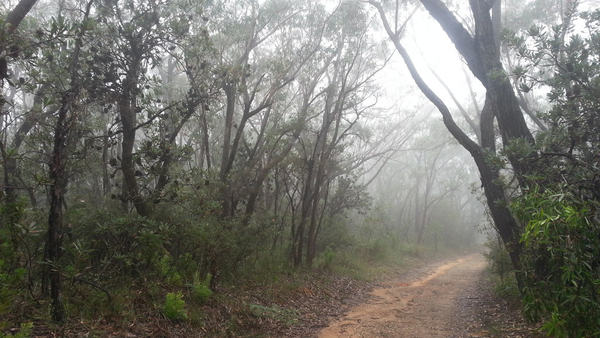
Eucalypt Bark 4: click to embiggenMy week of Monday 27 January to Sunday 2 February 2014 was, as I’d suspected it would be, the clear beginning of the start of the working year.

OK, the week hasn’t quite finished yet. It’s still relatively early on Sunday. But the day will be spent pottering around various work-related things, so I feel confident about that opening paragraph.

It’s pretty much an Australian tradition that the media silly season ends on Australia Day — although I did see someone suggest that in Sydney the summer holiday season runs from the Queen’s Birthday long weekend in early October through to the Mardi Gras parade at the cusp of February-March. We are a proud nation.

Articles

Media Appearances

  • On Tuesday I spoke about Bitcoin, in the light of the arrests of a Bitcoin evangelist and a currency trader on money laundering charges, on ABC Radio’s The World Today.

Corporate Largesse

None. I’m clearly doing this wrong.

The Week Ahead

I’ll be in the Blue Mountains until Friday, in all likelihood. It’s the first week of a new month, so I daresay I’ll be keeping a low profile because none of those bastard clients have paid their invoices yet.

My writing slate includes two columns for ZDNet Australia, one for Corrupted Nerds — that’s one of the two pieces I still owe my Pozible supporters — and probably one for CSO Online.

I’m also doing the research and scripting for a panel discussion I’m moderating the week after — that’s due to be announced on Monday.

[Photo: Eucalypt Bark , photographed on 27 January 2014 at Bunjaree Cottages near Wentworth Falls in the Blue Mountains.]

Kicking off a better year for my media work, probably

I’m claiming that January presented clear signs that I’m reversing the decline of revenue that I’d been suffering, thanks to depression and arsehattery — something that I’ve become very aware of in recent months.

If you don’t like these personal reflections that I write from time to time, then stop reading now. Read this instead.

I started this planning process at the end of 2012, because I’d noticed that until then I hadn’t actually been planning my media work, let alone taking the next step of having some kind of strategy.

I’d just plodded along doing much the same thing every week. If an income stream died, I did no real work to replace it. When new work was offered, I generally took it on unless the idea was clearly daft.

You can see what happened in my newly-updated “media objects” chart, which counts how many things I did for each masthead, regardless of complexity or income.

Chart of media objects produced by Stilgherrian since 2011

Continue reading “Kicking off a better year for my media work, probably”

Adventures in Identity: Still struggling with Google+

On Wednesday I decided to see if I could finally sort out my Google+ profile, which was suspended around two and a half years ago. I didn’t really get anywhere, but I did discover some new and different frustrations.

First, the back story…

Google+ screenshot 1: see text for a description

As the first screenshot (above) says, “Your profile [that is, my profile] was suspected because it violates our names policy.” That’s because back in 2011, Google required that names consist of at least two words. To get something that looked close to my single-word name (a “mononym”), I’d entered it as “Stilgherrian .” But the full stop (“period” for American readers) isn’t allowed, and the profile was suspended.

I was so frustrated by that, and even more so by Google’s arrogant-seeming error messages, that I wrote an infamous expletive-filled blog post — which got more than 100,000 unique viewers on the first day. Even now, two and a half years later, it sometimes gets a couple hundred readers a month.

Since then, Google had supposedly started allowing people to display their “nicknames” (that is, pseudonyms”), at least in some contexts, so I figured that I’d give it another go. It wouldn’t worry me too much if I was “Stilgherrian Stilgherrian” under the hood, as long as my name was displayed properly.

So I clicked on “Take action”…

Continue reading “Adventures in Identity: Still struggling with Google+”

Talking Bitcoin arrests on ABC The World Today

ABC logoOn Tuesday, news reached us that two men connected with the digital currency Bitcoin had been arrested in the US — one a prominent advocate, the other the operator of a currency exchange.

ABC Radio’s lunchtime current affairs program The World Today did a story about it the same day, in which I made a few brief comments. The reporter was Tom Nightingale. Here’s the audio.

The audio is of course ©2014 Australian Broadcasting Corporation, served here directly from their website — where you can also read a full transcript.